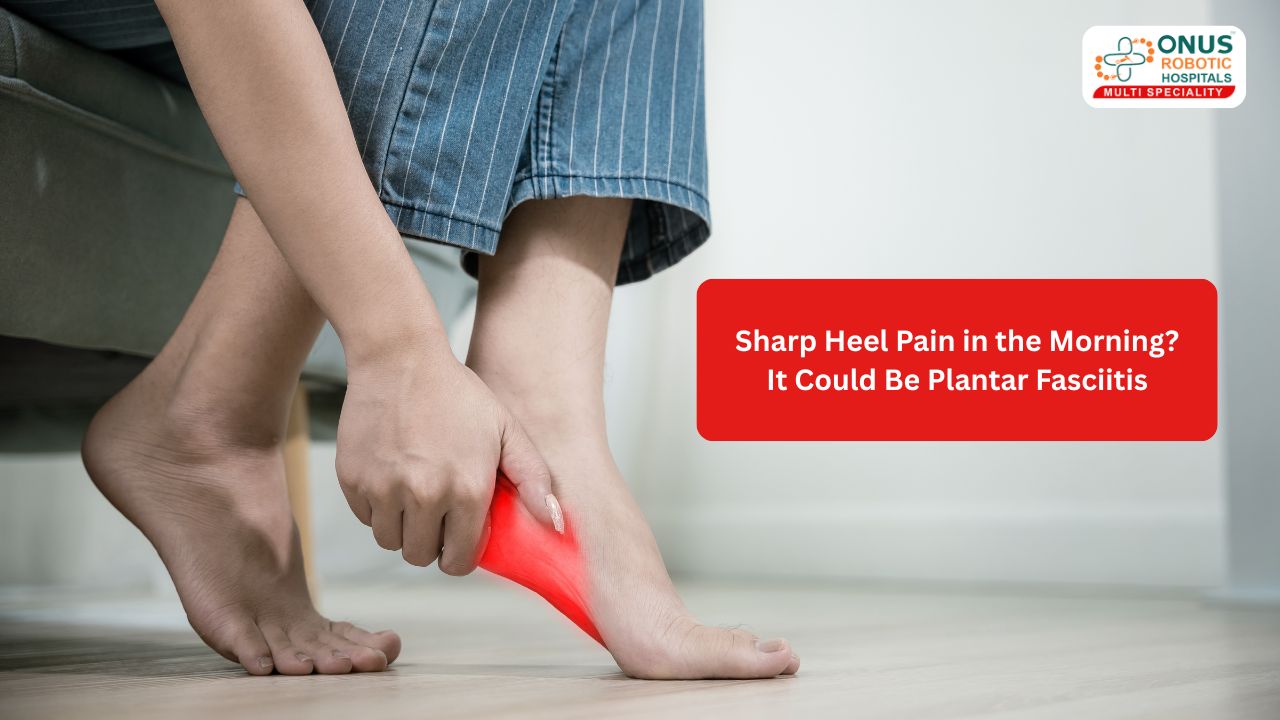
Sharp Heel Pain in the Morning? It Could Be Plantar Fasciitis- By Dr. Balaraju Naidu, Robotic Orthopedic Surgeon, ONUS Robotic Hospitals
Understanding the Causes, Symptoms & Treatment for One of the Most Common Foot Problems
Do you feel sharp heel pain when you take your first step in the morning?
Does the pain reduce after walking but return after long standing?
This condition is commonly caused by Plantar Fasciitis, one of the most frequent reasons for foot pain in adults.
The good news: Most patients recover with simple non-surgical treatment when diagnosed early.
What Is Plantar Fasciitis?
Plantar fasciitis occurs when the thick band of tissue (plantar fascia) at the bottom of the foot becomes inflamed.
This tissue:
- Supports the arch of the foot
- Absorbs shock while walking
- Stabilizes the foot
Repeated strain causes small tears, leading to pain and inflammation.
Why Is Heel Pain Worse in the Morning?
This is a classic symptom.
During sleep:
- The plantar fascia tightens
- Micro-tears begin to heal
- The tissue becomes stiff
When you take the first step:
- The fascia suddenly stretches
- Pain occurs
After walking:
- Tissue loosens
- Pain reduces temporarily
Common Causes of Plantar Fasciitis
1) Standing for Long Hours
Common in:
- Teachers
- Nurses
- Factory workers
- Retail workers
Prolonged standing increases pressure on the heel.
2) Improper Footwear
Shoes without support increase risk.
Examples:
- Flat slippers
- Hard sandals
- Worn-out shoes
- High heels
Poor footwear is one of the most preventable causes.
3) Obesity or Weight Gain
Extra body weight increases load on the foot.
This leads to:
- Strain on plantar fascia
- Chronic inflammation
- Persistent pain
4) Flat Feet or High Arches
Abnormal foot structure changes pressure distribution.
This increases stress on the heel.
5) Sudden Increase in Activity
Examples:
- Starting exercise suddenly
- Long-distance walking
- Running
- Climbing stairs
Common Symptoms of Plantar Fasciitis
Typical symptoms include:
- Sharp heel pain (especially morning)
- Pain after long standing
- Stiffness in foot
- Tenderness in heel
- Pain after rest
Symptoms usually affect one foot but can occur in both.
Warning Signs That Need Medical Evaluation
Consult a doctor if:
- Pain lasts more than 2 weeks
- Pain interferes with walking
- Heel swelling develops
- Pain becomes severe
- Home remedies fail
Early treatment prevents chronic pain.
How Is Plantar Fasciitis Diagnosed?
Diagnosis usually involves:
Clinical Examination
Doctors assess:
- Heel tenderness
- Foot movement
- Walking pattern
- Pain location
Imaging Tests (If Needed)
These may include:
Imaging helps rule out other causes such as fracture or nerve problems.
Treatment Options for Plantar Fasciitis
Most patients recover without surgery.
1) Rest and Activity Modification
Simple changes reduce strain.
Examples:
- Avoid prolonged standing
- Reduce walking distance
- Take frequent breaks
2) Stretching Exercises
One of the most effective treatments.
Helps:
- Reduce stiffness
- Improve flexibility
- Relieve pain
Common exercises:
- Calf stretch
- Plantar fascia stretch
- Foot rolling exercise
3) Proper Footwear and Insoles
Supportive shoes reduce pressure.
Recommended:
- Cushioned footwear
- Arch-support insoles
- Silicone heel pads
4) Physiotherapy
Physiotherapy helps:
- Reduce inflammation
- Improve flexibility
- Strengthen foot muscles
- Speed recovery
5) Medications
Doctors may prescribe:
- Pain relievers
- Anti-inflammatory medication
These reduce pain and swelling.
6) Advanced Treatments (If Needed)
Used when symptoms persist.
Options include:
- Steroid injection
- PRP injection
- Shockwave therapy
Surgery is rarely required.
Recovery Timeline
Typical recovery depends on severity.
Mild cases
Moderate cases
Chronic cases
Early treatment speeds recovery.
Prevention Tips for Heel Pain
You can reduce risk by:
- Wearing supportive footwear
- Maintaining healthy weight
- Stretching regularly
- Avoiding prolonged standing
- Using cushioned shoes
Prevention is easier than treatment.
When Should You See an Orthopedic Specialist?
Consult a doctor if:
- Heel pain persists
- Walking becomes difficult
- Pain increases over time
- Symptoms do not improve
Early diagnosis prevents long-term problems.
Final Takeaway
Plantar fasciitis is:
✔ Common
✔ Treatable
✔ Preventable
The key message:
Morning heel pain is not normal — early treatment prevents chronic foot problems.
For Appointments:
Dr. Balaraju Naidu, Robotic Orthopedic Surgeon
ONUS Robotic Hospitals – Hyderabad