Introduction
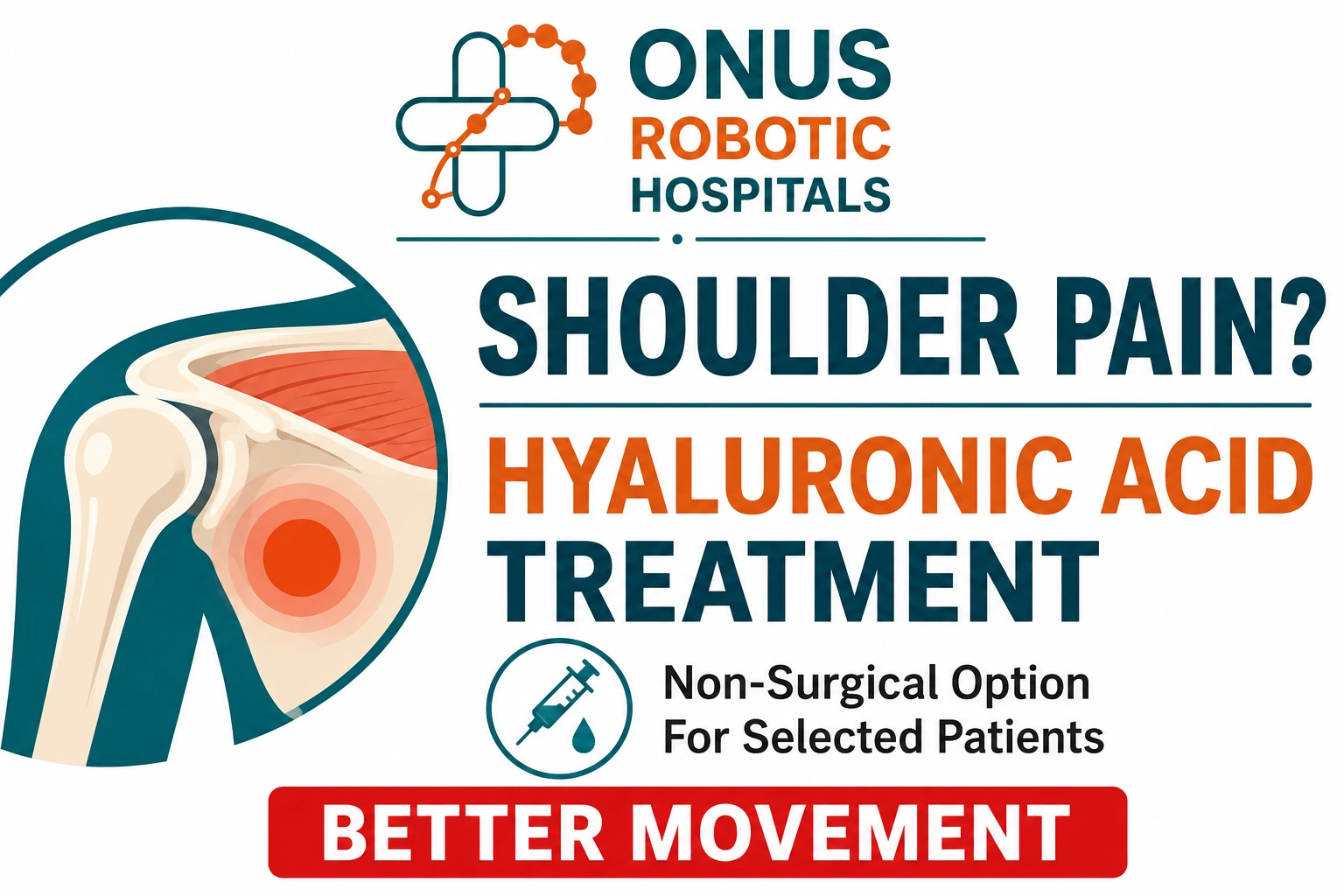
Shoulder pain is one of the most common musculoskeletal problems affecting adults. It can interfere with everyday activities such as lifting objects, combing hair, dressing, driving, reaching overhead, or even sleeping comfortably.
The shoulder is one of the most mobile joints in the body, allowing a wide range of movement. However, this flexibility also makes it vulnerable to injuries, inflammation, stiffness, and degenerative conditions.
Many patients worry that shoulder pain automatically means surgery. Fortunately, several non-surgical treatment options are available, including physiotherapy, medications, lifestyle modifications, and injections. One such treatment is Hyaluronic Acid (HA) Injection Therapy, which may help selected patients improve shoulder movement and reduce pain.
According to Dr. Balaraju Naidu, Robotic Orthopedic Surgeon at ONUS Robotic Hospitals, proper diagnosis is essential because not every shoulder problem requires the same treatment approach.
Understanding the Shoulder Joint
The shoulder is a complex joint formed by:
- Humerus (upper arm bone)
- Scapula (shoulder blade)
- Clavicle (collar bone)
- Rotator cuff muscles and tendons
- Ligaments and joint capsule
These structures work together to provide stability and movement.
When any of these components become injured, inflamed, or worn down, shoulder pain and restricted movement may occur.
Common Causes of Shoulder Pain
Several conditions can cause shoulder pain.
Rotator Cuff Problems
The rotator cuff is a group of muscles and tendons that stabilize the shoulder.
Damage or inflammation can result in:
- Pain during movement
- Weakness
- Difficulty lifting the arm
Supraspinatus Tendon Tears
The supraspinatus tendon is one of the most commonly affected rotator cuff tendons.
Patients may experience:
- Pain while raising the arm
- Night pain
- Difficulty performing overhead activities
Subacromial Impingement
This occurs when shoulder tendons become compressed during arm movements.
Symptoms include:
- Pain when lifting the arm
- Shoulder weakness
- Restricted movement
Shoulder Arthritis
Wear and tear of the joint cartilage may lead to:
- Pain
- Stiffness
- Reduced mobility
- Joint inflammation
Shoulder Stiffness
Also known as frozen shoulder in some cases, stiffness can significantly limit daily activities and range of motion.
What Is Hyaluronic Acid?
Hyaluronic acid is a naturally occurring substance found in joints throughout the body.
Its functions include:
- Lubricating joints
- Reducing friction
- Supporting smooth movement
- Absorbing shock during activity
Healthy joints contain adequate amounts of hyaluronic acid. However, degeneration, arthritis, and joint damage may reduce its effectiveness.
What Is Hyaluronic Acid Injection Therapy?
Hyaluronic acid injection therapy involves introducing a specially prepared form of hyaluronic acid into the affected joint.
The goal is to:
- Improve joint lubrication
- Reduce friction
- Support smoother movement
- Improve comfort during daily activities
The procedure is usually performed in a clinical setting after proper orthopedic evaluation.
How Can Hyaluronic Acid Help Shoulder Pain?
In appropriately selected patients, hyaluronic acid may provide several benefits.
Improved Joint Lubrication
The injection may enhance the natural lubricating environment within the joint.
Reduced Pain
Some patients experience reduced discomfort during movement.
Better Range of Motion
Improved lubrication may help support smoother shoulder movement.
Enhanced Daily Function
Patients may find routine activities easier to perform.
Non-Surgical Option
For selected individuals, hyaluronic acid may serve as part of a conservative treatment strategy before considering surgery.
Who May Benefit from Hyaluronic Acid Treatment?
The treatment may be considered for selected patients with:
- Mild to moderate shoulder arthritis
- Chronic shoulder pain
- Shoulder stiffness
- Certain rotator cuff-related conditions
- Joint degeneration
- Persistent symptoms despite conservative care
However, not every patient is an ideal candidate.
A detailed clinical assessment is necessary before deciding on treatment.
Is Hyaluronic Acid Suitable for Every Shoulder Condition?
No.
Shoulder pain can result from many different causes, and each condition requires an individualized treatment plan.
For example:
- Some patients may benefit from physiotherapy alone.
- Others may require medications.
- Some may need injections.
- Certain tendon tears may require surgical intervention.
This is why identifying the exact cause of pain is essential before selecting treatment.
Importance of Proper Diagnosis
One of the most common mistakes is treating shoulder pain based solely on symptoms without identifying the underlying condition.
A thorough orthopedic evaluation may include:
Clinical Examination
Assessment of:
- Pain location
- Range of motion
- Muscle strength
- Functional limitations
Imaging Studies
Depending on the condition, investigations may include:
- X-rays
- Ultrasound
- MRI scans
These studies help identify structural abnormalities and guide treatment planning.
Other Treatment Options for Shoulder Pain
Hyaluronic acid is only one component of shoulder pain management.
Physiotherapy
Physiotherapy often plays a critical role in:
- Improving flexibility
- Strengthening muscles
- Restoring function
Medications
Pain-relieving and anti-inflammatory medications may help manage symptoms.
Activity Modification
Reducing activities that aggravate symptoms may support recovery.
Exercise Programs
Targeted exercises can improve shoulder strength and mobility.
Surgical Treatment
When significant structural damage is present, surgery may be necessary.
When Should You See an Orthopedic Specialist?
Consult an orthopedic specialist if you experience:
- Persistent shoulder pain
- Difficulty lifting your arm
- Pain during daily activities
- Night pain
- Reduced shoulder movement
- Weakness in the arm
- Symptoms lasting several weeks
Early evaluation often leads to better treatment outcomes.
Right Diagnosis. Right Treatment. Better Movement.
The key to successful shoulder pain management is not simply choosing a treatment—it is choosing the right treatment for the correct diagnosis.
Hyaluronic acid injections may offer relief for selected patients, but they should be considered only after a comprehensive orthopedic assessment.
Every shoulder condition is unique, and treatment should always be tailored to the individual’s symptoms, diagnosis, activity level, and functional goals.
Conclusion
Shoulder pain can significantly affect daily life, limiting movement and reducing quality of life. Hyaluronic acid injection therapy is a non-surgical treatment option that may help selected patients by improving joint lubrication, reducing pain, and supporting better shoulder movement.
However, not every shoulder problem requires the same treatment. Proper diagnosis remains the most important step in determining whether physiotherapy, medications, injections, or surgery is appropriate.
Dr. Balaraju Naidu emphasizes that accurate diagnosis and individualized treatment planning are essential for achieving better movement, improved function, and long-term shoulder health.
For Appointments:
Dr. Balaraju Naidu, Robotic Orthopedic Surgeon
ONUS Robotic Hospitals – Hyderabad
👉 link: contact-us or book-appointment