What Is TB Knee?
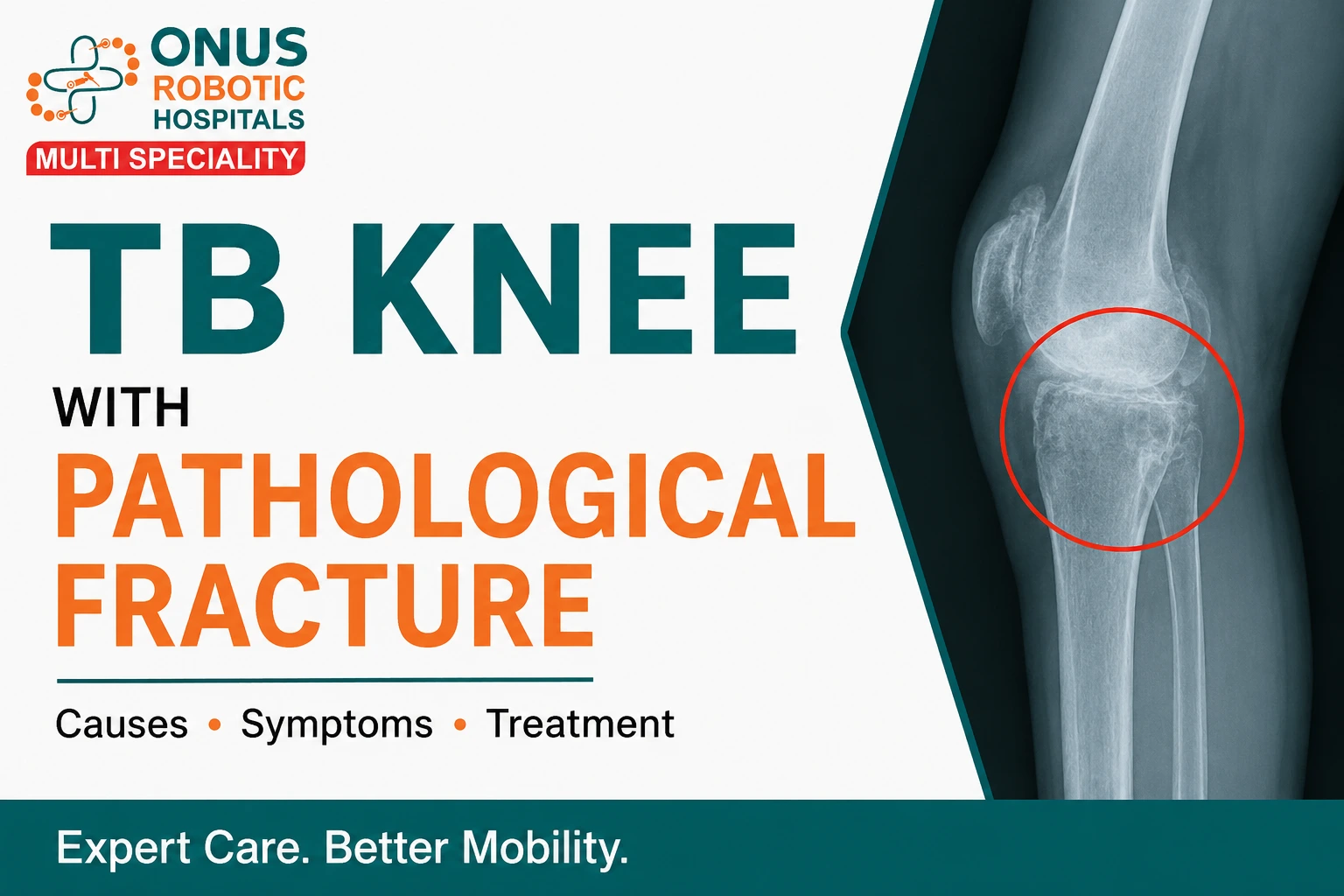
Tuberculosis (TB) is commonly known as a lung disease, but it can also affect bones and joints. When tuberculosis affects the knee joint, it is known as Tubercular Arthritis of the Knee or TB Knee. Although less common than pulmonary tuberculosis, skeletal TB can cause significant joint damage if left untreated.
In advanced cases, the infection weakens the bone around the knee, making it vulnerable to a pathological fracture—a fracture that occurs in a bone already weakened by disease rather than by major trauma.
Early diagnosis and treatment are critical to preserving joint function and preventing permanent disability.
What Is a Pathological Fracture?
A pathological fracture occurs when a bone breaks due to an underlying disease process that weakens its structure.
Unlike normal fractures caused by accidents or injuries, pathological fractures may occur after:
- Minor trauma
- Simple twisting movements
- Routine daily activities
- Even without a significant injury
In TB Knee, the infection progressively destroys bone and joint tissues, increasing the risk of fracture around the knee joint.
How Does Tuberculosis Affect the Knee Joint?
Tuberculosis bacteria can spread from the lungs to the bones through the bloodstream.
Once the infection reaches the knee joint, it can cause:
- Inflammation of the joint lining
- Bone destruction
- Cartilage damage
- Joint instability
- Progressive deformity
- Chronic pain and swelling
Without treatment, the infection can severely weaken the surrounding bone, eventually resulting in a pathological fracture.
Symptoms of TB Knee
Patients may experience symptoms gradually over weeks or months.
Common symptoms include:
Persistent Knee Pain
The pain usually develops slowly and progressively worsens over time.
Swelling Around the Knee
Chronic swelling is often one of the earliest signs.
Difficulty Walking
Patients may limp due to pain and reduced joint function.
Restricted Knee Movement
The knee becomes stiff and difficult to bend or straighten.
Warmth Around the Joint
Inflammation may cause localized warmth.
Weight Loss and Fatigue
Some patients experience general symptoms of tuberculosis, including:
- Weight loss
- Loss of appetite
- Fever
- Night sweats
- Fatigue
Sudden Severe Pain Due to Fracture
When a pathological fracture occurs, patients may suddenly experience:
- Intense pain
- Inability to bear weight
- Deformity around the knee
- Loss of mobility
Risk Factors for TB Knee
Certain factors increase the likelihood of skeletal tuberculosis:
- Previous TB infection
- Weakened immune system
- Diabetes
- Malnutrition
- Chronic kidney disease
- HIV infection
- Long-term steroid use
- Advanced age
How Is TB Knee Diagnosed?
Early diagnosis is essential to prevent joint destruction.
Clinical Examination
An orthopedic specialist evaluates:
- Swelling
- Pain
- Joint stability
- Range of motion
X-Rays
X-rays may show:
- Bone destruction
- Joint narrowing
- Pathological fractures
MRI Scan
MRI provides detailed images of:
- Bone involvement
- Soft tissue damage
- Abscess formation
- Extent of infection
Blood Tests
Doctors may order:
- ESR
- CRP
- Complete blood count
These tests help assess inflammation.
TB-Specific Testing
Additional investigations may include:
- Mantoux test
- GeneXpert
- Tissue biopsy
- Culture studies
A biopsy often provides definitive confirmation of tuberculosis.
Complications of Untreated TB Knee
Delayed treatment can lead to serious complications such as:
- Permanent joint damage
- Severe deformity
- Chronic pain
- Joint stiffness
- Pathological fractures
- Limb shortening
- Disability
Timely intervention can prevent many of these complications.
Treatment of TB Knee with Pathological Fracture
Treatment typically involves a combination of medical and surgical management.
Anti-Tubercular Therapy (ATT)
The primary treatment is anti-tuberculosis medication prescribed according to national TB treatment guidelines.
Treatment usually continues for several months to completely eradicate the infection.
Immobilization
The affected limb may require temporary support using:
- Braces
- Splints
- External supports
This helps protect the fracture while healing occurs.
Surgical Management
Surgery may be necessary when there is:
- Significant bone destruction
- Joint instability
- Pathological fracture
- Severe deformity
- Failure of conservative treatment
Surgical options may include:
Debridement
Removal of infected tissue to reduce disease burden.
Fracture Fixation
Specialized orthopedic techniques are used to stabilize the fracture.
Bone Reconstruction
In cases of severe bone loss, reconstruction procedures may be required.
Joint Replacement Surgery
In selected patients with advanced joint destruction, knee replacement may be considered after complete control of the infection.
Rehabilitation and Recovery
Physiotherapy plays an important role after treatment.
Goals include:
- Restoring knee movement
- Strengthening muscles
- Improving walking ability
- Preventing stiffness
- Returning to normal activities
Regular follow-up is essential to monitor healing and detect recurrence early.
Can TB Knee Be Prevented?
While not all cases can be prevented, the risk can be reduced by:
- Early diagnosis of tuberculosis
- Completing prescribed TB treatment
- Maintaining good nutrition
- Managing chronic medical conditions
- Seeking medical attention for persistent joint pain and swelling
For Appointments:
Dr. Balaraju Naidu, Robotic Orthopedic Surgeon
ONUS Robotic Hospitals – Hyderabad
👉 link: contact-us or book-appointment