What Is an Aneurysmal Bone Cyst?
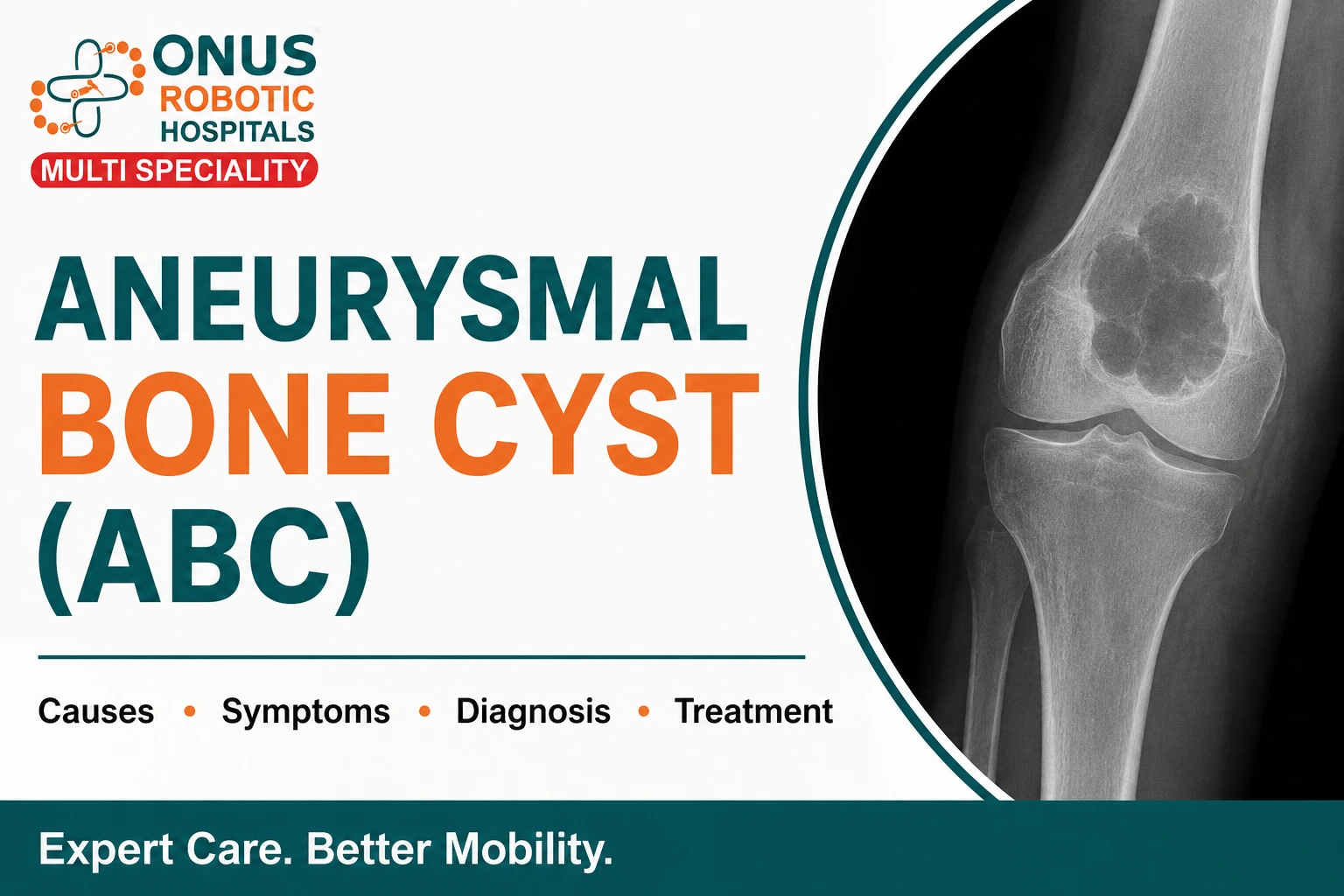
An Aneurysmal Bone Cyst (ABC) is a rare, benign but locally aggressive bone lesion that contains blood-filled spaces separated by connective tissue. Although it is not cancerous, an aneurysmal bone cyst can grow rapidly, weaken the affected bone, and increase the risk of fractures.
ABC most commonly affects children, adolescents, and young adults, typically occurring before the age of 30. It can develop in almost any bone but is frequently found in the long bones of the arms and legs, spine, pelvis, and shoulder region.
Early diagnosis and appropriate treatment are important to prevent bone destruction, deformity, and functional limitations.
Why Is It Called an Aneurysmal Bone Cyst?
The term “aneurysmal” refers to the blood-filled spaces that resemble aneurysms, while “cyst” refers to the cavity-like appearance of the lesion. Despite its name, an aneurysmal bone cyst is not a true cyst because it lacks an epithelial lining.
Which Bones Are Commonly Affected?
ABC can occur in several locations, including:
- Femur (thigh bone)
- Tibia (shin bone)
- Humerus (upper arm bone)
- Spine (vertebrae)
- Pelvis
- Shoulder bones
The lesion may develop close to growth plates in children and adolescents.
Causes of Aneurysmal Bone Cyst
The exact cause of ABC is not completely understood.
Researchers believe that ABC develops due to abnormal blood vessel formation within the bone, leading to increased pressure and expansion of the bone cavity.
ABC can occur as:
Primary ABC
Develops independently without any underlying bone condition.
Secondary ABC
Occurs in association with another bone lesion, such as:
- Giant Cell Tumor
- Chondroblastoma
- Fibrous Dysplasia
- Osteoblastoma
- Non-Ossifying Fibroma
Identifying associated conditions is important for treatment planning.
Symptoms of Aneurysmal Bone Cyst
Symptoms vary depending on the size and location of the lesion.
Persistent Bone Pain
Pain is usually the most common symptom and may gradually worsen over time.
Swelling
A noticeable swelling or lump may develop near the affected bone.
Limited Joint Movement
If the cyst is located near a joint, movement may become restricted.
Bone Weakness
The affected bone becomes thinner and weaker as the cyst expands.
Pathological Fracture
In some cases, the first sign of ABC is a fracture that occurs after a minor injury or even normal daily activity.
Neurological Symptoms
When ABC affects the spine, patients may experience:
- Back pain
- Numbness
- Weakness in limbs
- Difficulty walking
These symptoms require urgent medical attention.
How Is Aneurysmal Bone Cyst Diagnosed?
Clinical Examination
An orthopedic specialist evaluates:
- Pain location
- Swelling
- Range of motion
- Bone tenderness
X-Ray
X-rays often show:
- Bone expansion
- Thinning of the bone cortex
- Characteristic “blown-out” appearance
MRI Scan
MRI helps assess:
- Size of the lesion
- Blood-filled cavities
- Soft tissue involvement
- Relationship to nearby structures
CT Scan
Provides detailed visualization of bone destruction and structural integrity.
Biopsy
A biopsy is often performed to confirm the diagnosis and rule out malignant bone tumors.
Is Aneurysmal Bone Cyst Cancer?
No.
Aneurysmal Bone Cyst is considered a benign tumor-like lesion. However, it can behave aggressively and cause significant bone destruction if left untreated.
Although it does not spread to other organs, it can recur after treatment if not completely managed.
Treatment Options for Aneurysmal Bone Cyst
Treatment depends on:
- Patient age
- Location of the cyst
- Size of the lesion
- Risk of fracture
- Presence of neurological symptoms
Curettage and Bone Grafting
This is the most commonly performed procedure.
The surgeon removes the cyst and fills the cavity with:
- Bone graft
- Bone substitute material
This helps restore bone strength and promote healing.
Extended Curettage
Special techniques may be used to reduce recurrence risk.
Internal Fixation
If the bone is significantly weakened or fractured, plates, screws, or rods may be used to stabilize the bone.
Selective Arterial Embolization
In selected cases, blood supply to the cyst is blocked to reduce growth and bleeding.
Minimally Invasive Procedures
Certain lesions may be treated using image-guided injections and advanced orthopedic techniques.
Surgical Stabilization for Spine ABC
When ABC affects the spine, surgery may be necessary to protect neurological function and maintain spinal stability.
Can Aneurysmal Bone Cyst Recur?
Yes.
Recurrence rates are higher in younger patients and when complete removal is difficult.
Regular follow-up with imaging studies is important after treatment.
Most recurrences occur within the first two years after surgery.
Recovery After Treatment
Recovery depends on the location and size of the lesion.
Patients may require:
- Physiotherapy
- Strengthening exercises
- Gradual return to activities
- Regular follow-up imaging
Most patients can return to normal daily activities after appropriate treatment and rehabilitation.
When Should You Consult an Orthopedic Specialist?
Seek medical attention if you experience:
- Persistent bone pain
- Unexplained swelling
- Recurrent fractures
- Limited joint movement
- Back pain with neurological symptoms
Early diagnosis improves treatment outcomes and reduces complications.
For Appointments:
Dr. Balaraju Naidu, Robotic Orthopedic Surgeon
ONUS Robotic Hospitals – Hyderabad
👉 link: contact-us or book-appointment