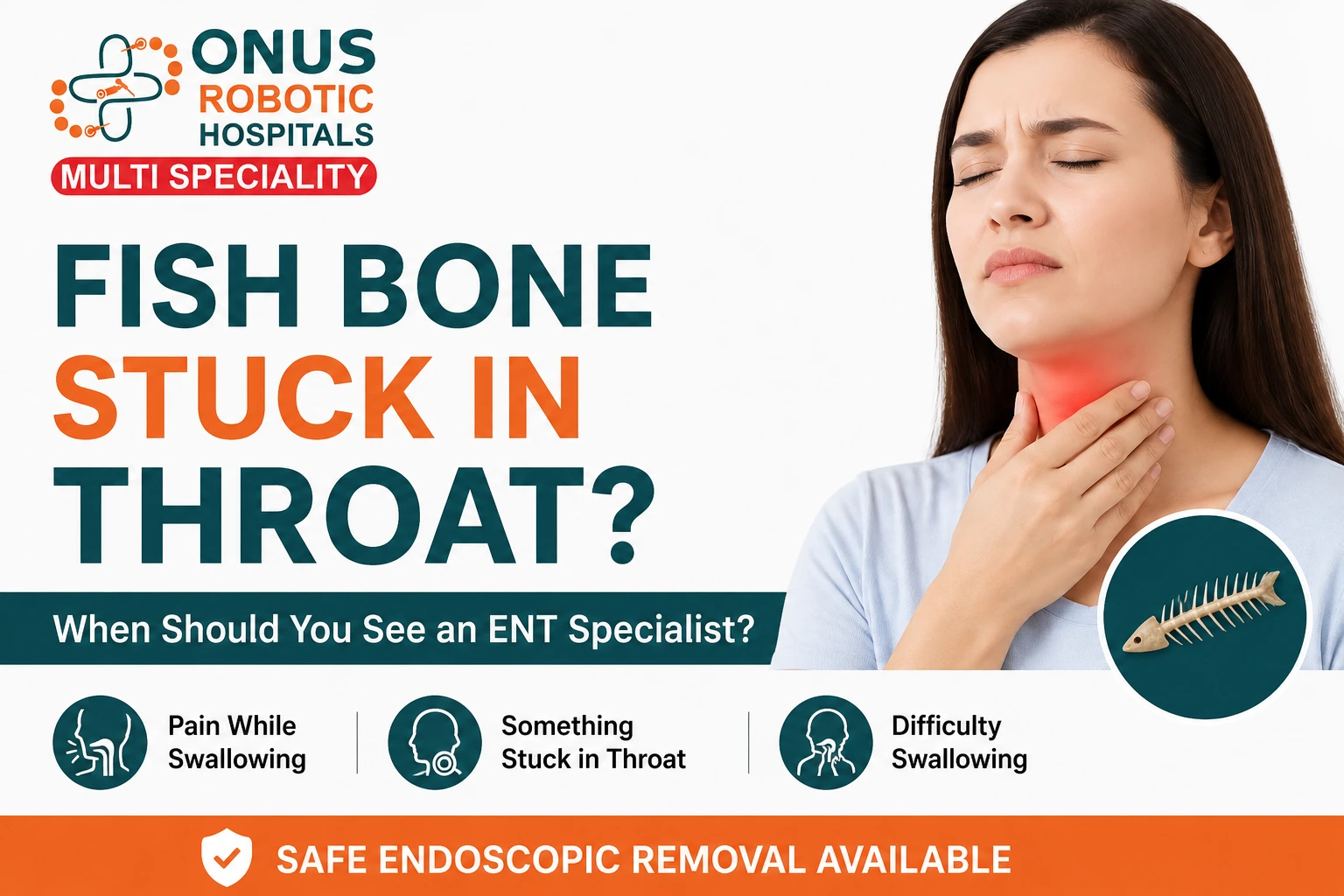
When Should You See an ENT Specialist?
Immediate medical evaluation is recommended if:
- The sensation persists for more than a few hours
- Pain becomes severe
- Swallowing is difficult
- Symptoms worsen over time
- There is bleeding from the throat
- Breathing difficulty develops
- Home remedies fail to provide relief
- A child is affected
Prompt assessment allows safe removal and reduces the risk of complications.
Why Home Remedies May Be Dangerous
Many people try traditional remedies before seeking medical care.
Common methods include:
- Swallowing large balls of rice
- Eating bananas without chewing properly
- Swallowing large chunks of bread
- Drinking excessive amounts of water
Although these remedies may occasionally work, they can also create problems.
Risks of Home Remedies
- Pushing the bone deeper into tissues
- Causing additional throat injury
- Increasing pain and swelling
- Delaying proper treatment
- Making removal more difficult
For this reason, ENT specialists generally advise against forceful swallowing techniques when symptoms persist.
How ENT Specialists Diagnose a Stuck Fish Bone
A detailed examination is performed to identify the exact location of the fish bone.
Clinical Examination
The doctor carefully inspects the mouth and throat using specialized lighting and instruments.
Endoscopic Evaluation
If the fish bone is not immediately visible, an ENT specialist may perform endoscopy.
A thin camera-equipped instrument is used to examine:
- Nose
- Throat
- Voice box
- Upper food pipe
This allows precise localization of the fish bone.
How Fish Bones Are Safely Removed
Endoscopic Fish Bone Removal
Modern ENT clinics use advanced endoscopic equipment to remove fish bones safely and effectively.
The procedure involves:
- Identifying the exact location
- Using specialized instruments
- Carefully removing the bone under direct visualization
Benefits of Endoscopic Removal
- Quick diagnosis
- Precise localization
- Minimal discomfort
- Safe removal
- Reduced tissue injury
- Immediate symptom relief
Most fish bone removals can be performed as an outpatient procedure.
What If the Fish Bone Is in the Food Pipe?
Sometimes the fish bone travels beyond the throat and becomes lodged in the esophagus (food pipe).
Symptoms may include:
- Severe chest discomfort
- Painful swallowing
- Inability to swallow food
- Excessive drooling
In such cases, advanced procedures may be required:
Flexible Endoscopy
A flexible endoscope is passed through the mouth to locate and remove the fish bone.
Rigid Esophagoscopy
In certain situations, a rigid endoscope may be used under anesthesia for safe extraction.
Early intervention is essential to prevent serious complications.
Possible Complications of Delayed Treatment
Ignoring a lodged fish bone can result in:
Infection
The surrounding tissues may become infected.
Throat Ulcers
Continuous irritation can lead to ulcer formation.
Abscess Formation
Localized collections of pus may develop in the throat or neck.
Injury to the Esophagus
Sharp fish bones can puncture or damage the food pipe.
Deep Neck Infections
In rare cases, untreated fish bones can cause severe infections that spread into deeper tissues of the neck.
Airway Complications
Although uncommon, swelling and infection may affect breathing.
Prevention Tips
You can reduce the risk of swallowing fish bones by:
- Eating slowly and carefully
- Inspecting fish for visible bones before eating
- Cutting fish into small pieces
- Supervising children while eating fish
- Avoiding distractions while eating
- Not talking or laughing with food in the mouth
Fish Bone in Children: Special Considerations
Children may not always communicate symptoms clearly.
Parents should watch for:
- Refusal to eat
- Excessive drooling
- Crying during swallowing
- Throat pain
- Persistent coughing
Any suspicion of a swallowed fish bone in a child warrants prompt medical evaluation.
For Appointments:
Consultant ENT Head & Neck Surgeon
ONUS Robotic Hospitals – Hyderabad
👉 link: contact-us or book-appointment