Adenoids in Children: Signs Parents Should Never Ignore – By Consultant ENT Head & Neck Surgeon, ONUS Robotic Hospitals

Adenoids in Children: Signs Parents Should Never Ignore – By Consultant ENT Head & Neck Surgeon, ONUS Robotic Hospitals

Many children experience frequent colds, snoring, or difficulty breathing through the nose. While these symptoms are often blamed on seasonal allergies or infections, enlarged adenoids may be the hidden cause.

Adenoids are a normal part of a child’s immune system, but when they become enlarged, they can interfere with breathing, sleep, hearing, and overall development. Recognizing the warning signs early can help prevent complications and improve your child’s quality of life.


What Are Adenoids?

Adenoids are small patches of lymphoid tissue located behind the nose, where the nasal passages meet the throat. They help the body fight germs during early childhood by trapping bacteria and viruses.

Adenoids are largest between the ages of 3 and 7 years and usually shrink naturally during adolescence.

However, when they become enlarged due to repeated infections or allergies, they can block the airway and cause various health problems.


Causes of Enlarged Adenoids

Several factors can lead to enlarged adenoids, including:

  • Repeated upper respiratory infections
  • Chronic sinus infections
  • Allergies
  • Viral or bacterial infections
  • Family history
  • Environmental irritants like dust or smoke

In some children, enlarged adenoids occur without any obvious cause.


Signs Parents Should Never Ignore

Watch for these common symptoms:

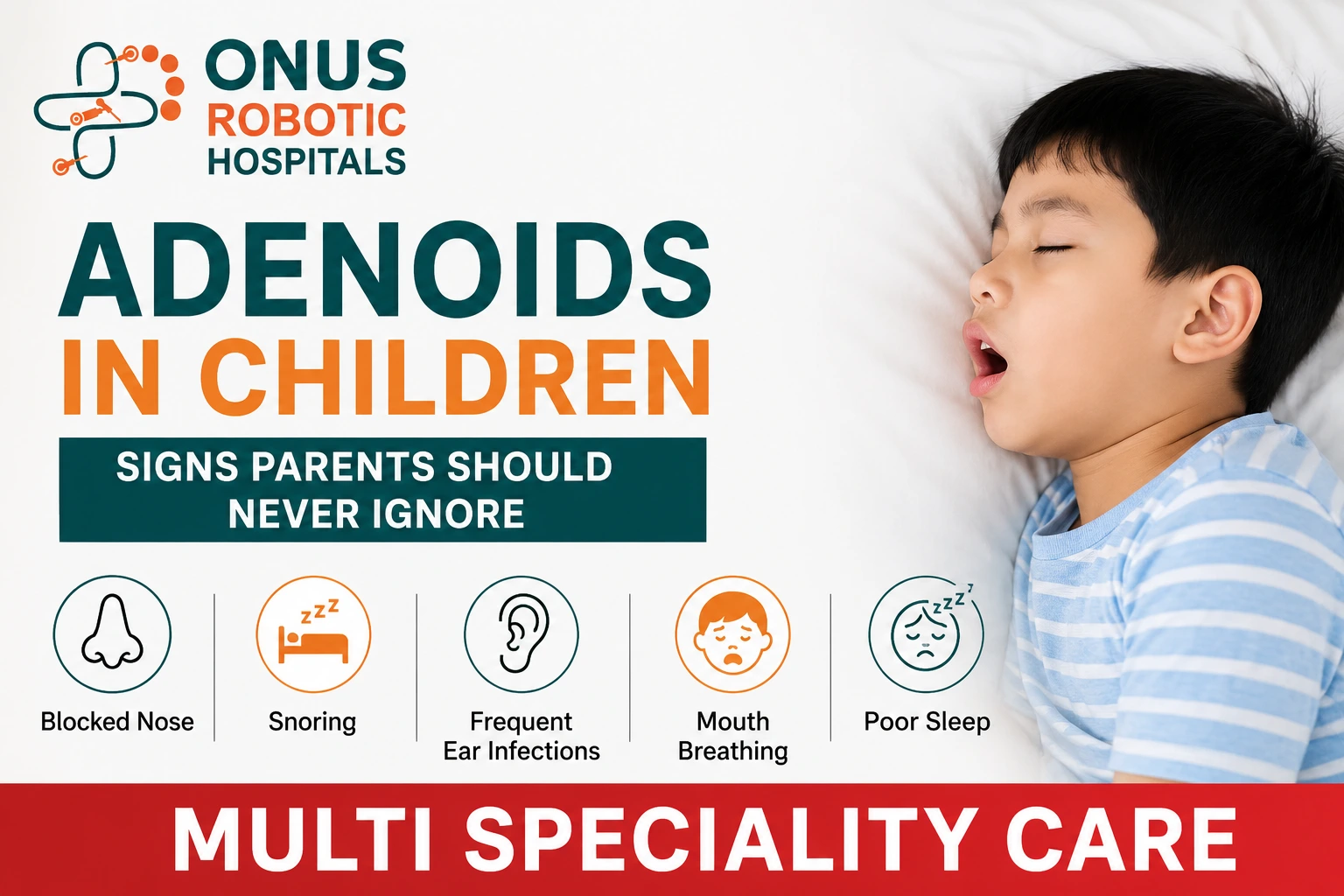
Persistent Mouth Breathing

Children with enlarged adenoids often breathe through their mouth because the nose remains blocked.

Loud Snoring

Regular snoring is one of the earliest signs of enlarged adenoids.

Difficulty Sleeping

Poor sleep quality, frequent waking, restless sleep, or pauses in breathing may indicate airway obstruction.

Blocked Nose

The child may always sound congested even without having a cold.

Frequent Ear Infections

Enlarged adenoids can block the Eustachian tubes, leading to repeated middle ear infections and fluid buildup.

Hearing Problems

Temporary hearing loss or delayed speech development may occur due to chronic ear infections.

Nasal Voice

The child’s speech may sound “blocked” or nasal.

Daytime Fatigue

Poor sleep often causes tiredness, irritability, difficulty concentrating, and poor school performance.


When Should Parents Be Concerned?

Consult an ENT specialist if your child experiences:

  • Snoring every night
  • Difficulty breathing through the nose
  • Sleep apnea (breathing pauses during sleep)
  • Recurrent ear infections
  • Hearing loss
  • Persistent nasal blockage
  • Delayed speech
  • Poor sleep affecting daily activities

Early diagnosis helps prevent long-term complications.

How Are Enlarged Adenoids Diagnosed?

An ENT specialist may recommend:

  • Detailed medical history
  • Physical examination
  • Nasal endoscopy
  • X-ray of the nasopharynx (if needed)
  • Hearing evaluation
  • Sleep assessment in selected cases

These tests help determine the severity of airway blockage.


Treatment Options

Treatment depends on the child’s age, symptoms, and severity.

Medical Treatment

For mild to moderate cases, treatment may include:

  • Nasal steroid sprays
  • Allergy medications
  • Saline nasal irrigation
  • Antibiotics (when bacterial infection is present)

Many children improve with appropriate medical treatment.


Adenoid Surgery (Adenoidectomy)

Surgery may be recommended when enlarged adenoids cause:

  • Severe nasal blockage
  • Sleep apnea
  • Recurrent ear infections
  • Persistent hearing problems
  • Frequent sinus infections
  • Poor quality of life despite medication

Adenoidectomy is a common and safe procedure that usually provides significant improvement in breathing, sleep, and overall health.


Possible Complications if Left Untreated

Ignoring enlarged adenoids may lead to:

  • Chronic mouth breathing
  • Poor sleep quality
  • Growth problems
  • Frequent ear infections
  • Hearing impairment
  • Speech delay
  • Facial development changes
  • Learning and concentration difficulties

Timely treatment helps prevent these complications.


Can Enlarged Adenoids Be Prevented?

Although enlarged adenoids cannot always be prevented, parents can reduce the risk by:

  • Treating allergies promptly
  • Maintaining good hygiene
  • Avoiding cigarette smoke exposure
  • Managing recurrent infections early
  • Ensuring regular pediatric check-ups

When Should You Visit an ENT Specialist?

Seek medical attention if your child has:

  • Persistent snoring
  • Mouth breathing
  • Difficulty sleeping
  • Frequent ear infections
  • Hearing problems
  • Continuous nasal blockage
  • Sleep apnea
  • Poor daytime concentration

Early evaluation can prevent long-term health issues.


Expert Pediatric ENT Care at ONUS Robotic Hospitals

At ONUS Robotic Hospitals, our ENT specialists provide comprehensive evaluation and treatment for enlarged adenoids and other pediatric ENT conditions. Using advanced diagnostic techniques and personalized treatment plans, we help children breathe better, sleep peacefully, hear clearly, and enjoy a healthier childhood.


Frequently Asked Questions (FAQs)

Are enlarged adenoids common in children?

Yes. Enlarged adenoids are common in children, especially between the ages of 3 and 7 years.

Do enlarged adenoids always require surgery?

No. Many children respond well to medications. Surgery is recommended only when symptoms are severe or persistent.

Can enlarged adenoids affect hearing?

Yes. They can block the Eustachian tubes, leading to fluid buildup and temporary hearing loss.

At what age do adenoids shrink?

Adenoids usually begin shrinking after 7–8 years of age and become much smaller during adolescence.

Is adenoid surgery safe?

Yes. Adenoidectomy is a commonly performed and generally safe procedure with a good success rate when performed by an experienced ENT surgeon.

Consultant ENT Head & Neck Surgeon

ONUS Robotic Hospitals – Hyderabad

πŸ‘‰ link: contact-us or book-appointment

Β 

Book Doctor Appointment
Book Free Appointment
Please enable JavaScript in your browser to complete this form.