Introduction
Hearing is one of our most important senses, helping us communicate, stay connected with loved ones, and remain aware of our surroundings. Yet, hearing loss often develops gradually, making it easy to overlook the early warning signs.
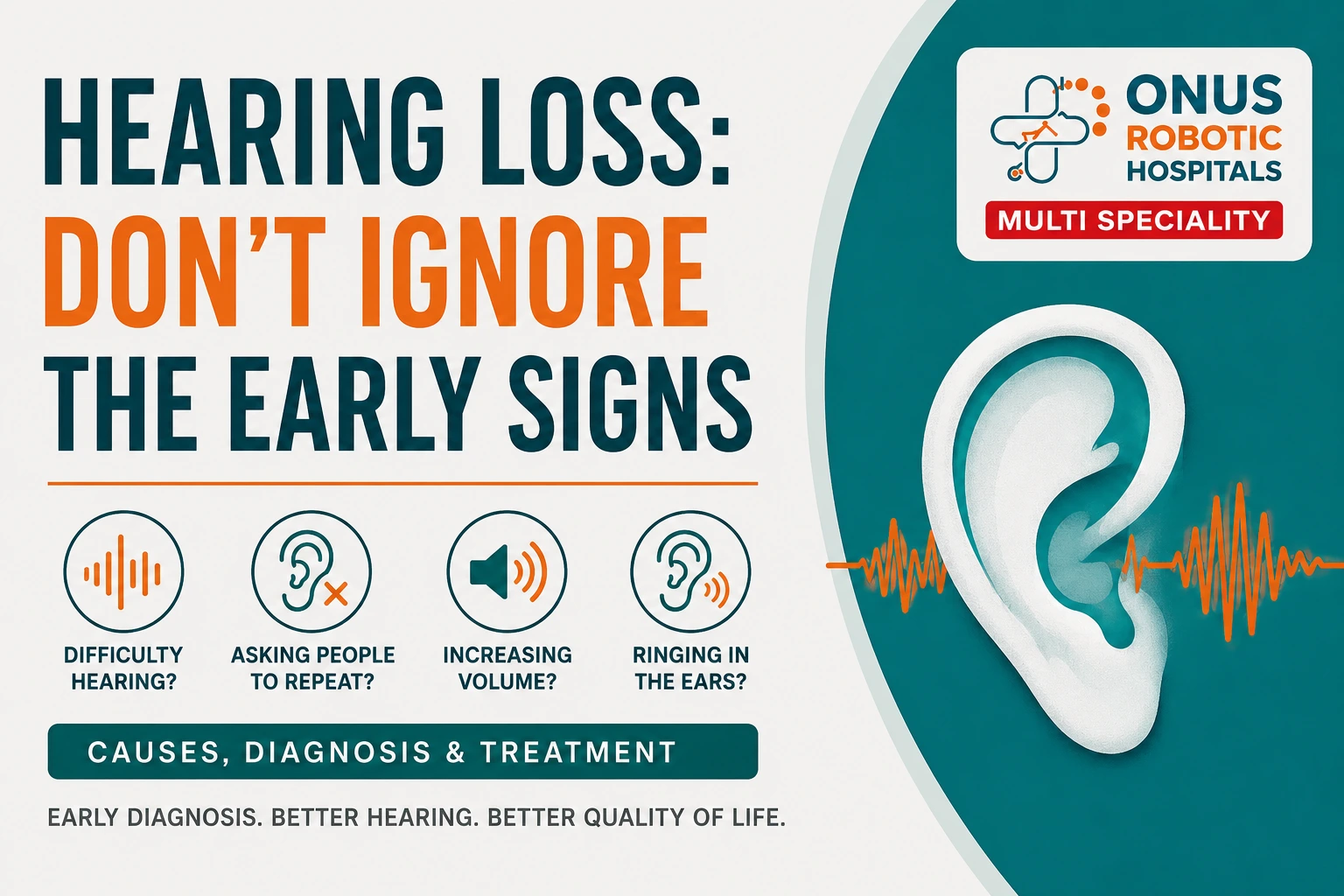
Many people dismiss symptoms such as turning up the television volume, asking others to repeat themselves, or struggling to follow conversations in noisy environments. However, these can be early indicators of hearing impairment that require medical attention.
In this article, Dr. Akshita Reddy, Consultant ENT Surgeon at ONUS Robotic Hospitals, explains the causes, symptoms, diagnosis, and treatment options for hearing loss and why early intervention is crucial.
What is Hearing Loss?
Hearing loss occurs when a person is unable to hear sounds as clearly or as loudly as before. It can affect one ear or both ears and may range from mild difficulty hearing certain sounds to complete deafness.
Hearing loss can occur at any age and may develop suddenly or gradually over time.
Why Should Hearing Loss Not Be Ignored?
Untreated hearing loss can affect multiple aspects of daily life, including:
- Communication with family and friends
- Workplace productivity
- Academic performance
- Social interactions
- Mental health and emotional well-being
- Safety awareness
Studies have shown that untreated hearing problems may contribute to social isolation, anxiety, depression, and cognitive decline in older adults.
Early diagnosis often leads to better treatment outcomes.
Common Early Signs of Hearing Loss
Many individuals do not realize they are experiencing hearing loss until it begins affecting daily activities.
Warning Signs Include:
- Frequently asking people to repeat themselves
- Increasing TV or mobile volume
- Difficulty understanding conversations in crowded places
- Trouble hearing over the phone
- Missing parts of conversations
- Feeling that others are mumbling
- Difficulty hearing high-pitched sounds
- Ringing or buzzing in the ears (tinnitus)
- Trouble hearing children or female voices clearly
If you experience any of these symptoms regularly, it is important to consult an ENT specialist.
How Does Hearing Work?
The hearing process involves several structures within the ear:
Outer Ear
Collects sound waves and directs them toward the eardrum.
Middle Ear
Contains tiny bones that amplify sound vibrations.
Inner Ear
Converts sound vibrations into electrical signals that travel to the brain through the auditory nerve.
A problem in any of these areas can result in hearing impairment.
Common Causes of Hearing Loss
1. Earwax Blockage
One of the most common and easily treatable causes of hearing loss is excessive earwax accumulation.
Symptoms
- Reduced hearing
- Ear fullness
- Ear discomfort
- Ringing in the ears
Professional earwax removal can often restore normal hearing immediately.
2. Ear Infections
Infections can cause fluid accumulation and inflammation within the ear.
Common Symptoms
- Ear pain
- Hearing difficulty
- Ear discharge
- Fever
Prompt treatment helps prevent complications and long-term hearing damage.
3. Eardrum Problems
The eardrum plays an essential role in transmitting sound vibrations.
Hearing loss can occur due to:
- Eardrum perforation
- Chronic infections
- Trauma
- Previous surgeries
Many eardrum conditions can be successfully treated by an ENT specialist.
Consultant ENT Head & Neck Surgeon
ONUS Robotic Hospitals – Hyderabad
👉 link: contact-us or book-appointment