Insulin Resistance: The Hidden Reason Behind Belly Fat, Prediabetes and Weight Gain – By Dr. Ravi Kiran | Diabetologist, Onus Robotic Hospital
Introduction
Many people struggle with stubborn belly fat, gradual weight gain, fatigue, sugar cravings, and rising blood sugar levels despite making efforts to eat healthier and exercise regularly. In many cases, the underlying problem may not simply be diet or lack of physical activity—it could be insulin resistance.
Insulin resistance is one of the most common yet often overlooked metabolic disorders affecting millions of people worldwide. It plays a major role in the development of obesity, prediabetes, Type 2 diabetes, fatty liver disease, high blood pressure, and cardiovascular disease.
Understanding insulin resistance is important because it often develops silently for years before serious health problems appear. Recognizing the warning signs early can help prevent long-term complications and improve overall metabolic health.
What Is Insulin?
Insulin is a hormone produced by the pancreas that helps regulate blood sugar levels.
After you eat, carbohydrates are broken down into glucose, which enters the bloodstream. Insulin acts like a key that allows glucose to move from the blood into the body’s cells, where it is used for energy.
When insulin functions normally:
- Blood sugar remains within a healthy range
- Cells receive energy efficiently
- The body maintains metabolic balance
What Is Insulin Resistance?
Insulin resistance occurs when the body’s cells become less responsive to insulin.
As a result:
- Glucose cannot enter cells efficiently
- The pancreas produces more insulin to compensate
- Insulin levels remain elevated
- Blood sugar gradually begins to rise
Initially, the body may maintain normal blood sugar levels by producing extra insulin. However, over time, the pancreas may struggle to keep up, leading to prediabetes and eventually Type 2 diabetes.
Why Is Insulin Resistance Dangerous?
Insulin resistance affects far more than blood sugar.
Chronically elevated insulin levels can contribute to:
- Belly fat accumulation
- Weight gain
- Prediabetes
- Type 2 diabetes
- Fatty liver disease
- High blood pressure
- High triglycerides
- Heart disease
- Polycystic Ovary Syndrome (PCOS)
- Chronic inflammation
Because these changes develop gradually, many people remain unaware of the problem for years.
Why Does Insulin Resistance Cause Belly Fat?
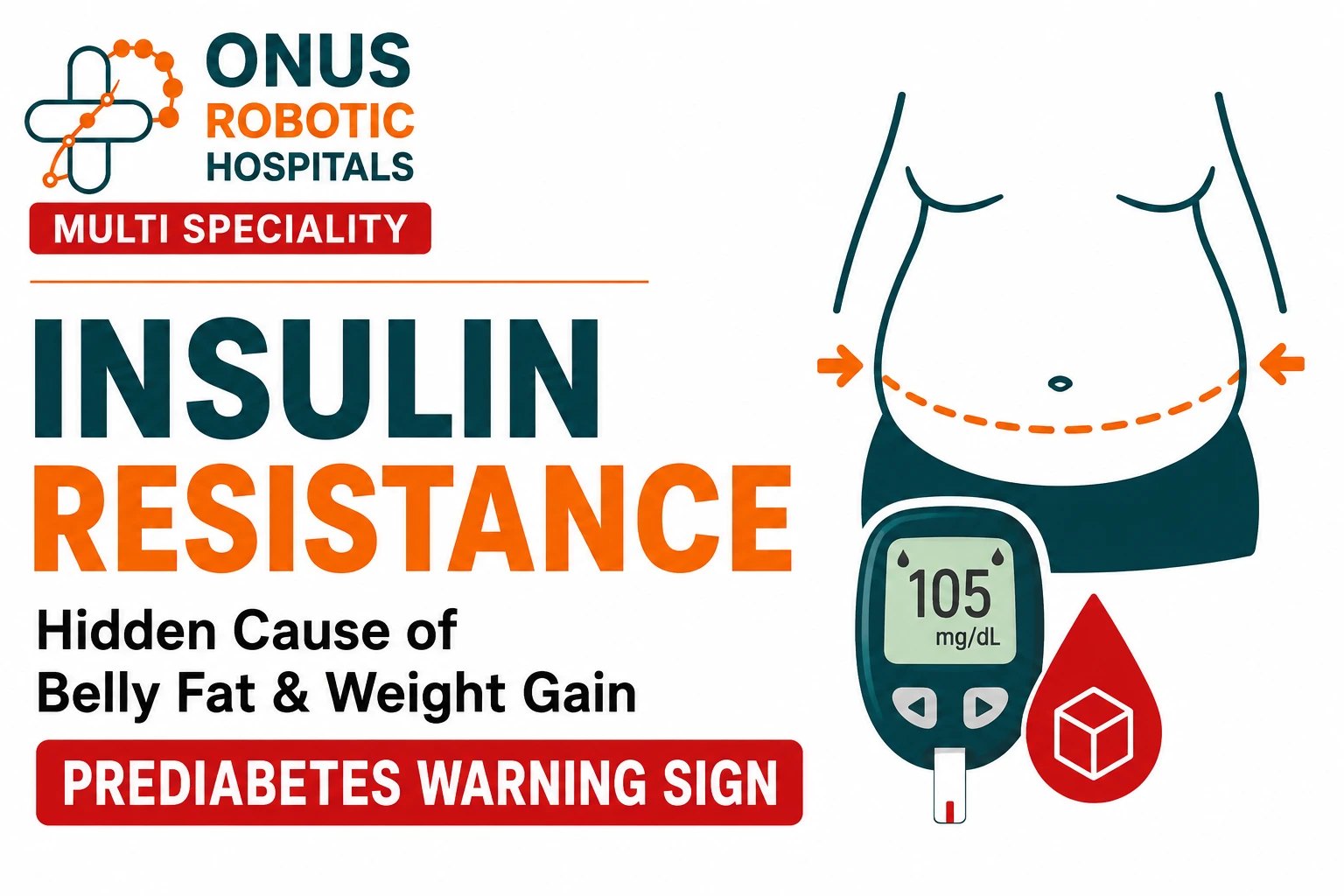
One of the most visible signs of insulin resistance is increasing abdominal fat.
When insulin levels remain elevated:
- Fat storage increases
- Fat burning becomes less efficient
- Excess calories are more likely to be stored around the abdomen
This type of fat is known as visceral fat, which surrounds internal organs and is considered more harmful than fat located under the skin.
Visceral fat is strongly linked to:
- Diabetes
- Fatty liver disease
- Heart disease
- Metabolic syndrome
This is why a growing waistline should never be ignored.
The Connection Between Insulin Resistance and Weight Gain
Many individuals with insulin resistance find it difficult to lose weight even when following conventional diet plans.
High insulin levels can:
- Increase hunger
- Trigger food cravings
- Promote fat storage
- Reduce fat breakdown
- Cause energy fluctuations
As a result, people may feel hungry more often and struggle with repeated weight gain.
Weight gain and insulin resistance often create a vicious cycle, where each condition worsens the other.
How Insulin Resistance Leads to Prediabetes
Prediabetes is a warning stage that occurs before Type 2 diabetes develops.
In the early stages of insulin resistance:
- The pancreas produces extra insulin
- Blood sugar may remain normal
Over time:
- The pancreas becomes overworked
- Blood sugar starts rising
- Prediabetes develops
Without intervention, many people with prediabetes eventually progress to Type 2 diabetes.
The good news is that insulin resistance and prediabetes can often be improved through lifestyle changes and appropriate medical care.
Common Signs of Insulin Resistance
Many people have insulin resistance without realizing it.
Some common warning signs include:
Increased Belly Fat
A growing waistline despite no major change in eating habits.
Difficulty Losing Weight
Weight loss becomes increasingly challenging.
Sugar Cravings
Frequent cravings for sweets and high-carbohydrate foods.
Fatigue After Meals
Feeling sleepy or tired after eating.
Increased Hunger
Needing to eat frequently despite consuming adequate calories.
Dark Skin Patches
Dark, velvety skin around the neck, underarms, or groin (acanthosis nigricans).
Elevated Blood Sugar
Prediabetes or rising fasting glucose levels.
High Triglycerides
Abnormal blood fat levels may indicate metabolic dysfunction.
Who Is at Risk?
Several factors increase the likelihood of developing insulin resistance.
Overweight and Obesity
Particularly excess abdominal fat.
Physical Inactivity
A sedentary lifestyle reduces insulin sensitivity.
Family History
Genetics can influence metabolic risk.
Poor Sleep
Insufficient sleep negatively affects hormone balance.
Chronic Stress
Long-term stress can worsen insulin resistance.
Unhealthy Diet
Frequent consumption of highly processed foods and sugary beverages.
PCOS
Women with Polycystic Ovary Syndrome commonly experience insulin resistance.
How Is Insulin Resistance Diagnosed?
There is no single test that perfectly diagnoses insulin resistance.
Doctors may use:
Blood Sugar Testing
- Fasting blood sugar
- HbA1c
Insulin Levels
In selected cases, fasting insulin measurements may be useful.
Lipid Profile
To evaluate cholesterol and triglycerides.
Liver Function Tests
To assess fatty liver disease.
Waist Circumference
Abdominal obesity is a key marker of metabolic risk.
Clinical Assessment
Symptoms, medical history, and physical examination remain important.
Can Insulin Resistance Be Reversed?
In many cases, insulin resistance can be significantly improved.
The earlier it is identified, the greater the opportunity to prevent complications.