Introduction
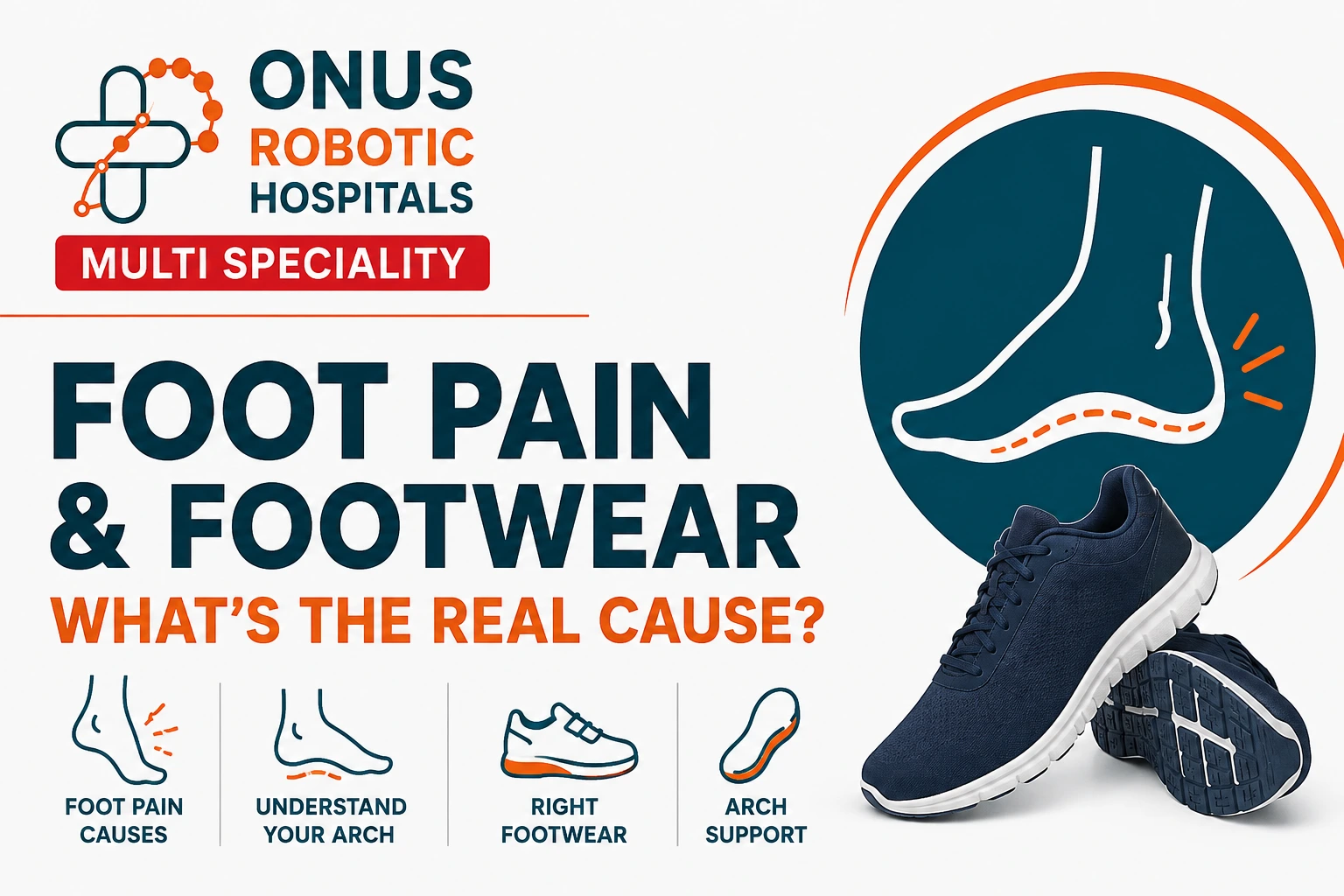
Foot pain is one of the most common orthopedic complaints affecting people of all ages. Many individuals experience discomfort while walking, standing for long periods, exercising, or even while wearing their regular footwear.
Often, people assume that the pain is caused solely by their shoes. While poorly fitting footwear can certainly contribute to foot discomfort, the real cause may sometimes lie deeper within the structure and mechanics of the foot itself.
Conditions such as flat feet, high arches, abnormal foot alignment, and altered walking patterns can place excessive stress on different parts of the foot, leading to persistent pain and discomfort.
In this article, Dr. Balraj Naidu, Robotic Orthopedic Surgeon, explains the common causes of foot pain, the role of footwear, and why proper orthopedic evaluation is important for long-term relief.
Why Does Foot Pain Occur?
The human foot is a complex structure consisting of:
- 26 bones
- Multiple joints
- Ligaments
- Tendons
- Muscles
- Nerves
These structures work together to support body weight, absorb shock, and maintain balance during movement.
When any part of this system is overloaded or improperly aligned, pain can develop.
Is Footwear Always the Cause?
Not necessarily.
Many people experience pain only after wearing certain shoes and assume the footwear is the sole reason.
While footwear can contribute to symptoms, it may simply be revealing an underlying foot problem that already exists.
Poor footwear may:
- Increase pressure on the foot
- Reduce arch support
- Alter walking mechanics
- Aggravate existing structural abnormalities
Therefore, changing shoes alone may not always solve the problem.
Common Signs That Footwear May Be Contributing to Foot Pain
You may notice:
Pain After Wearing Shoes
Pain begins after wearing footwear for a period of time.
Discomfort During Walking
Walking feels different or uncomfortable.
Need to Remove Shoes Frequently
Some people feel relief immediately after removing their footwear.
Pressure Points
Pain develops at specific areas where shoes apply pressure.
Increased Fatigue
Feet become tired more quickly than usual.
These symptoms may indicate either improper footwear or an underlying foot condition.
Understanding the Foot Arch
One of the most important structures in the foot is the arch.
The arch acts as a natural shock absorber and helps distribute body weight during movement.
There are generally three types of foot arches:
- Normal Arch
- Flat Foot (Low Arch)
- High Arch
Each type affects walking mechanics differently.
Flat Foot (Pes Planus)
Flat foot occurs when the arch of the foot is reduced or absent.
As a result, more of the sole comes into contact with the ground.
Possible Symptoms
- Foot pain
- Heel pain
- Ankle discomfort
- Fatigue while walking
- Difficulty standing for long periods
Why It Causes Problems
Flat feet may alter body alignment and increase stress on:
- Feet
- Ankles
- Knees
- Hips
- Lower back
Some people with flat feet experience no symptoms, while others develop significant discomfort.
High Arch Foot (Pes Cavus)
A high arch is the opposite of flat foot.
The arch is unusually elevated, reducing the amount of foot surface contacting the ground.
Common Symptoms
- Foot pain
- Pressure under the heel
- Pain beneath the ball of the foot
- Instability while walking
- Increased risk of ankle sprains
Why It Happens
A high arch may reduce the foot’s ability to absorb shock efficiently, causing excessive pressure on certain areas.
Abnormal Foot Structure and Alignment
Foot pain can also develop due to structural abnormalities.
Examples include:
- Uneven weight distribution
- Toe deformities
- Joint misalignment
- Differences in foot shape
Even minor structural variations can significantly affect walking mechanics over time.
The Role of Walking Pattern (Gait)
Your walking pattern, also known as gait, influences how force is distributed across the foot.
Some people naturally:
- Roll their feet inward excessively (overpronation)
- Roll outward excessively (supination)
- Walk unevenly
- Place excessive pressure on certain foot regions
Abnormal gait patterns may contribute to:
- Foot pain
- Heel pain
- Ankle pain
- Knee pain
- Hip discomfort
This is why gait analysis can be valuable during orthopedic evaluation.
Why Proper Footwear Matters
Appropriate footwear can support healthy foot function and reduce unnecessary stress.
Good footwear should:
Provide Adequate Support
Proper support helps maintain foot alignment.
Fit Correctly
Shoes should neither be too tight nor too loose.
Offer Cushioning
Shock absorption reduces stress on joints and soft tissues.
Match Your Activity Level
Walking shoes, running shoes, sports footwear, and work shoes have different design requirements.
Accommodate Foot Structure
People with flat feet or high arches may require different footwear features.
What Is Arch Support?
Arch support refers to devices or shoe features designed to support the natural arch of the foot.
Depending on the individual’s condition, arch support may help:
- Improve comfort
- Reduce pressure
- Improve weight distribution
- Enhance walking mechanics
However, arch support is not necessary for everyone.
The decision should be based on professional assessment rather than self-diagnosis.
When Should You Seek Orthopedic Evaluation?
Consult an orthopedic specialist if you experience:
- Persistent foot pain
- Difficulty walking
- Recurrent discomfort while wearing shoes
- Pain that affects daily activities
- Foot fatigue
- Balance problems
- Heel pain
- Arch-related discomfort
Ignoring symptoms may allow the condition to worsen over time.
How Is Foot Pain Evaluated?
An orthopedic assessment may include:
Clinical Examination
Evaluation of:
- Foot shape
- Alignment
- Arch structure
- Areas of tenderness
Gait Analysis
Observation of walking mechanics.
Foot Arch Assessment
Determining whether the arch is normal, low, or high.
Imaging Studies
X-rays or other investigations may be recommended when necessary.
The goal is to identify the actual cause of pain rather than simply treating symptoms.
Treatment Options
Treatment depends on the underlying cause.
Footwear Modification
Appropriate shoe selection may improve comfort and support.
Arch Support
Selected patients may benefit from customized or prefabricated support devices.
Physiotherapy
Exercises may help strengthen foot and ankle muscles.
Activity Modification
Reducing activities that worsen symptoms may be recommended temporarily.
Medical Treatment
Pain management and other interventions may be considered when necessary.
A personalized treatment plan usually provides the best results.
Preventing Foot Pain
You can reduce the risk of foot problems by:
- Wearing properly fitted footwear
- Maintaining a healthy body weight
- Staying physically active
- Replacing worn-out shoes
- Avoiding prolonged standing when possible
- Seeking early evaluation for persistent symptoms
Early intervention often prevents more serious problems from developing.
Conclusion
Foot pain is not always caused by footwear alone. Flat feet, high arches, abnormal foot structure, and altered walking patterns can all contribute to discomfort and walking difficulties.
While choosing the right footwear is important, persistent foot pain should not be ignored. A proper orthopedic evaluation can identify the underlying cause and help determine whether footwear modification, arch support, physiotherapy, or other treatments are needed.
Dr. Balraj Naidu emphasizes that understanding your foot structure and walking pattern is the key to selecting the right footwear and achieving lasting relief from foot pain.
For Appointments:
Dr. Balaraju Naidu, Robotic Orthopedic Surgeon
ONUS Robotic Hospitals – Hyderabad
👉 link: contact-us or book-appointment