Flat Foot in Adults – Causes, Symptoms, and the Best Treatment Options – By Dr. Balaraju Naidu, Robotic Orthopedic Surgeon, ONUS Robotic Hospitals
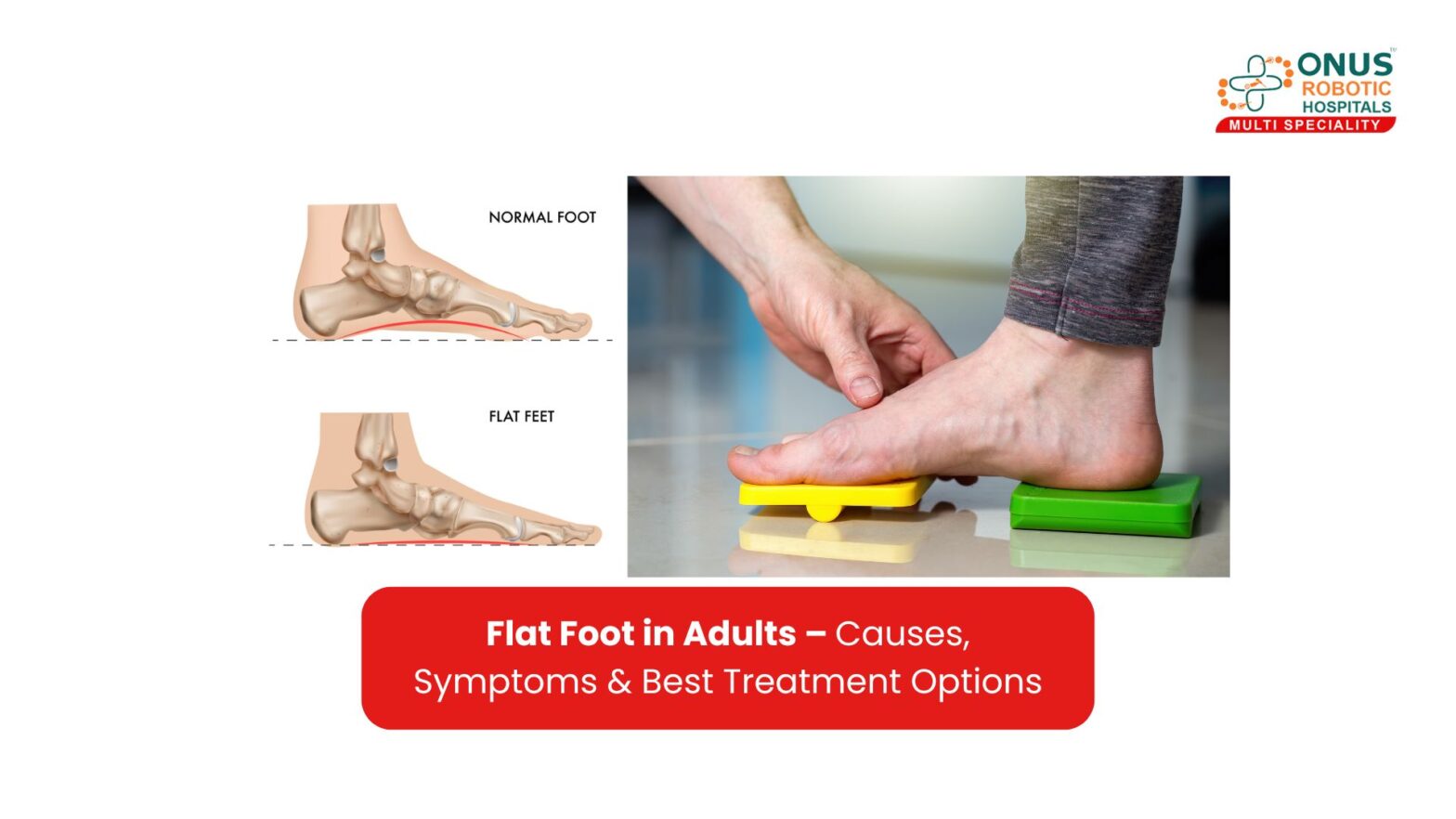
Flat foot (also called “fallen arches”) is a common condition where the arch of the foot collapses, causing the entire foot to make contact with the ground. While many children outgrow flat feet, some adults develop it later in life due to tendon weakness, injury, or lifestyle factors.
This blog explains the causes, symptoms, and treatment options for flat foot in adults — and when you should seek medical care.
⭐ What Is Flat Foot?
The foot arch acts like a natural spring absorber. It supports your weight while walking and keeps your posture aligned.
When the arch collapses:
- Your foot loses support
- Walking becomes painful
- Your knees, hips, and lower back compensate
- Over time, posture becomes affected
⭐ Types of Flat Foot
1. Flexible Flat Foot
- Arch appears when foot is relaxed
- Disappears when standing
- Most common and usually mild
2. Rigid Flat Foot
- No arch in any position
- Often painful
- May indicate structural issues
3. Adult-Acquired Flat Foot (Posterior Tibial Tendon Dysfunction – PTTD)
- Occurs due to tendon degeneration
- Common after age 30–40
- If untreated, can progress to severe deformity
⭐ Common Causes of Flat Foot in Adults
Flat foot can develop gradually or suddenly. Causes include:
- Weak posterior tibial tendon
- Foot or ankle injury
- Diabetes
- Obesity
- Rheumatoid arthritis
- Long periods of standing
- Pregnancy
- Family history
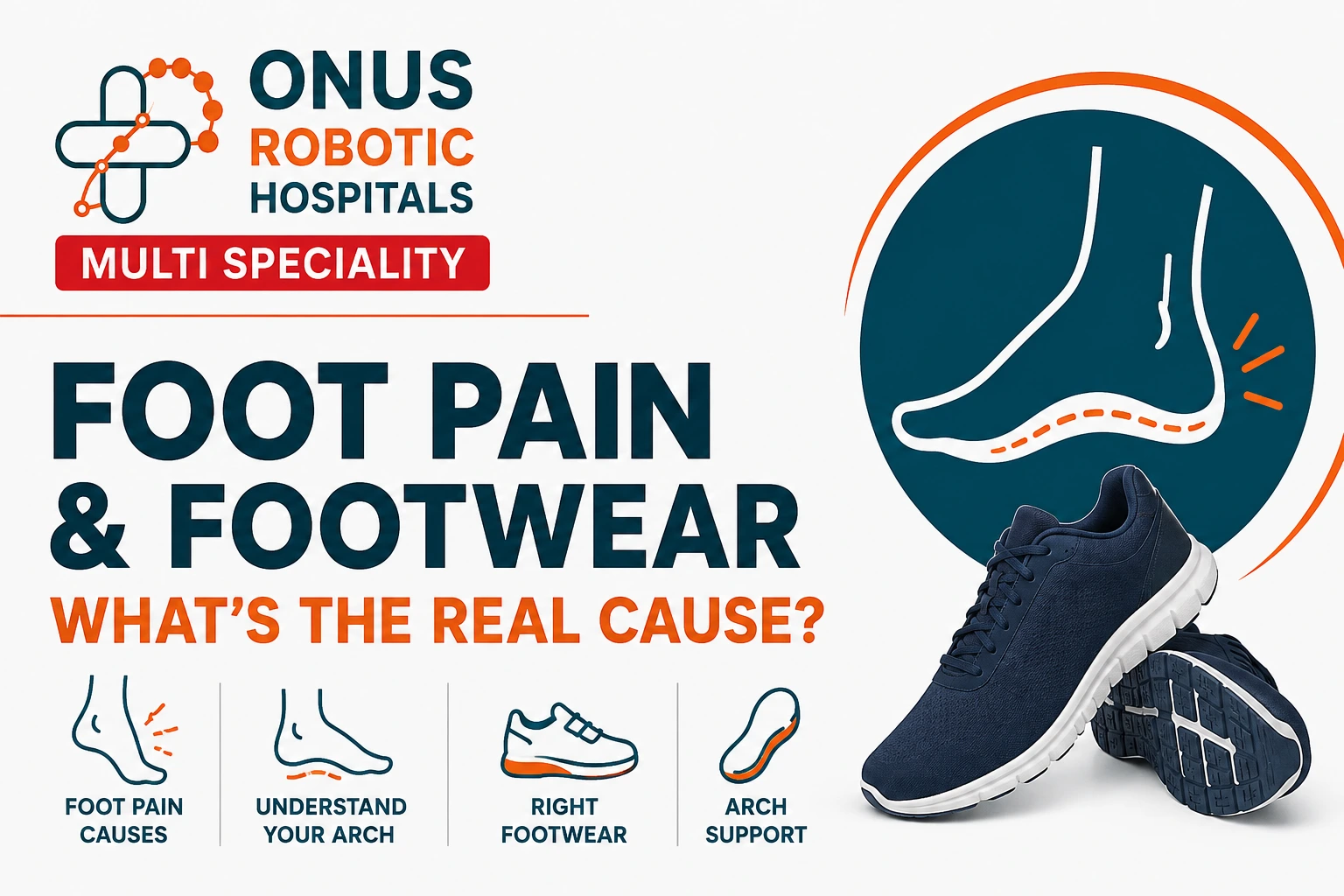
- Poor footwear
⭐ Symptoms of Flat Foot
You may experience:
- Pain along the inner ankle
- Swelling around the foot
- Difficulty standing for long periods
- Uneven shoe wear
- Foot rolls inward while walking
- Knee and lower back pain
- Reduced ability to run or climb stairs
If the pain increases or flat foot appears suddenly, immediate medical evaluation is recommended.
⭐ When to See a Doctor?
Seek medical care if you notice:
- Persistent or worsening pain
- Inability to walk long distances
- Swelling along the tendon
- Flat foot developing after age 30
- Pain in knees or lower back
- Difficulty balancing
⭐ Diagnosis at ONUS Robotic Hospitals
Doctors may use:
- Physical examination
- Gait analysis
- X-rays
- MRI (if tendon damage suspected)
⭐ Treatment Options for Flat Foot
1. Footwear Modification
- Soft yet supportive shoes
- Avoid flat chappals or thin soles
2. Orthotic Insoles
- Custom arch supports relieve pressure on the tendons
- Improves foot alignment and walking
3. Physiotherapy
Recommended exercises:
- Arch strengthening
- Calf stretching
- Balance training
- Tendon strengthening
4. Medications
- Anti-inflammatories for pain relief
5. Weight Management
Reduces pressure on foot arches.
6. Surgical Correction
Considered only if:
- Severe deformity
- Tendon rupture
- Failure of conservative treatment
Surgery aims to restore alignment and improve mobility.
Flat foot in adults is treatable — especially when detected early. With proper footwear, orthotics, physiotherapy, and lifestyle changes, most people recover without surgery.
If you experience foot pain or difficulty walking, visit ONUS Robotic Hospitals for expert evaluation and treatment options.
📞 For Appointments:
ONUS Robotic Hospitals – Hyderabad