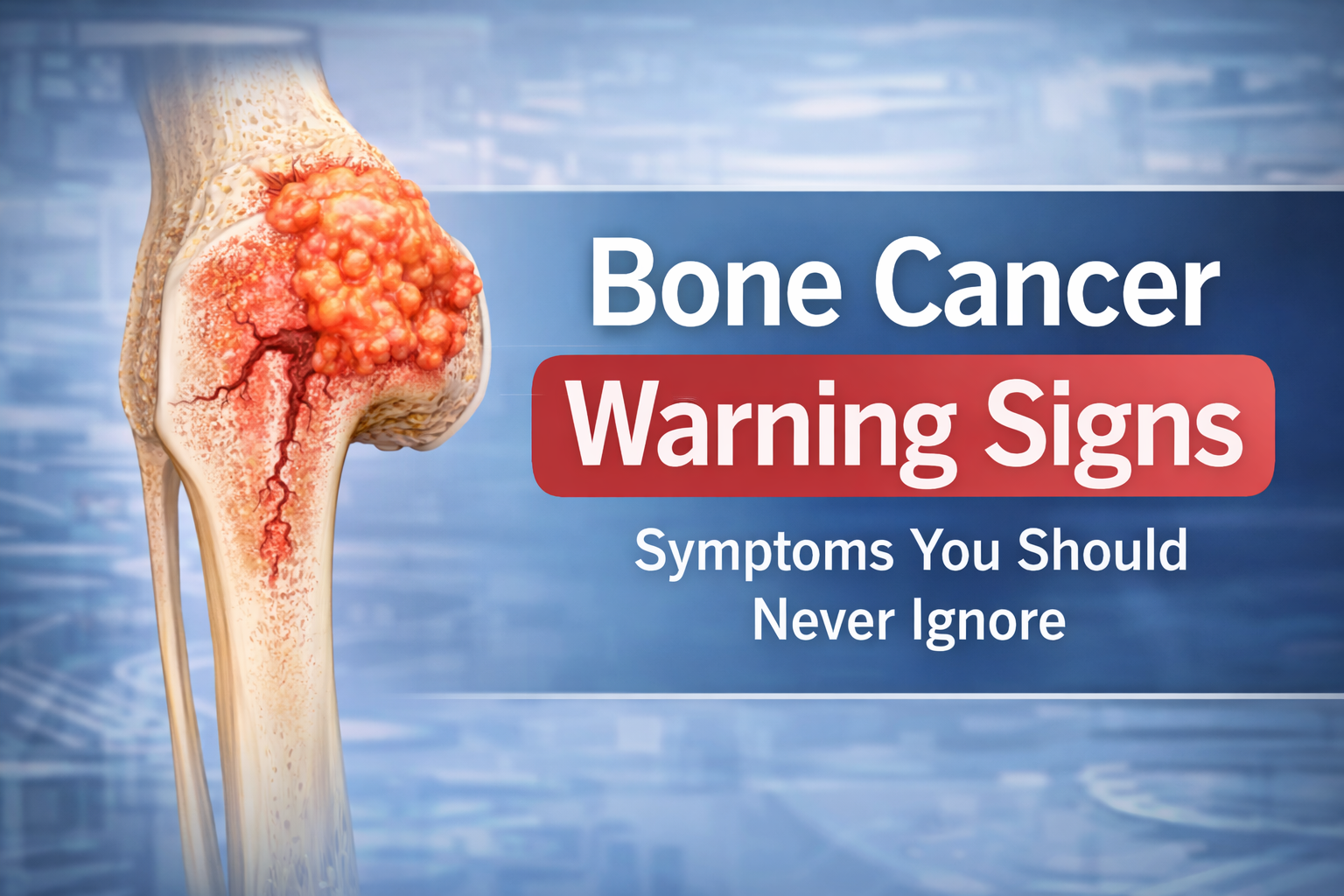
Bone Cancer Warning Signs: Symptoms You Should Never Ignore: By Dr. Balaraju Naidu, Robotic Orthopedic Surgeon, ONUS Robotic Hospitals
Bone cancer is rare, but when it occurs, early diagnosis is critical. Unfortunately, many patients ignore early symptoms, confusing them with arthritis, muscle strain, or sports injuries. Delayed diagnosis can reduce treatment options and affect survival.
Recognizing the early warning signs of bone cancer can lead to timely diagnosis, limb-saving treatment, and better outcomes.
What Is Bone Cancer (Osseous Cancer)?
Bone cancer occurs when abnormal cells grow uncontrollably within bone tissue. It can be classified into:
-
Primary bone cancer – originates in the bone
-
Secondary bone cancer – spreads to bone from other cancers (metastasis)
Early detection often allows limb-preserving surgery and targeted treatment.
Common Warning Signs of Bone Cancer
1. Persistent Bone Pain (Most Common Symptom)
Bone cancer pain:
-
Begins mildly or intermittently
-
Gradually becomes constant, deep, and intense
-
Often worsens at night or during rest
-
Does not improve with painkillers or physiotherapy
⚠️ Bone pain lasting more than 2–3 weeks without injury must be evaluated.
2. Swelling or a Palpable Lump
-
Swelling may appear weeks after pain begins
-
The area may feel hard, warm, or tender
-
Common locations:
-
Knee
-
Hip
-
Shoulder
-
Upper arm
-
Thigh or leg
-
🚨 Swelling over a bone without trauma is never normal.
3. Pathological (Unexplained) Fractures
Bones weakened by cancer may fracture:
-
With minimal trauma
-
During daily activities
-
Without any obvious injury
These fractures often indicate advanced disease.
4. Reduced Mobility or Limping
Tumors near joints can cause:
-
Joint stiffness
-
Difficulty walking
-
Limping
-
Reduced range of motion
👶 In children, unexplained limping should always be investigated.
5. General (Systemic) Symptoms
In advanced stages, patients may experience:
-
Persistent fatigue
-
Fever without infection
-
Unexplained weight loss
-
Loss of appetite
These signs suggest progressive or spreading disease.
Who Is at Higher Risk?
Bone cancer risk is higher in:
-
Children & teenagers (osteosarcoma)
-
Adults over 40 years (chondrosarcoma)
-
Cancer survivors (especially after radiation therapy)
-
People with genetic bone disorders
-
Patients with Paget’s disease of bone

How Is Bone Cancer Diagnosed?
Early diagnosis involves:
-
X-rays (initial clue)
-
MRI or CT scan (tumor extent)
-
Bone scan / PET scan
-
Biopsy (definitive diagnosis)
Modern imaging helps determine whether limb preservation is possible.
Treatment Options for Bone Cancer
Treatment depends on:
-
Tumor type
-
Location
-
Stage
-
Patient age and health
Common treatments include:
-
Limb-salvage surgery
-
Robotic-assisted orthopedic tumor surgery
-
Chemotherapy
-
Radiation therapy (selected cases)
👉 With early diagnosis, amputation can often be avoided.
When Should You See a Doctor?
Seek urgent medical care if you have:
-
Bone pain lasting more than 2 weeks
-
Swelling over a bone
-
Night pain without injury
-
Unexplained fractures
-
Persistent limping or stiffness
Key Takeaway
Persistent bone pain is never normal.
Ignoring early symptoms can delay diagnosis and reduce treatment options.
Early medical evaluation:
-
Saves limbs
-
Improves survival
-
Reduces complications
-
Enables minimally invasive, advanced treatment
For Appointments:
Dr. Balaraju Naidu, Robotic Orthopedic Surgeon
ONUS Robotic Hospitals – Hyderabad
👉 Button link: contact-us or book-appointment
Hashtags:-
#BoneCancer
#OrthopedicOncology
#BoneTumor
#CancerAwareness
#EarlyDiagnosis
#CancerSymptoms
#OrthopedicCare
#LimbSalvage
#RoboticSurgery
#AdvancedOrthopedics
#CancerCare