Bone Health After Menopause — Why It Declines & How to Protect It- By Dr. Balaraju Naidu, Robotic Orthopedic Surgeon, ONUS Robotic Hospitals
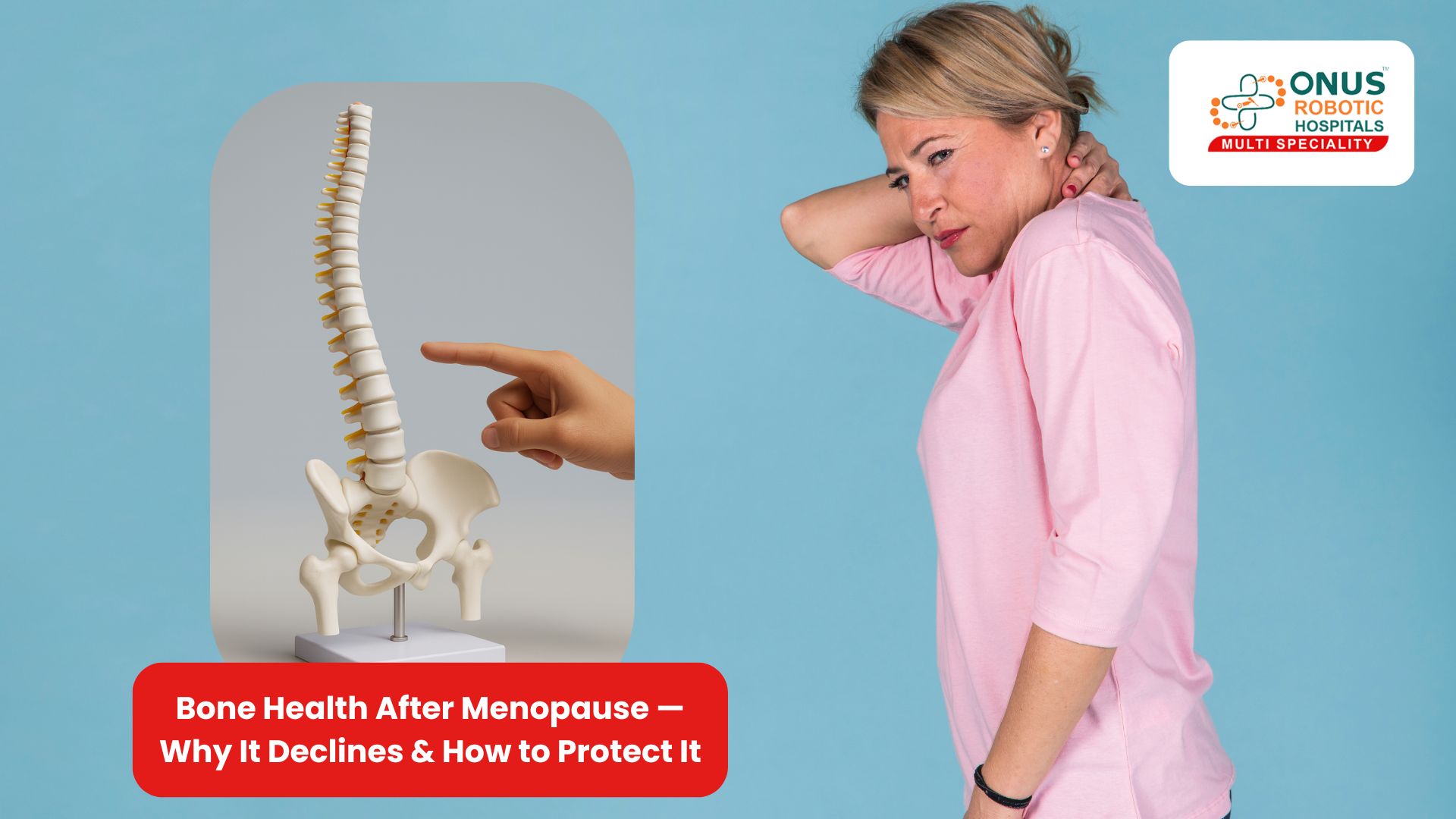
Menopause brings many hormonal changes, but one of the most significant — and most ignored — is the impact on bone health. As estrogen levels drop, bone density reduces rapidly, making women more prone to osteoporosis and fractures. Understanding this connection can help women take timely steps to protect their bones.
Why Menopause Affects Bones
Estrogen keeps bones strong by maintaining calcium absorption and preventing bone breakdown. When menopause begins, estrogen levels fall drastically. This makes bone loss faster than bone formation, leading to weak, porous bones (osteoporosis).
Within just 5 years after menopause, a woman may lose 15–20% of her bone mass.
Warning Signs of Weak Bones
Often, osteoporosis shows no symptoms until a fracture occurs. But some early signs include:
- Frequent back or neck pain
- Fragile or brittle nails
- Loss of height
- Stooped posture
- Fractures from minor injuries
- Reduced grip strength
Essential Tests for Bone Health
Women above 40 should undergo a bone health evaluation that includes:
- DEXA Scan: Gold-standard test for bone density
- Vitamin D levels: Deficiency is extremely common in India
- Serum Calcium: For mineral balance
- Thyroid Test: Thyroid disorders worsen bone loss
- Bone Markers: Assess rate of bone breakdown
Early detection can prevent disability and long-term complications.
Foods for Strong Bones After Menopause
Nutrition plays a crucial role in bone strength.
Calcium-Rich Foods:
- Dairy: milk, curd, paneer
- Ragi
- Spinach & methi
- Almonds, sesame seeds
- Fish with soft bones (sardines)
Vitamin D:
- Sun exposure
- Supplements when recommended
Protein:
Adequate protein supports bone structure and muscle strength. Include eggs, legumes, tofu, chicken, and dairy.
Magnesium & Vitamin K2:
These help move calcium into bones and improve bone mineralization.
Exercises That Improve Bone Density
Activity is essential to slow bone loss.
Weight-bearing exercises:
Walking, jogging, stair climbing
Strength training:
Resistance bands, dumbbells, bodyweight exercises
Balance training:
Yoga, Pilates, Tai Chi — reduces fall risk
Aim for:
30 minutes/day × 5 days/week
Treatment Options for Osteoporosis
If diagnosed, doctors may recommend:
- Oral medications to reduce bone loss
- Injection therapy (once in 6–12 months)
- Hormone replacement therapy (in selected women)
- Calcium & Vitamin D supplements
- Physiotherapy to build strength & prevent falls
- Lifestyle modifications
Timely treatment can reduce fracture risk by up to 70%.
Preventive Tips for All Women After 40
- Avoid smoking & alcohol
- Limit aerated drinks
- Reduce excessive salt
- Stay active
- Maintain a healthy weight
- Sleep 7–8 hours
Menopause is natural, but bone loss doesn’t have to be. With regular screening, proper nutrition, the right exercises, and medical guidance, women can maintain strong bones well into their later years. ONUS Robotic Hospitals provides comprehensive bone health evaluations, advanced treatments, and personalized menopause care.
📞 For Appointments:
ONUS Robotic Hospitals – Hyderabad