Cement Failure vs Bone–Cement Interface Failure – A Crucial Difference After Joint ReplacementP: By Dr. Balaraju Naidu, Robotic Orthopedic Surgeon, ONUS Robotic Hospitals
Causes, Symptoms, Diagnosis & Prevention
Joint replacement surgery—whether knee replacement, hip replacement, or shoulder replacement—has significantly improved the quality of life for patients suffering from chronic pain and mobility limitations. These procedures are designed to provide long-term pain relief and restore function.
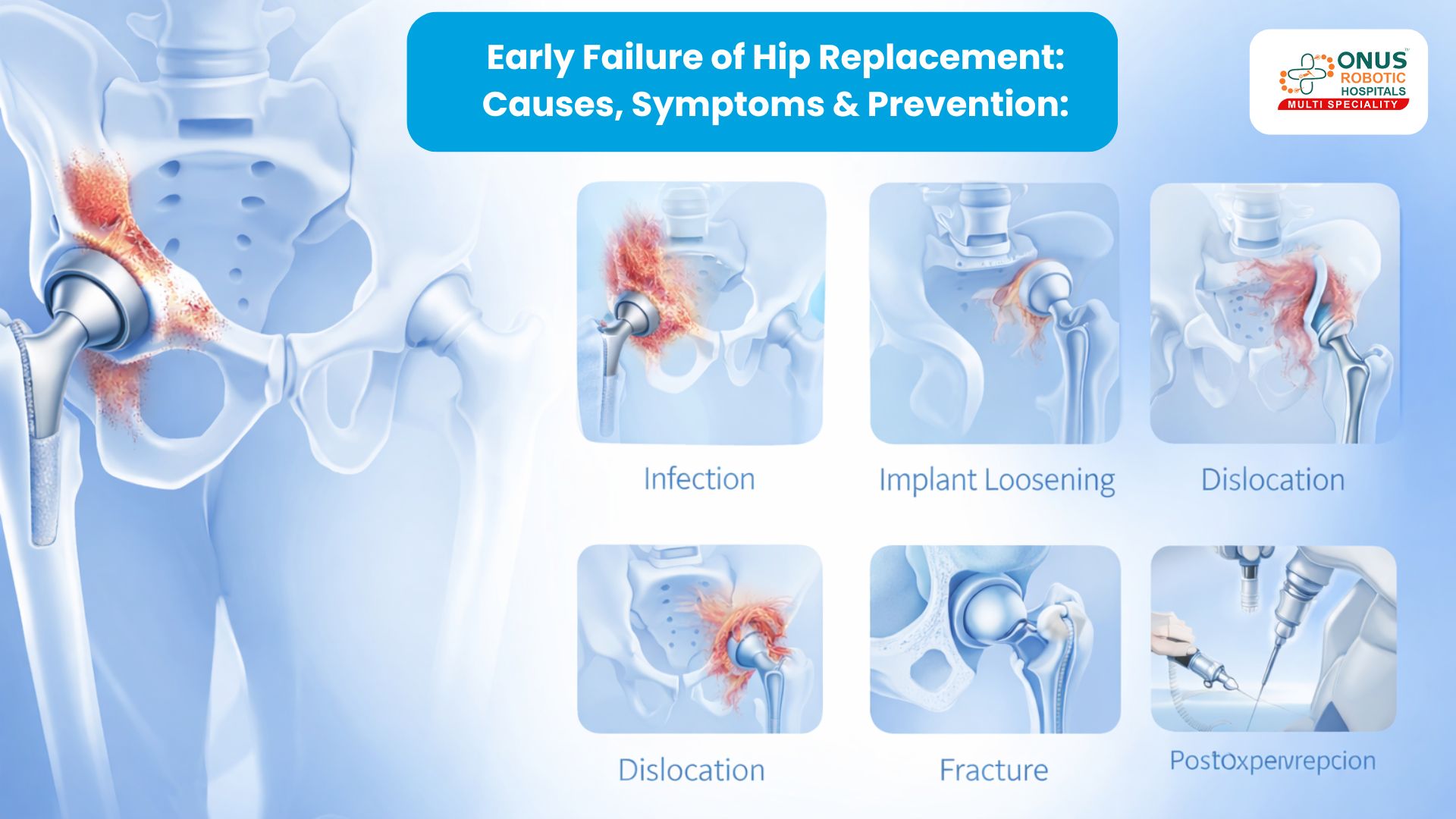
However, in a small percentage of patients, the implanted joint may loosen over time, leading to pain, stiffness, and difficulty walking. Two commonly misunderstood causes of implant loosening are cement failure and bone–cement interface failure. Although they sound similar, they are distinct problems with different causes, imaging findings, and treatments.
Understanding this distinction is critical for accurate diagnosis and successful revision surgery.
Cemented vs Cementless Joint Replacement
In cemented joint replacement, an orthopedic bone cement called polymethylmethacrylate (PMMA) is used to fix the implant securely to the bone. This cement provides immediate stability and is commonly used in elderly patients or those with poor bone quality.
Implant failure in cemented joints can occur in two ways:
-
Within the cement itself
-
At the interface between the cement and the bone
What Is Cement Failure?
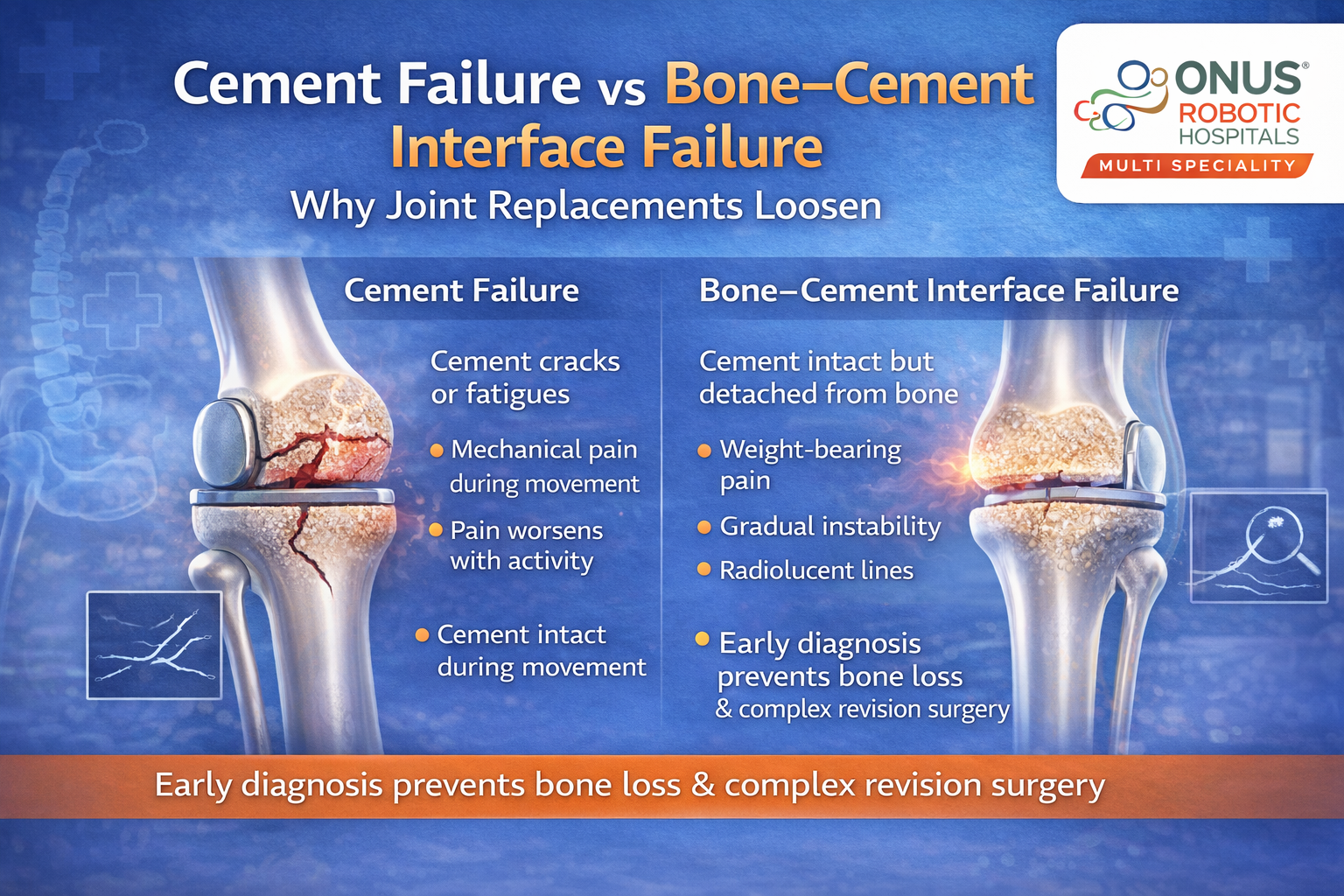
Cement failure refers to cracking, fatigue, or breakdown of the bone cement over time.
Why Does Cement Failure Occur?
-
Repeated mechanical stress over many years
-
Poor cement mixing or curing
-
Improper implant alignment
-
High body weight or high-impact activity
-
Older cementing techniques
With time, microscopic cracks develop within the cement mantle, eventually leading to implant instability.
Symptoms of Cement Failure
Patients may experience:
-
Mechanical pain during movement
-
Progressive discomfort while walking or standing
-
Sensation of implant instability
-
Pain that improves with rest but worsens with activity
Imaging Findings
-
Cracks within the cement mantle
-
Implant micromotion
-
Progressive component migration on serial X-rays

What Is Bone–Cement Interface Failure?
In bone–cement interface failure, the cement itself remains structurally intact but loses its bond with the bone.
Why Does Bone–Cement Interface Failure Occur?
-
Poor bone quality (osteoporosis)
-
Inadequate cement penetration into bone
-
Infection (including low-grade or occult infection)
-
Bone resorption over time
-
Metabolic bone disorders
This results in loosening at the interface even though the cement appears intact on imaging.
Symptoms of Bone–Cement Interface Failure
Common signs include:
-
Pain during weight bearing
-
Gradual loss of joint stability
-
Difficulty walking long distances
-
Progressive worsening of symptoms over months or years
Imaging Findings
-
Radiolucent lines between bone and cement
-
Implant subsidence
-
Signs of bone loss around the implant
Key Differences at a Glance
| Feature | Cement Failure | Bone–Cement Interface Failure |
|---|---|---|
| Primary problem | Cement deterioration | Loss of cement–bone bond |
| Cement condition | Cracked or fatigued | Structurally intact |
| Pain type | Mechanical, activity-related | Weight-bearing pain |
| X-ray findings | Cement cracks | Radiolucent interface lines |
| Common cause | Mechanical stress | Poor bone quality or infection |
| Treatment approach | Revision with new cement | Bone reconstruction & refixation |
Why Early Diagnosis Is Important
Delayed diagnosis of implant loosening can result in:
-
Progressive bone loss
-
Increased risk of periprosthetic fractures
-
More complex revision surgeries
-
Reduced implant lifespan
-
Poor long-term functional outcomes
Early evaluation allows surgeons to intervene before significant bone damage occurs, improving surgical success.
Diagnosis & Evaluation
Accurate diagnosis involves:
-
Detailed clinical examination
-
Serial X-rays
-
CT scans for cement and bone assessment
-
Infection markers (ESR, CRP)
-
Advanced imaging when required
Robotic-assisted surgical planning plays a crucial role in identifying the exact failure pattern and planning precise revision surgery.
How Can These Failures Be Prevented?
Prevention begins at the time of primary surgery and continues long-term.
Key Preventive Strategies
-
Proper bone preparation
-
Modern cementing techniques
-
Accurate implant positioning
-
Early diagnosis and treatment of osteoporosis
-
Weight management
-
Regular post-surgery follow-ups
-
Early evaluation of new or worsening pain
Robotic-assisted joint replacement significantly improves implant alignment and cement distribution, reducing the risk of failure.
Final Takeaway
Not every painful joint replacement indicates implant failure. However, when failure does occur, identifying whether it is cement failure or bone–cement interface failure is essential.
Correct diagnosis leads to:
-
Targeted treatment
-
Safer revision surgery
-
Longer implant durability
-
Better patient outcomes
If you experience persistent pain, instability, or difficulty walking after joint replacement, consult an orthopedic specialist without delay.
For Appointments:
Dr. Balaraju Naidu, Robotic Orthopedic Surgeon
ONUS Robotic Hospitals – Hyderabad
👉 Button link: contact-us or book-appointment
Hashtags:-
#JointReplacement
#KneeReplacement
#HipReplacement
#ImplantLoosening
#CementFailure
#OrthopedicCare
#RoboticSurgery
#RevisionSurgery
#BoneHealth
#ONUSRoboticHospitals