Delayed Union vs Non-Union: Why Some Fractures Fail to Heal: By Dr. Balaraju Naidu, Robotic Orthopedic Surgeon, ONUS Robotic Hospitals
Delayed Union vs Non-Union: Why Some Fractures Fail to Heal
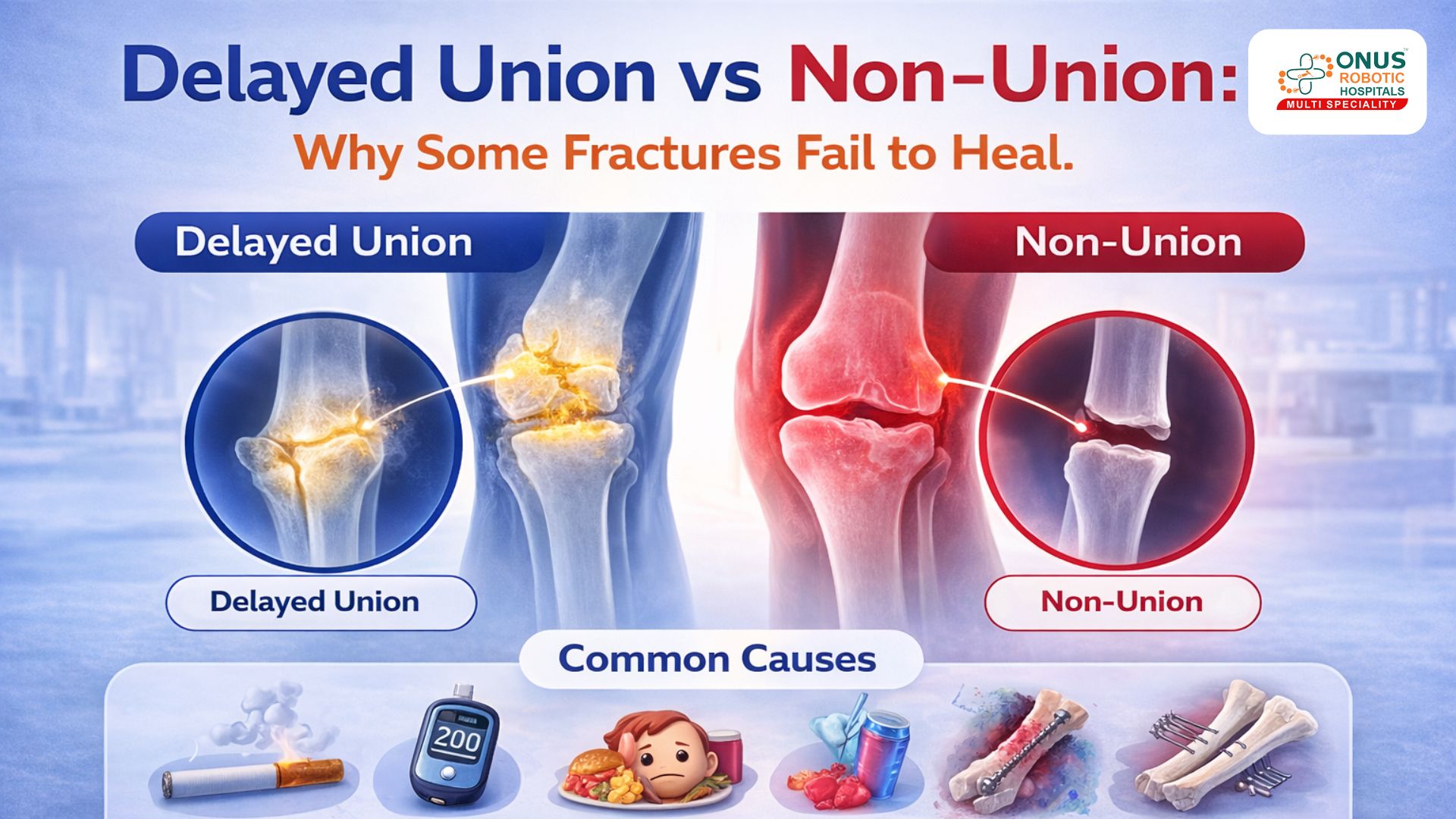
Most fractures heal naturally with proper treatment, rest, and nutrition. However, in some patients, bone healing does not progress as expected. Healing may become slow (delayed union) or may stop completely (non-union).
Understanding the difference between these two conditions is crucial for early intervention, preventing deformity, chronic pain, and long-term disability.
Normal Fracture Healing – A Quick Overview

Under normal circumstances, fractures heal in 6–12 weeks, depending on:
-
Age
-
Bone involved
-
Severity of injury
-
Blood supply
-
Overall health
Bone healing occurs in stages:
-
Inflammation
-
Callus formation
-
Bone consolidation
-
Remodeling
Problems arise when this process slows down or stops.
What Is Delayed Union?
Delayed union occurs when a fracture takes longer than expected to heal, but healing is still ongoing.

Key Features of Delayed Union
-
Healing is slow but progressing
-
X-rays show partial callus formation
-
Pain gradually reduces but does not disappear
-
Bone is not fully stable yet
Common Scenarios
-
Large bones like tibia or femur
-
Elderly patients
-
Patients with mild nutritional deficiencies
👉 Important: Delayed union can still heal completely with proper support and monitoring.
What Is Non-Union?
Non-union occurs when a fracture fails to heal completely, even after sufficient time (usually 6–9 months).

Key Features of Non-Union
-
No progression in healing
-
Persistent pain at fracture site
-
Abnormal movement or instability
-
No callus formation or broken implants on X-ray
-
Difficulty using the limb
Without treatment, non-union can lead to permanent disability.
Key Differences at a Glance
| Feature | Delayed Union | Non-Union |
|---|---|---|
| Healing progress | Slow but ongoing | Healing has stopped |
| Pain | Gradually reducing | Persistent or worsening |
| X-ray findings | Partial callus | No callus or gap persists |
| Stability | Improving | Unstable |
| Treatment | Often conservative | Usually surgical |
Why Do Some Fractures Fail to Heal?
Patient-Related Causes
-
Smoking (reduces blood flow and oxygen)
-
Diabetes (impairs tissue repair)
-
Poor nutrition (low protein, calcium, Vitamin D)
-
Advanced age
-
Alcohol abuse
-
Steroid medications
Injury-Related Causes
-
Severe trauma
-
Open fractures
-
Infection at fracture site
-
Poor blood supply (e.g., tibia, scaphoid)
Treatment-Related Causes
-
Inadequate immobilization
-
Poor fixation
-
Early weight-bearing
-
Implant failure or loosening
Treatment Options
Treatment for Delayed Union
Most cases can be managed without surgery:
-
Extended immobilization
-
Bone stimulation therapies
-
Nutritional optimization
-
Correction of vitamin deficiencies
-
Smoking cessation
-
Careful monitoring with serial X-rays
Treatment for Non-Union
Non-union usually requires active intervention:
-
Revision surgery with stronger fixation
-
Bone grafting (autograft or synthetic)
-
Biological enhancers (PRP, BMP)
-
Infection control (if present)
-
Advanced fixation techniques (rods, plates, external fixators)
Modern robotic-assisted orthopedic surgery improves alignment and healing outcomes.
When Should You See an Orthopedic Surgeon?
Seek medical advice if:
-
Pain persists beyond expected healing time
-
Fracture site feels unstable
-
Swelling or redness continues
-
X-rays show no healing progress
-
You cannot bear weight or use the limb normally
Dr. Balaraju Naidu, Robotic Orthopedic Surgeon
For Appointments :
ONUS Robotic Hospitals – Hyderabad
👉 Button link: contact-us or book-appointment
Hashtags:-
#FractureHealing #DelayedUnion #NonUnion #BoneHealth
#OrthopedicCare #BrokenBone #FractureRecovery #BoneHealing
#OrthopedicSurgeon #ONUSRoboticHospitals #InjuryCare
#MedicalAwareness #EarlyDiagnosis