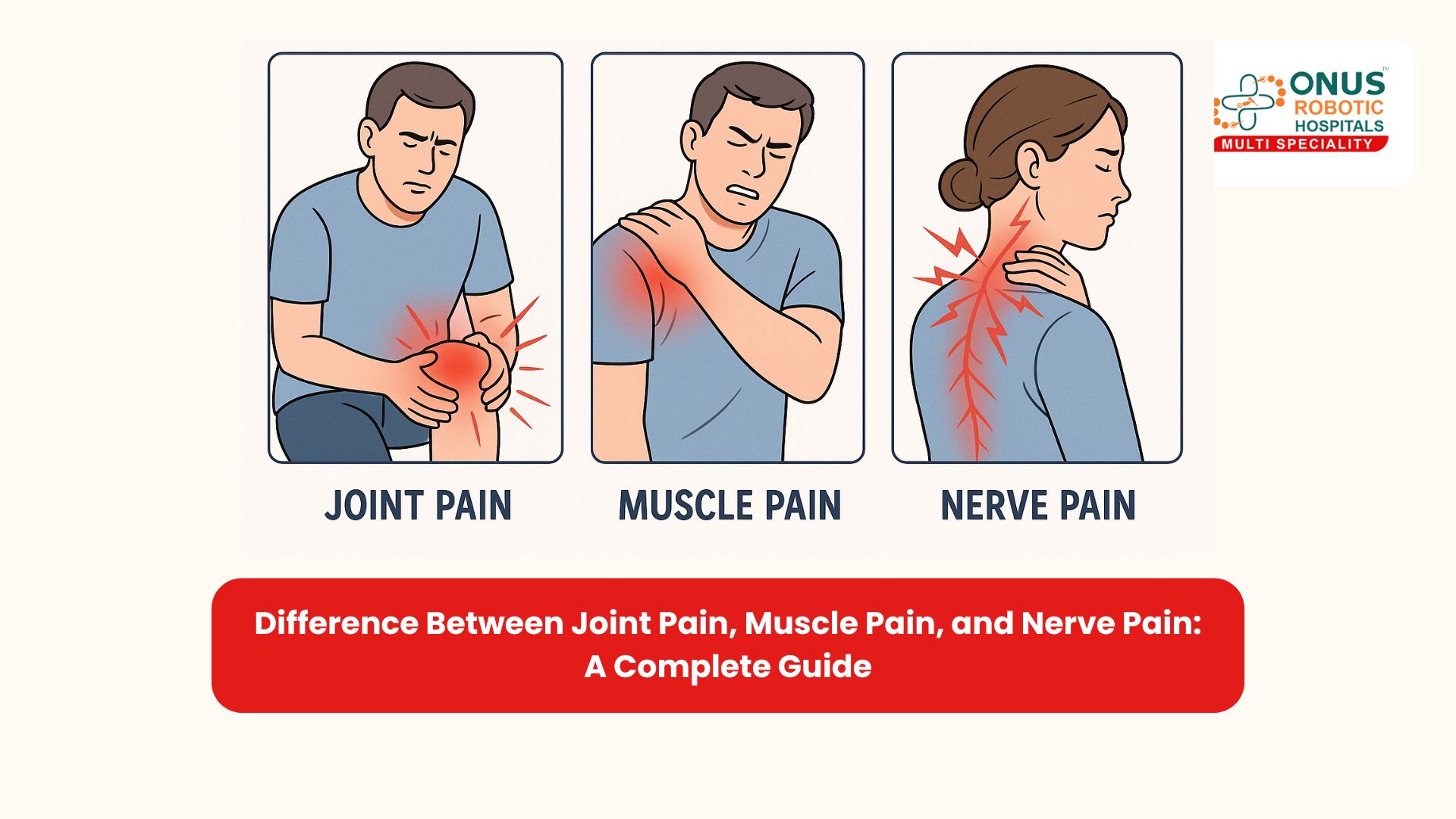
Difference Between Joint Pain, Muscle Pain, and Nerve Pain: A Complete Guide – By Dr. Balaraju Naidu, Robotic Orthopedic Surgeon, ONUS Robotic Hospitals
Pain is one of the most common reasons people visit a doctor. But not all pain is the same. Understanding whether your symptoms come from joints, muscles, or nerves helps you choose the right treatment and avoid complications.
In this guide, we break down the differences in how each type of pain feels, why it occurs, and when to seek help.
1. What Is Joint Pain?
Joint pain (arthralgia) occurs when the structures inside or around a joint are inflamed or damaged.
How joint pain feels:
- Deep aching or throbbing
- Pain increases with joint movement
- Morning stiffness (lasting >30 minutes in arthritis)
- Swelling, warmth, or redness
- Sometimes clicking or grinding (crepitus)
Common causes of joint pain:
- Osteoarthritis
- Rheumatoid arthritis
- Gout / uric acid issues
- Ligament or meniscal injuries
- Post-traumatic arthritis
When to worry:
Seek urgent evaluation if you have severe swelling, sudden redness, fever, or joint deformity.
2. What Is Muscle Pain?
Muscle pain (myalgia) arises from strain, overuse, inflammation, or injury.
How muscle pain feels:
- Dull, sore, tender to touch
- Tightness or stiffness
- Better with rest
- Worse with use
- Occasionally muscle spasms
Common causes:
- Over-exercising
- Poor posture (text neck, long sitting)
- Muscle strain or tear
- Vitamin D deficiency
- Viral infections
- Stress-related muscle tension
When to worry:
Seek help if you have severe weakness, swelling, or dark-colored urine (possible muscle breakdown).
3. What Is Nerve Pain?
Nerve pain (neuropathic pain) occurs when a nerve is compressed, irritated, or damaged.
How nerve pain feels:
This pain is very distinct:
- Sharp, shooting, or electric shock–like
- Burning or tingling
- Numbness in hands/feet
- Radiating pain down arms or legs
- Pins and needles
- Hypersensitivity to touch
Common causes:
- Sciatica (slipped disc compressing nerve)
- Carpal tunnel syndrome
- Diabetes-related neuropathy
- B12 deficiency
- Shingles
- Nerve entrapment in neck or back
When to worry:
Immediate medical attention is needed if you experience:
- Loss of bladder or bowel control
- Foot drop
- Sudden severe numbness
How to Know Which Type of Pain You Have
| Feature | Joint Pain | Muscle Pain | Nerve Pain |
| Pain Type | Deep, aching | Sore, tight, tender | Sharp, burning, electric |
| Triggers | Movement, weight-bearing | Activity; touch | Certain positions; radiates |
| Associated Signs | Swelling, stiffness | Fatigue, spasms | Tingling, numbness |
| Relief | Rest, anti-inflammatories | Rest, stretching | Treat underlying nerve compression |
Which Doctor Should You Consult?
- Joint Pain → Orthopedician / Rheumatologist
- Muscle Pain → Physio / Orthopedician
- Nerve Pain → Neurologist / Spine Specialist
Pain is your body’s warning signal. If the pain persists, spreads, or affects daily activities, get evaluated early. Correct diagnosis = faster recovery and fewer complications.
📞 For Appointments:
ONUS Robotic Hospitals – Hyderabad