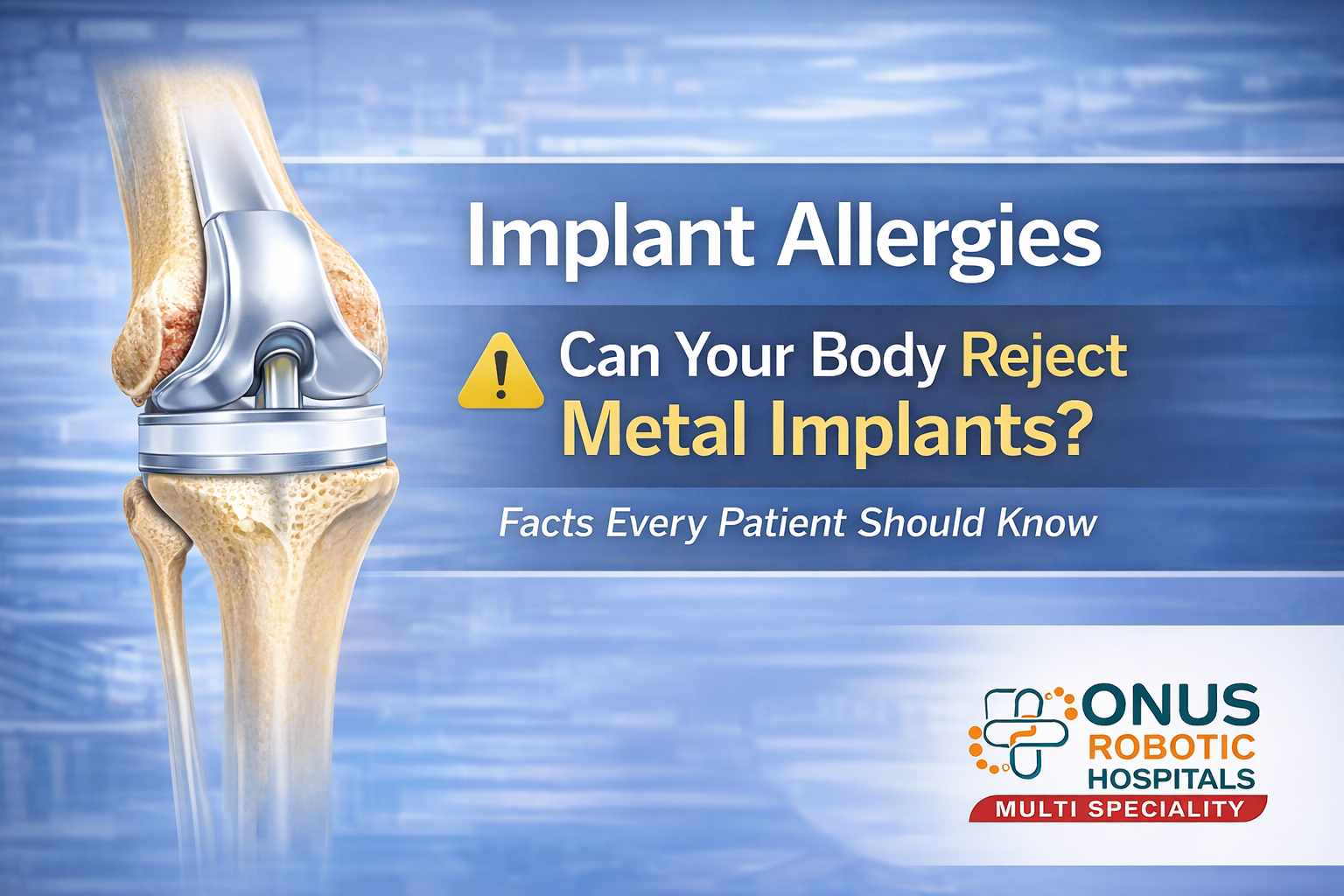
Implant Allergies – Can Your Body Reject Metal Implants?: By Dr. Balaraju Naidu, Robotic Orthopedic Surgeon, ONUS Robotic Hospitals
Orthopedic implants have transformed modern medicine, making joint replacement and fracture surgeries safer, durable, and life-changing. Every year, millions of patients worldwide regain mobility through knee replacements, hip replacements, spine implants, and fracture fixation devices.
However, one concern many patients raise is:
“What if my body is allergic to metal implants?”
This blog explains the truth about implant allergies, how common they are, symptoms to watch for, who actually needs testing, and how modern orthopedic practices prevent complications.
What Is an Implant Allergy?
An implant allergy is a rare immune reaction caused by sensitivity to metal ions released from orthopedic implants over time.
⚠️ Important clarification:
This is NOT the same as organ rejection. Orthopedic implants are non-living, inert materials, not transplanted organs.
In a small group of sensitive individuals, microscopic metal particles may trigger a localized inflammatory response, leading to discomfort or skin reactions.
Metals Commonly Used in Orthopedic Implants
Modern implants are engineered for maximum biocompatibility and longevity.
Common materials include:
-
Titanium alloys – Highly biocompatible, corrosion-resistant, and lightweight
-
Cobalt–chromium alloys – Extremely strong and wear-resistant
-
Stainless steel – Used in selected fracture fixation implants
-
Nickel – Present only in trace amounts (most common allergen)
📌 Key Fact:
Although nickel allergy is common with jewelry, true implant-related allergy is extremely rare.
Symptoms of Implant Allergy
Implant allergy symptoms are usually chronic and gradual, not sudden.
Possible symptoms include:
-
Persistent joint pain without signs of infection
-
Swelling or warmth around the implant
-
Skin rash or eczema near the surgical site
-
Stiffness or reduced joint movement
-
Early implant loosening without mechanical cause
⚠️ These symptoms may mimic infection or implant failure, making expert evaluation essential.

Who Should Be Tested for Implant Allergy?
Most patients do NOT require routine allergy testing.
Testing is considered only if a patient has:
-
Known metal allergy (especially severe nickel allergy)
-
Severe skin reactions to watches, belts, or jewelry
-
Previous unexplained implant failure
-
Persistent symptoms without infection or mechanical cause
✅ Routine allergy screening is NOT recommended for all patients
How Is Implant Allergy Diagnosed?
Diagnosis is made only after excluding infection and mechanical loosening.
Common Diagnostic Tests
1. Patch Testing
-
Performed by dermatologists
-
Detects contact allergy to metals
2. Blood-Based Metal Sensitivity Tests
-
Measures immune response to metal ions
-
Used selectively when clinically indicated
📌 Diagnosis must always be correlated with clinical findings and imaging studies.
Treatment & Prevention of Implant Allergy
Prevention
-
Use of hypoallergenic implants (titanium or ceramic-coated)
-
Proper implant selection
-
Detailed patient history before surgery
-
Precision techniques including robotic assistance
Treatment
-
Close monitoring in mild cases
-
Anti-inflammatory treatment if required
-
Revision surgery is very rare and done only in persistent severe cases
With proper planning, most patients never experience implant-related allergic reactions.
Can the Body Truly “Reject” a Metal Implant?
No.
Orthopedic implants do not cause immune rejection like organ transplants.
In rare cases, there may be localized hypersensitivity, not rejection.
Modern materials and robotic-assisted precision have made implants safer and longer-lasting than ever.

Key Takeaways
✔ Implant allergies are very rare
✔ Most patients tolerate metal implants without issues
✔ Modern materials are highly biocompatible
✔ Testing is required only in select high-risk patients
✔ Expert planning ensures safe, long-term outcomes
If you experience persistent pain, swelling, or skin reactions after surgery, consult an orthopedic specialist for proper evaluation.
For Appointments:
Dr. Balaraju Naidu, Robotic Orthopedic Surgeon
ONUS Robotic Hospitals – Hyderabad
👉 Button link: contact-us or book-appointment
Hashtags:-
#RoboticOrthopedics
#AdvancedOrthopedicCare
#MinimallyInvasiveSurgery
#PrecisionSurgery
#ONUSRoboticHospitals
#HyderabadDoctors
#BestOrthopedicCare
#IndiaHealthcare
#KneeReplacement
#HipReplacement
#SpineSurgery
#ImplantLoosening
#MetalAllergy
#ImplantAllergy
#OrthopedicImplants
#JointReplacement
#BoneHealth
#OrthopedicCare