Joint Noises (Clicking, Cracking): Normal or a Warning Sign?: By Dr. Balaraju Naidu, Robotic Orthopedic Surgeon, ONUS Robotic Hospitals
Clicks, cracks, or popping sounds in your joints can be unsettling—especially when they occur repeatedly or suddenly. Many patients worry that these noises automatically mean arthritis or serious joint damage.
The truth is not all joint noises are harmful. Some are completely normal, while others may indicate an underlying orthopedic condition. Knowing the difference helps you seek early treatment and avoid long-term joint problems.
Why Do Joints Make Noise?
Joints are complex structures made up of bones, cartilage, ligaments, tendons, and lubricating fluid. Sounds can occur due to normal physiological reasons or pathological changes.
Common Causes of Joint Sounds
1. Gas Bubbles in Synovial Fluid
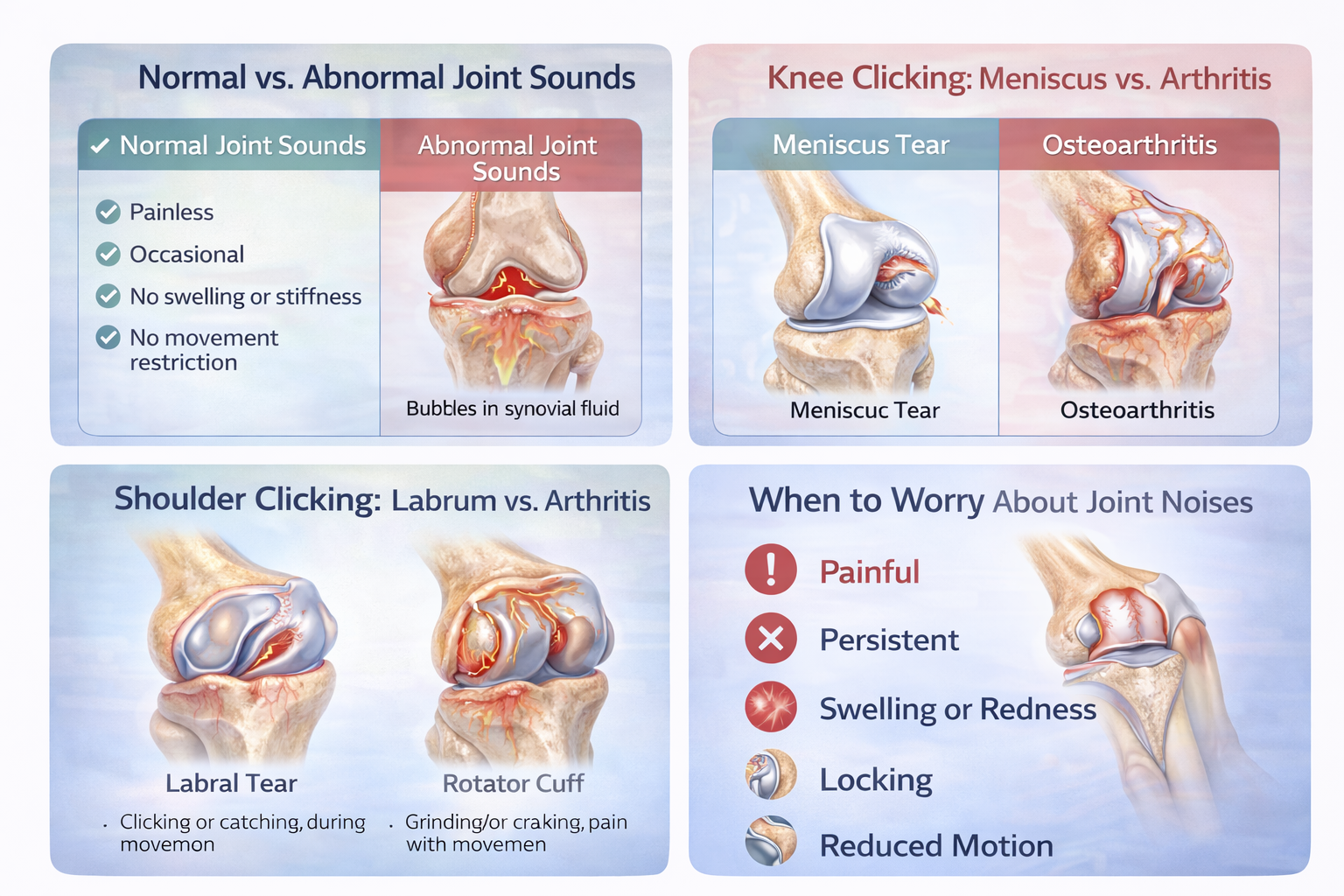
Joints are lubricated by synovial fluid. When a joint moves, tiny gas bubbles may form and burst, producing a cracking or popping sound.
-
Completely normal
-
Common in knuckles, knees, and shoulders
2. Tendons or Ligaments Snapping Over Bone
Tendons crossing bony surfaces may momentarily catch and release, causing a snapping sound.
-
Often painless
-
Common in shoulders, hips, and ankles
3. Rough Cartilage Surfaces
As cartilage thins due to aging or early wear, joint surfaces may no longer glide smoothly, leading to grinding or crackling sounds.
4. Age-Related Joint Changes
With age, ligaments lose elasticity and cartilage hydration decreases. This makes joint noises more noticeable—even without joint disease.

When Are Joint Sounds Normal?
Joint noises are usually harmless if all of the following are present:
-
No pain
-
Occur occasionally
-
No swelling or redness
-
No locking or stiffness
-
No restriction in movement
In such cases, reassurance, posture correction, and basic strengthening exercises are usually sufficient.
Warning Signs That Should Not Be Ignored
Joint noises may indicate a problem when they are associated with symptoms.
Concerning Joint Sounds Include:
-
Painful clicking or popping
-
Persistent grinding or crunching
-
Swelling, warmth, or redness
-
Locking or catching sensation
-
Reduced range of motion
-
Feeling of joint instability
These signs suggest structural joint damage and require medical evaluation.
Conditions Associated With Abnormal Joint Sounds
Painful or persistent joint noises may be caused by:
-
Osteoarthritis – cartilage degeneration causing grinding
-
Meniscus tears – knee clicking or locking
-
Ligament injuries – popping sounds after trauma
-
Cartilage damage (chondral lesions)
-
Labral tears in the shoulder or hip
-
Early degenerative joint disease
Common Joints Affected
Knee
-
Meniscus tears
-
Osteoarthritis
-
Cartilage wear
Shoulder
-
Labral tears
-
Rotator cuff injuries
-
Shoulder instability
Hip
-
Snapping hip syndrome
-
Labral tears
-
Early arthritis
Neck & Spine
-
Posture-related strain
-
Cervical spondylosis
-
Muscle imbalance
When Should You See an Orthopedic Specialist?
Consult an orthopedic doctor if joint noises are:
-
Persistent or worsening
-
Accompanied by pain or swelling
-
Limiting daily activities
-
Occurring after injury or trauma
-
Associated with stiffness or weakness
Early diagnosis allows most conditions to be treated without surgery and prevents permanent joint damage.
Diagnosis & Treatment
Your orthopedic specialist may recommend:
-
Detailed clinical examination
-
X-rays or MRI (if required)
-
Physiotherapy and muscle strengthening
-
Activity modification
-
Joint injections (PRP or viscosupplementation)
-
Minimally invasive surgery in advanced cases
Key Takeaway
Joint sounds alone are not dangerous—but joint sounds with pain are a warning sign.
Listening to your body and seeking timely medical advice can protect your joints and preserve long-term mobility.
👉 If joint noises are painful, persistent, or limiting movement, consult an orthopedic specialist for proper evaluation.
For Appointments:
Dr. Balaraju Naidu, Robotic Orthopedic Surgeon
ONUS Robotic Hospitals – Hyderabad
👉 Button link: contact-us or book-appointment
Hashtags:-
#JointHealth
#ClickingJoints
#KneePain
#OrthopedicCare
#JointNoises
#ArthritisAwareness
#BoneAndJointHealth
#ONUSRoboticHospitals
#PainFreeMovement
#EarlyDiagnosis