Prevention of Blood Clots After Surgery – Complete Guide for Patients: By Dr. Balaraju Naidu, Robotic Orthopedic Surgeon, ONUS Robotic Hospitals
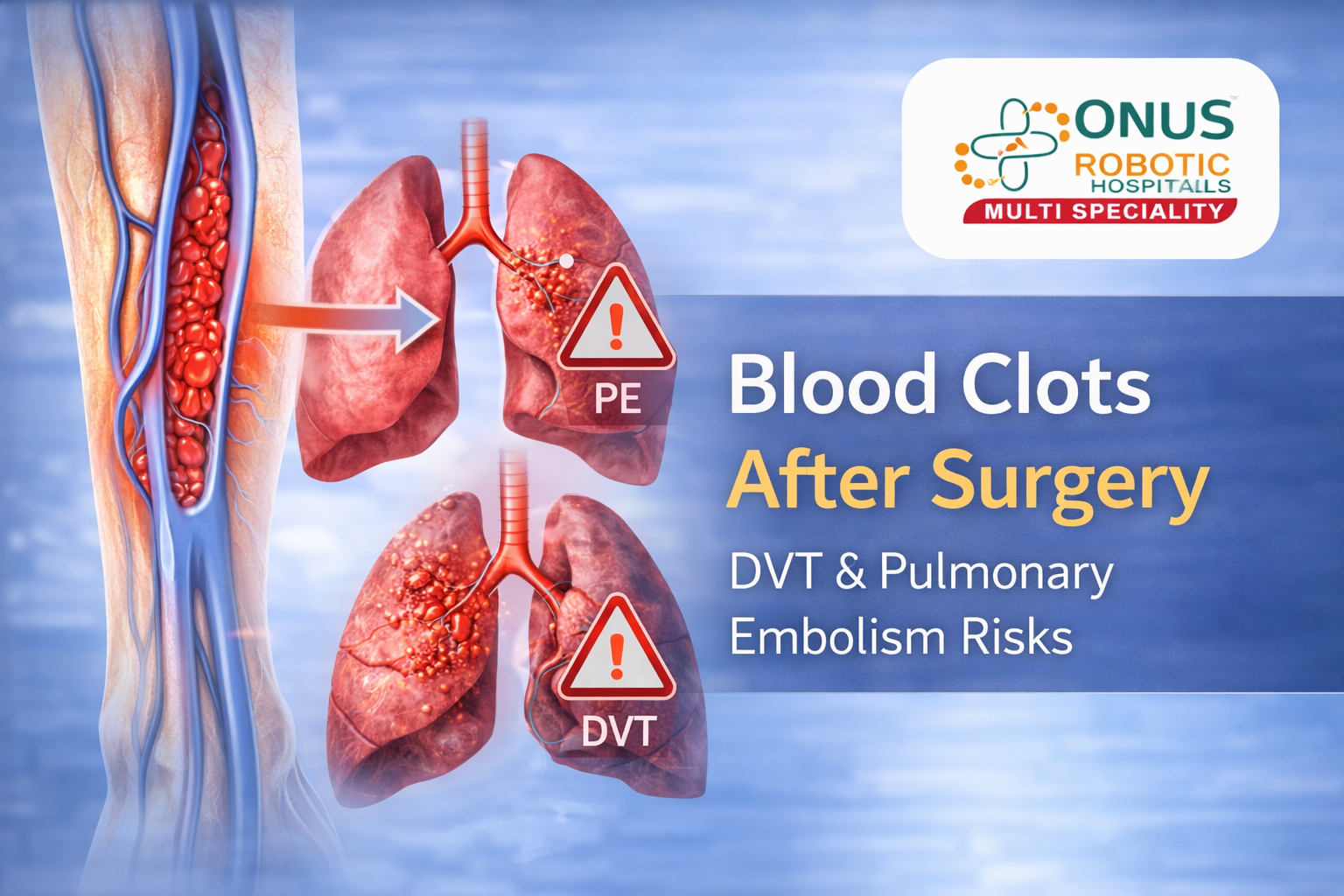
Blood clots, especially Deep Vein Thrombosis (DVT), are a serious but preventable complication following any major surgery. When a clot forms in the deep veins of the leg, it can block blood flow and sometimes travel to the lungs, causing a Pulmonary Embolism (PE) — a medical emergency. Understanding how and why clots form, along with preventive measures, helps patients recover safely.
Why Do Blood Clots Form After Surgery?
After surgery, your body goes into healing mode. To prevent excessive bleeding, it naturally increases clotting factors. Combine this with reduced movement, and blood flow in your legs slows down significantly — creating the perfect environment for clots to form.
Who Is at Risk?
Certain patients have a higher risk of developing blood clots after surgery:
- Those undergoing orthopedic procedures like hip or knee replacements
- Patients aged 60 or above
- Individuals with obesity
- Cancer patients
- Smokers
- Those with a past clotting history
- Dehydrated or bedridden patients
Being aware of your risk level helps in planning prevention strategies with your doctor.
Warning Signs You Should Never Ignore
The most common symptoms of DVT include:
- Swelling in one leg (especially the calf)
- Pain or tenderness
- Warmth or discoloration
Symptoms of a pulmonary embolism include:
- Sudden breathlessness
- Sharp chest pain
- Rapid heartbeat
- Coughing blood (rare but serious)
Seek immediate medical help if any of these appear.
Top Strategies to Prevent Blood Clots After Surgery
1. Early Mobility
Movement is the simplest and most effective method to prevent clots.
- Start walking as early as allowed
- Perform ankle flexion, extension, and circles
- Avoid sitting for long periods
Even small leg movements keep blood flowing.
2. Compression Stockings and Devices
Graduated compression stockings or pneumatic compression boots help maintain constant pressure on your legs, preventing blood pooling.
3. Blood Thinner Medications
Your surgeon may prescribe blood thinners such as:
- Enoxaparin
- Heparin
- Rivaroxaban
- Apixaban
These medications significantly reduce the risk of clot formation. Take them exactly as directed.
4. Adequate Hydration
Dehydration thickens the blood, making clots more likely. Drink water regularly unless medically restricted.
5. Leg Elevation
Keeping your legs elevated during rest improves venous return and reduces pooling.
6. Lifestyle Choices That Reduce Risk
- Quit smoking
- Maintain a healthy weight
- Stay active even after recovery
Adopting these habits builds long-term protection.
Blood clots after surgery are dangerous but preventable. With awareness, early movement, compression, medications, hydration, and follow-up care, patients can recover safely. Always follow your surgeon’s advice and monitor any unusual symptoms.
For Appointments:
Dr. Balaraju Naidu, Robotic Orthopedic Surgeon
ONUS Robotic Hospitals – Hyderabad
👉 Button link: contact-us or book-appointment
Hashtags:-
#BloodClots
#DVTAwareness
#PostSurgeryCare
#OrthopedicSafety
#PatientEducation
#SurgicalRecovery
#PulmonaryEmbolism
#JointReplacementCare
#HealthAwareness