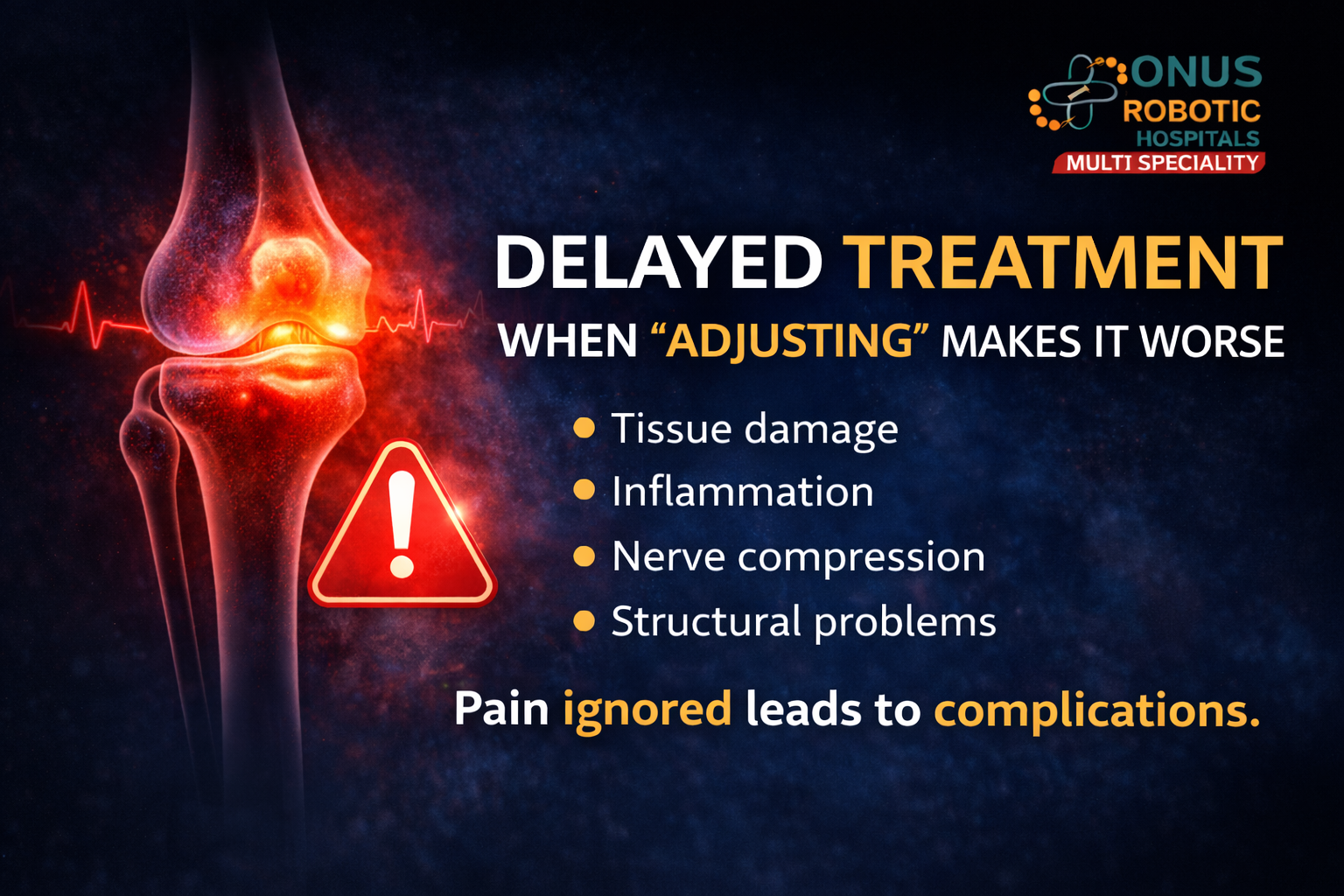
Subchondral Bone Edema: The Silent Warning Sign Before Arthritis: By Dr. Balaraju Naidu, Robotic Orthopedic Surgeon, ONUS Robotic Hospitals
Joint pain does not always start with visible arthritis on X-rays.
In many patients, the earliest and most critical warning sign occurs deep within the bone, long before cartilage damage becomes obvious. This hidden condition is known as Subchondral Bone Edema (SBE).
Recognizing and treating subchondral bone edema early can slow, delay, or even prevent the progression to irreversible arthritis.
What Is Subchondral Bone Edema?
Subchondral bone edema refers to abnormal fluid accumulation within the bone just beneath the joint cartilage.
It is not visible on routine X-rays and is typically detected only through MRI scans.
This edema reflects bone stress, micro-damage, and early joint overload, often occurring before cartilage breakdown becomes evident.
In simple terms, it is the bone’s distress signal—warning that the joint is under excessive strain.
Why Subchondral Bone Edema Matters
Subchondral bone edema is not a minor or incidental finding. It has significant clinical implications:
-
Indicates early cartilage overload
-
Strongly predicts faster progression to osteoarthritis
-
Causes severe deep joint pain, even when X-rays appear normal
-
Reflects active joint damage rather than age-related wear alone
Many patients are told their X-rays are “normal,” yet continue to suffer pain—this is often due to underlying bone edema.
Common Causes of Subchondral Bone Edema
Several mechanical and biological factors can lead to this condition:
-
Knee or joint injuries
-
Meniscus tears
-
Abnormal joint alignment (varus/valgus deformity)
-
Obesity or sudden weight gain
-
Repetitive overuse or high-impact activity
-
Early-stage osteoarthritis
-
Post-traumatic joint stress
These factors increase pressure on specific areas of the joint, overwhelming the bone beneath the cartilage.
Symptoms You Should Not Ignore
Subchondral bone edema often presents with symptoms that seem disproportionate to imaging findings:
-
Persistent deep joint pain
-
Pain that worsens at night
-
Swelling without a clear injury
-
Pain that increases after activity or weight-bearing
-
Reduced joint tolerance despite “normal” X-rays
These symptoms indicate that damage is already occurring at a microscopic level.
How Is It Diagnosed?
-
MRI is the gold standard for diagnosing subchondral bone edema
-
Early X-rays are often normal
-
MRI reveals bone stress patterns and helps assess the risk of arthritis progression
Early MRI evaluation is crucial in patients with unexplained joint pain.
Treatment Options: Acting Early Makes the Difference
When detected early, subchondral bone edema can often be managed conservatively, preventing permanent joint damage.
Early-Stage Management Includes:
-
Weight management to reduce joint load
-
Activity modification
-
Physiotherapy to improve joint mechanics
-
Bracing for alignment correction
-
Bone-supportive medications
-
Pain-control strategies without masking damage
Ignoring this stage allows the condition to progress toward cartilage collapse and established arthritis.
Why Early Intervention Is Critical
If untreated, subchondral bone edema can lead to:
-
Permanent cartilage loss
-
Rapid arthritis progression
-
Chronic pain
-
Reduced mobility
-
Early need for joint replacement surgery
Early intervention can halt or slow this process, preserving the joint for years.
Key Takeaway
Subchondral bone edema is not a minor MRI finding.
It is the earliest alarm system of joint degeneration.
📌 Act early — before arthritis becomes permanent.
If joint pain persists despite normal X-rays, advanced evaluation can protect your joint and quality of life.
For Appointments:
Dr. Balaraju Naidu, Robotic Orthopedic Surgeon
ONUS Robotic Hospitals – Hyderabad
👉 Button link: contact-us or book-appointment
✅ Hashtags
#JointHealth
#SubchondralBoneEdema
#EarlyArthritis
#KneePainRelief
#JointPainAwareness
#OrthopedicCare
#MRIForJointPain
#ArthritisPrevention
#BoneHealth
#CartilageCare
#PainIsASignal
#MoveBetterLiveBetter
#Orthopedics
#EarlyDiagnosis