What Is Inflammation? How It Damages Your Joints — A Complete Guide- By Dr. Balaraju Naidu, Robotic Orthopedic Surgeon, ONUS Robotic Hospitals
Joint pain has become extremely common — not just in the elderly but also in young professionals, athletes, and homemakers. What many people don’t realize is that inflammation is the silent root cause behind most joint problems.
What Exactly Is Inflammation?
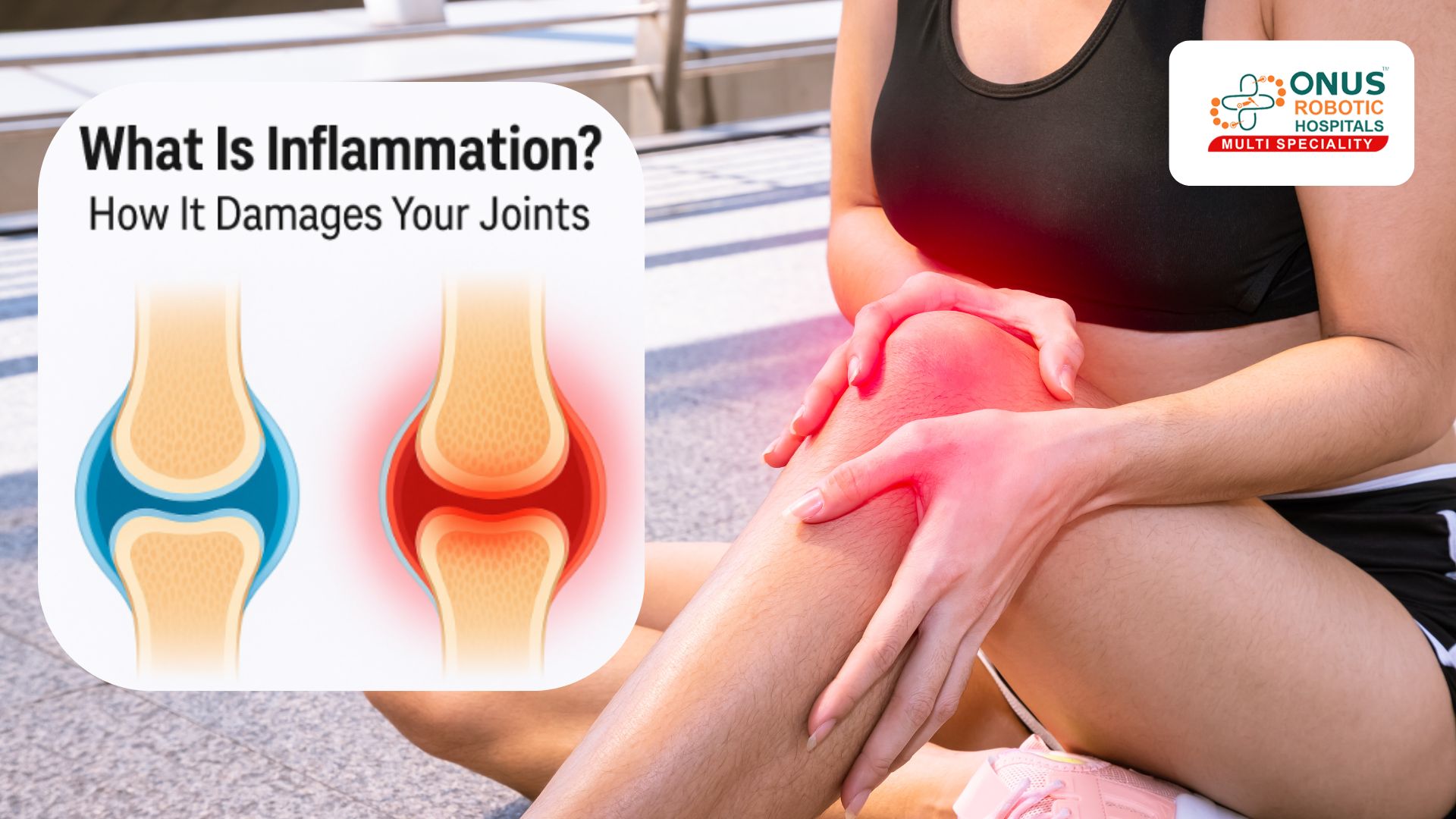
Inflammation is your body’s natural response to injury, irritation, or infection. It is meant to protect you. When you twist your ankle or cut your finger, your immune system activates to repair the damage. This is called acute inflammation and is completely normal.
However, when inflammation continues for months or years, even without any visible injury, it becomes harmful. This is known as chronic inflammation.
How Chronic Inflammation Affects Your Joints
Joints contain cartilage, synovial fluid, tendons, and ligaments. Chronic inflammation affects all these structures:
1. Cartilage Breakdown
Inflammatory chemicals destroy the smooth cartilage that allows your joints to glide without friction. As cartilage wears out, bones start rubbing directly — causing sharp pain.
2. Thickened Joint Lining
The synovial membrane swells and thickens, making joints stiff and difficult to move. Morning stiffness is a classic sign.
3. Swelling & Fluid Build-up
Inflammation increases fluid around the joint, leading to visible swelling.
4. Bone Erosion
In severe inflammatory arthritis (like rheumatoid arthritis), the immune system mistakenly attacks your joints, eroding bone and causing deformities.
Conditions Linked to Inflammation
- Osteoarthritis
- Rheumatoid arthritis
- Ankylosing spondylitis
- Gout
- Bursitis
- Tendinitis
- Overuse injuries (sports, gym, repetitive work)
What Causes Chronic Joint Inflammation?
Modern lifestyle plays a huge role:
- Poor posture
- Excess body weight
- High-sugar and processed foods
- Long sitting hours
- Stress
- Smoking
- Hormonal imbalance
- Poor sleep
- Vitamin D deficiency
Symptoms of Joint Inflammation
- Morning stiffness
- Swelling or puffiness
- Warmth or redness
- Pain during movement
- Joint locking or instability
- Difficulty squatting, climbing stairs, or lifting objects
If these symptoms last for more than 2 weeks, medical evaluation is essential.
How to Reduce Inflammation Naturally
- Exercise regularly
Strengthens muscles supporting the joints. - Maintain a healthy weight
Every 1 kg reduces 4 kg pressure on knees. - Anti-inflammatory foods
- Turmeric
- Ginger
- Omega-3-rich fish
- Nuts and seeds
- Leafy greens
- Adequate hydration
Maintains joint lubrication. - Stress management
Yoga, walking, deep breathing, hobbies. - Physiotherapy
Improves mobility and reduces stiffness. - Robotic and minimally invasive treatments
For advanced arthritis, robotic joint procedures ensure precision and faster recovery.
Inflammation might be invisible, but its effects on joints can be lifelong if not treated early. Pay attention to your body, make lifestyle changes, and seek timely medical help.
For expert orthopedic and robotic solutions, visit ONUS Robotic Hospitals.
📞 For Appointments:
ONUS Robotic Hospitals – Hyderabad