When Joint Swelling Means Infection: A Medical Emergency You Shouldn’t Ignore- By Dr. Balaraju Naidu, Robotic Orthopedic Surgeon, ONUS Robotic Hospitals
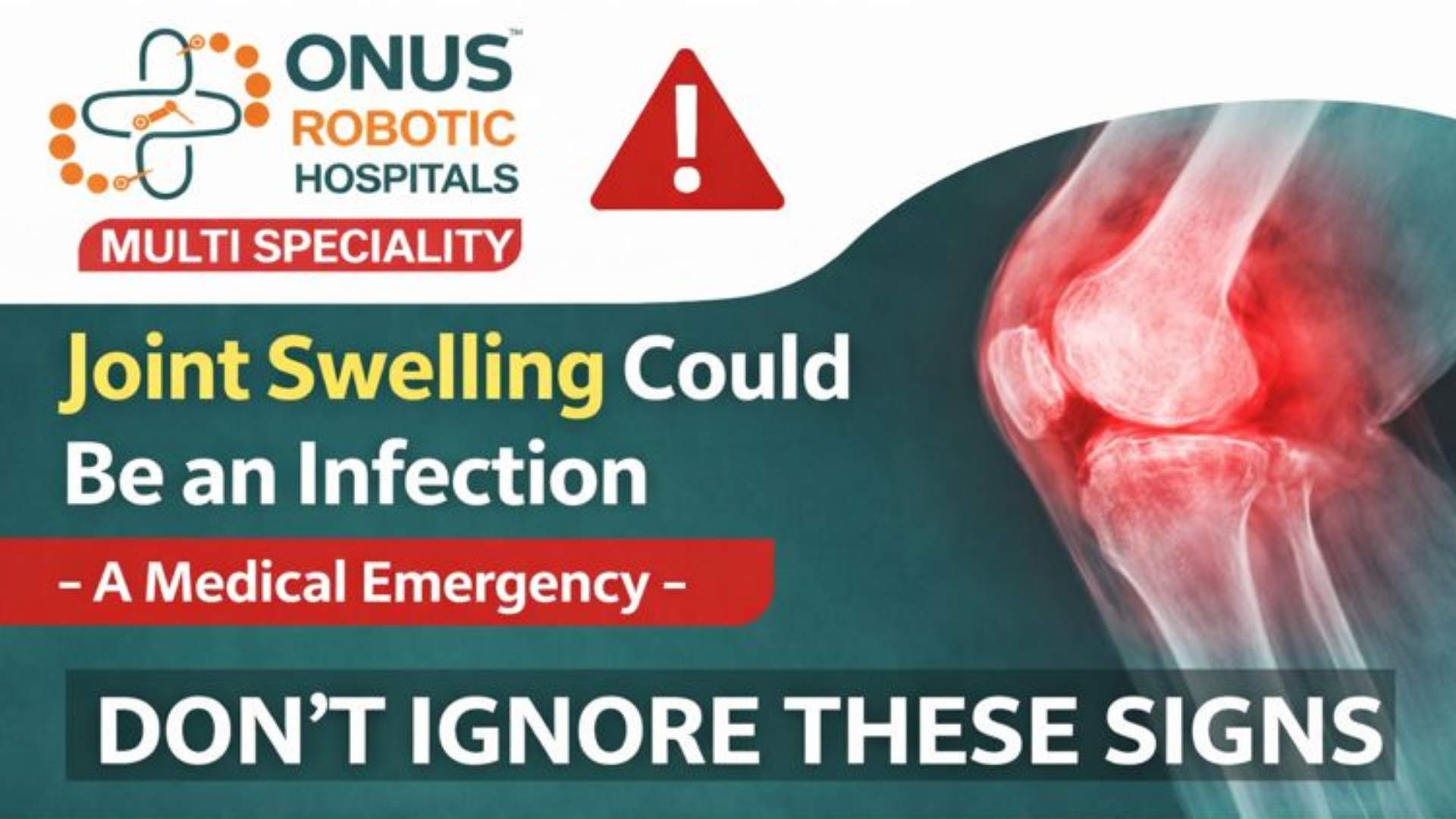
Joint swelling is commonly blamed on arthritis, minor injuries, or overuse. While many joint problems are harmless, some cases of sudden joint swelling signal a serious medical emergency—a joint infection known as septic arthritis.
If left untreated, a joint infection can destroy the joint within days and may even become life-threatening. Early recognition and immediate treatment are critical.
What Is Septic Arthritis?
Septic arthritis is an infection inside a joint, caused when bacteria or other microorganisms enter the joint space.
The infection may reach the joint through:
-
The bloodstream (from infections elsewhere in the body)
-
Joint injections
-
Previous surgery
-
Open wounds or trauma near a joint
Once bacteria enter the joint, they multiply rapidly, causing inflammation, cartilage destruction, and severe pain.
Why Septic Arthritis Is Dangerous
Unlike arthritis, which develops gradually, septic arthritis:
-
Progresses very rapidly
-
Can cause permanent joint damage within 24–72 hours
-
May spread to the bloodstream, leading to sepsis
This is why septic arthritis is considered an orthopedic and medical emergency.
Symptoms That Strongly Suggest a Joint Infection
Seek immediate medical attention if you experience:
-
Sudden onset of severe joint pain
-
Swelling, redness, and warmth around the joint
-
Fever and chills
-
Inability or extreme difficulty moving the joint
-
Pain even while resting, not just on movement
Commonly affected joints include:
-
Knee (most common)
-
Hip
-
Shoulder
-
Ankle
-
Wrist
Septic Arthritis vs. Arthritis: Key Differences
| Feature | Arthritis | Septic Arthritis (Infection) |
|---|---|---|
| Pain onset | Gradual | Sudden and severe |
| Pain at rest | Usually improves | Severe even at rest |
| Swelling | Mild to moderate | Marked, tense swelling |
| Fever | Rare | Common |
| Disease course | Long-term | Rapid joint destruction |
| Urgency | Manageable | Medical emergency |
Who Is at Higher Risk?
Septic arthritis can affect anyone, but risk is higher in:
-
Elderly individuals
-
People with diabetes
-
Patients with weakened immunity
-
Those with rheumatoid arthritis
-
Patients with artificial joints
-
Recent joint surgery or injections
-
Skin or bloodstream infections
How Is Septic Arthritis Diagnosed?
Early diagnosis is crucial and typically involves:
-
Blood tests (to detect infection and inflammation)
-
Joint fluid aspiration (gold standard test)
-
Imaging studies (X-ray, ultrasound, MRI if needed)
Delay in diagnosis significantly increases the risk of permanent damage.
Treatment: Time Is Critical
Treatment must begin immediately and usually includes:
🔹 Intravenous (IV) Antibiotics
Broad-spectrum antibiotics are started first, then adjusted based on culture results.
🔹 Joint Drainage
-
Needle aspiration or
-
Surgical washout (arthroscopy or open surgery)
This removes infected fluid and reduces pressure inside the joint.
What Happens If Treatment Is Delayed?
Delayed treatment can lead to:
-
Permanent cartilage damage
-
Joint deformity
-
Loss of joint function
-
Spread of infection to blood (sepsis)
-
Increased risk of death
Key Takeaway
👉 Not all joint swelling is arthritis.
👉 Sudden, painful, swollen joints with fever should never be ignored.
Septic arthritis is a medical and orthopedic emergency. Early diagnosis and prompt treatment can save the joint—and save lives.
If you or a loved one experiences sudden joint swelling with pain and fever, seek emergency medical care immediately.
For Appointments:
Dr. Balaraju Naidu, Robotic Orthopedic Surgeon
ONUS Robotic Hospitals – Hyderabad
👉 Button link: contact-us or book-appointment
✅ Hashtags
#JointInfection
#SepticArthritis
#JointSwelling
#OrthopedicEmergency
#BoneAndJointCare
#SwollenJoint
#JointPainAwareness
#EmergencyOrthopedics
#ONUSRoboticHospitals
#EarlyDiagnosis
#HealthAwareness
#MedicalEmergency