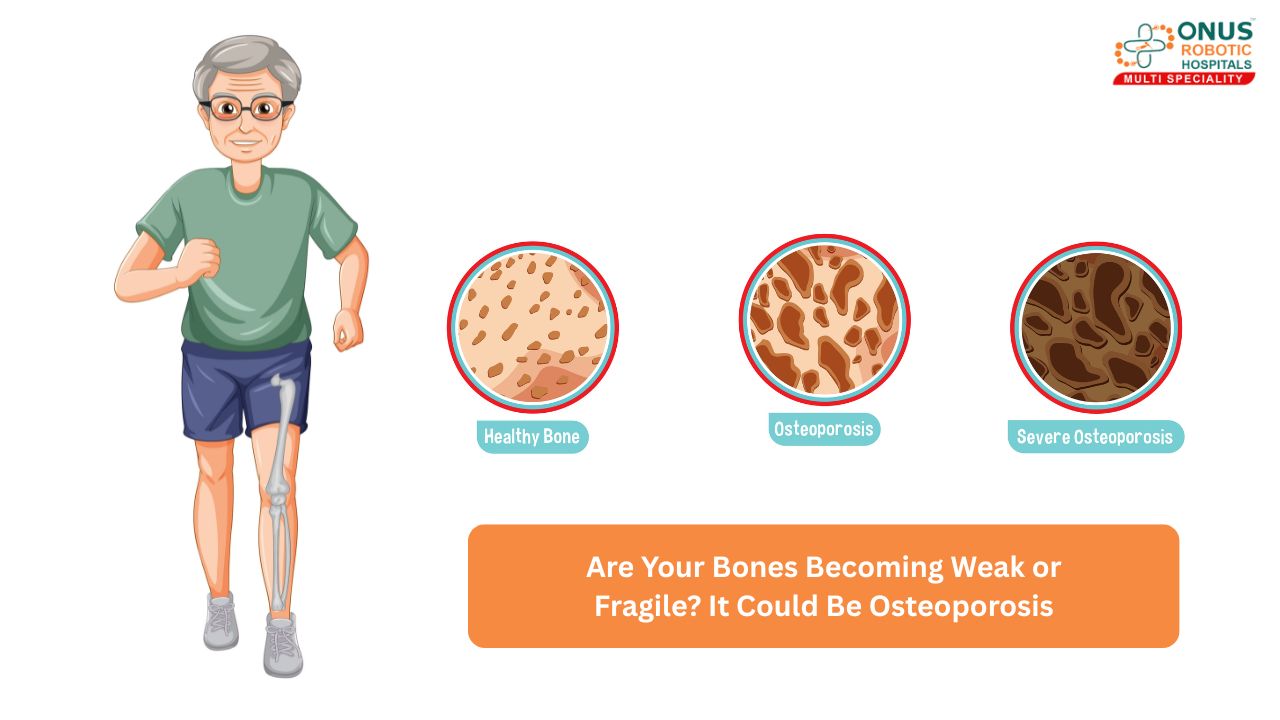
Who Is at High Risk for Osteoporosis?
High-risk groups include:
- Women above 50
- Men above 60
- Post-menopausal women
- People with low body weight
- Individuals with family history
- Long-term steroid users
- Patients with thyroid disorders
- Sedentary individuals
This risk profile matches many patients seen in orthopedic clinics managing fragility fractures.
Early Warning Signs of Osteoporosis
Symptoms are often subtle.
Watch for:
- Frequent fractures
- Back pain
- Loss of height
- Stooped posture
- Weak bones
- Fragility fractures
These are late-stage indicators.
Most Common Osteoporosis Fractures
Hip Fracture
Most dangerous complication.
Risks include:
- Surgery
- Prolonged bed rest
- Disability
- Increased mortality
Spine Fracture
Also called:
Vertebral compression fracture
Symptoms include:
- Back pain
- Height loss
- Bent posture
Wrist Fracture
Often the first warning sign.
Occurs during:
- Minor fall
- Loss of balance
How Osteoporosis Is Diagnosed
The gold standard test is:
DEXA Scan
This test measures bone density and fracture risk.
Other Tests May Include
- X-ray
- Blood tests
- Vitamin D level
- Calcium level
Screening is recommended for:
- Women above 50
- Men above 60
- Anyone with fracture risk
Treatment Options for Osteoporosis
Treatment focuses on strengthening bones and preventing fractures.
1) Calcium and Vitamin D Supplements
Essential foundation therapy.
Benefits:
- Improves bone strength
- Supports bone repair
2) Medications
Doctors may prescribe:
- Bone-strengthening medications
- Hormone therapy (if needed)
These reduce fracture risk.
3) Exercise and Physiotherapy
One of the most effective preventive strategies.
Recommended exercises:
- Weight-bearing exercises
- Strength training
- Balance training
These improve:
- Bone strength
- Muscle strength
- Fall prevention
4) Fall Prevention
Critical in elderly patients.
Measures include:
- Proper footwear
- Home safety modifications
- Vision correction
- Balance training
This is one of the highest-impact interventions.
Prevention Tips for Strong Bones
You can significantly reduce osteoporosis risk by:
- Eating calcium-rich foods
- Getting regular sunlight
- Exercising daily
- Maintaining healthy weight
- Avoiding smoking
- Limiting alcohol
Prevention is cheaper than fracture treatment.
When Should You Get a Bone Density Test?
Screening is recommended if:
- Age above 50
- Menopause
- History of fracture
- Family history of osteoporosis
- Long-term steroid use
- Persistent back pain
Early screening prevents fractures.
Final Takeaway
Osteoporosis is:
✔ Common
✔ Silent
✔ Preventable
✔ Treatable
The key message:
Do not wait for a fracture to diagnose bone weakness.
Early detection protects mobility, independence, and quality of life.
For Appointments:
Dr. Balaraju Naidu, Robotic Orthopedic Surgeon
ONUS Robotic Hospitals – Hyderabad
👉 link: contact-us or book-appointment