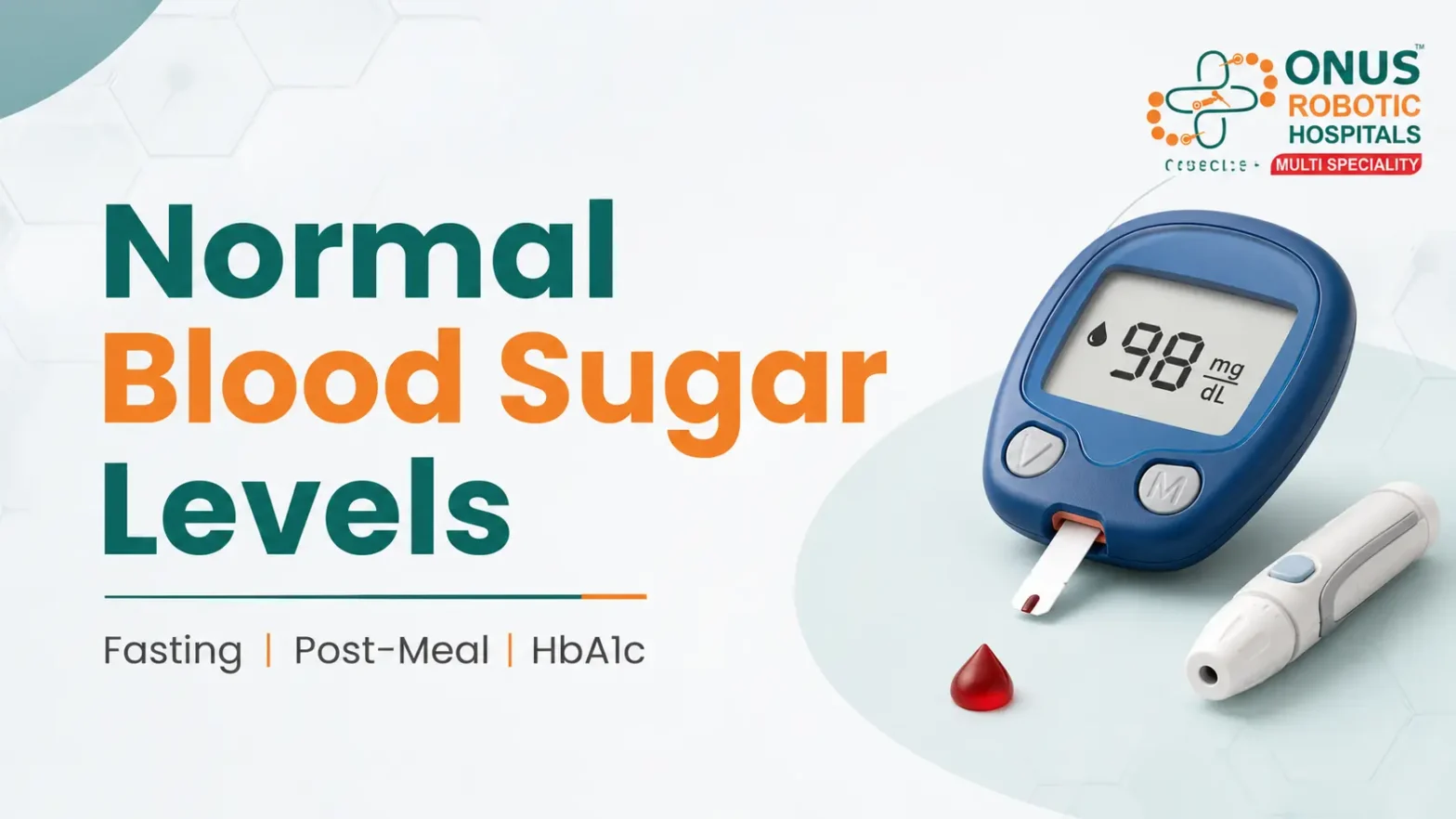
Normal Blood Sugar Levels: Fasting, Post-Meal, Random Sugar & HbA1c Explained: Dr. Ravi Kiran | Diabetologist, Onus Robotic Hospital
Many people check their blood sugar but do not clearly understand what the numbers mean. Fasting sugar, post-meal sugar, random sugar, and HbA1c all give different information about diabetes risk and sugar control.
In this awareness video, Dr. P. Ravi Kiran, Senior General Physician, Diabetologist, and Medical Director at ONUS Robotic Hospitals, explains normal blood sugar levels, prediabetes range, diabetes range, high and low sugar symptoms, and when medical consultation is needed.
Why Blood Sugar Monitoring Is Important
Blood sugar monitoring helps identify whether your sugar levels are normal, in the prediabetes range, or in the diabetes range. Regular monitoring is especially important for people with obesity, family history of diabetes, high BP, thyroid problems, PCOS, sedentary lifestyle, frequent infections, or symptoms of high sugar.
Early detection can help prevent complications involving the eyes, kidneys, nerves, heart, brain, and feet.
What Is Fasting Blood Sugar?
Fasting blood sugar is checked after overnight fasting, usually after not eating for at least 8 hours.
According to CDC diagnostic ranges:
Normal fasting blood sugar: 99 mg/dL or below
Prediabetes: 100–125 mg/dL
Diabetes: 126 mg/dL or above
ADA also lists fasting plasma glucose below 100 mg/dL as normal, 100–125 mg/dL as prediabetes, and 126 mg/dL or higher as diabetes.
What Is Post-Meal Blood Sugar?
Post-meal blood sugar, also called post-prandial blood sugar, shows how your body handles food after eating. It is usually checked 2 hours after a meal.
For people living with diabetes, CDC lists a typical blood sugar target of less than 180 mg/dL two hours after the start of a meal, though individual targets may differ depending on age, health condition, medicines, and doctor advice.
Post-meal sugar can rise due to:
High carbohydrate intake
Large meal portions
Sugary drinks
Low physical activity
Insulin resistance
Skipping medicines
Stress or poor sleep
Infections or illness
What Is Random Blood Sugar?
Random blood sugar is checked at any time of the day, regardless of when you last ate. It is useful during symptoms like dizziness, sweating, excessive thirst, frequent urination, weakness, confusion, or sudden tiredness.
A single random sugar reading may not always confirm diabetes unless it is very high and associated with symptoms. Your doctor may advise fasting sugar, HbA1c, or oral glucose tolerance test for confirmation.
What Is HbA1c?
HbA1c gives an average estimate of your blood sugar control over the past 2–3 months. It is very useful for detecting diabetes risk and monitoring long-term sugar control.
CDC lists the following HbA1c ranges:
Normal: below 5.7%
Prediabetes: 5.7% to 6.4%
Diabetes: 6.5% or above
NIDDK also explains that A1C reflects average blood glucose levels over the past 3 months, and higher A1C means higher average blood glucose.
Normal, Prediabetes and Diabetes Range
Fasting Blood Sugar
Normal: 99 mg/dL or below
Prediabetes: 100–125 mg/dL
Diabetes: 126 mg/dL or above
HbA1c
Normal: below 5.7%
Prediabetes: 5.7–6.4%
Diabetes: 6.5% or above
2-Hour Glucose Tolerance Test
Normal: 140 mg/dL or below
Prediabetes: 140–199 mg/dL
Diabetes: 200 mg/dL or above
A diagnosis of diabetes usually needs proper medical evaluation and sometimes repeat testing, especially if symptoms are not clear.
Symptoms of High Blood Sugar
High blood sugar may develop slowly and can be missed in the early stages. Do not ignore:
Frequent thirst
Frequent urination
Tiredness
Unexplained weight loss
Blurred vision
Increased hunger
Slow wound healing
Repeated infections
Dry mouth
Skin infections
Genital itching or infections
Numbness or burning in feet
These symptoms need medical evaluation, especially if they are repeated or worsening.
Symptoms of Low Blood Sugar
Low blood sugar can happen in people taking diabetes medicines, especially insulin or certain tablets. It may also occur with skipped meals, delayed food intake, excess exercise, or wrong medicine timing.
Symptoms may include:
Sweating
Shivering
Hunger
Dizziness
Palpitations
Weakness
Headache
Confusion
Irritability
Blurred vision
Fainting in severe cases
Low sugar can be dangerous. Patients using diabetes medicines should learn how to manage low sugar episodes under doctor guidance.
When High Sugar Becomes Dangerous
Seek urgent medical care if you have very high sugar levels along with:
Vomiting
Severe weakness
Drowsiness
Confusion
Breathlessness
Fruity smell in breath
Dehydration
Severe abdominal pain
Altered consciousness
These may suggest serious diabetes-related emergencies and need immediate medical attention.
Lifestyle Changes for Better Sugar Control
Blood sugar control is not only about medicines. Daily habits matter.
Helpful lifestyle steps include:
Balanced diet with portion control
Reducing refined carbohydrates and sugary drinks
Eating more vegetables and fiber
Adequate protein intake
Regular walking
Post-meal walking for 10–15 minutes if suitable
Strength training under guidance
Weight management
Good sleep hygiene
Stress control
Regular sugar monitoring
Medication adherence
Regular doctor follow-up
When Should You Consult a Doctor?
Consult a physician or diabetologist if:
Fasting sugar is repeatedly 100 mg/dL or above
HbA1c is 5.7% or above
Random sugar is repeatedly high
You have frequent thirst or urination
You feel tired without reason
You have unexplained weight loss
You have blurred vision
You get repeated infections
You have family history of diabetes
You are overweight or sedentary
You are pregnant and have high sugar readings
You are already diabetic but sugar is uncontrolled
Early consultation can help prevent complications and guide safe treatment.
Expert Diabetes Care at ONUS Robotic Hospitals
At ONUS Robotic Hospitals, patients with diabetes, prediabetes, BP, thyroid problems, vitamin deficiencies, obesity, infections, and lifestyle disorders receive expert medical evaluation and personalized care.
Consultation
📍 Dr. Ravi Kiran
Diabetologist & Preventive Medicine Specialist
Onus Robotic Hospital, Hyderabad