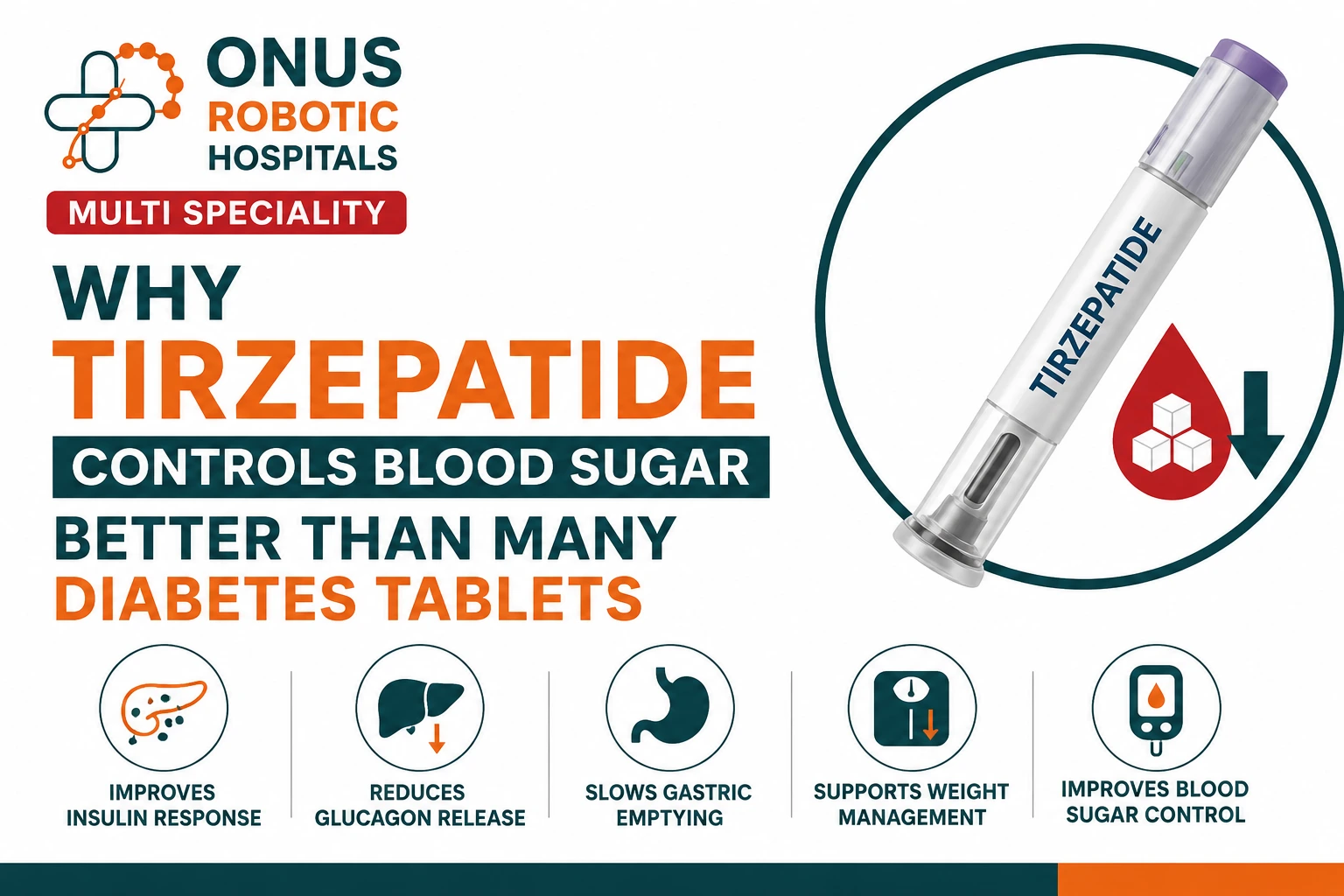
Why Tirzepatide Controls Blood Sugar Better Than Many Diabetes Tablets- By Dr. Ravi Kiran | Diabetologist, Onus Robotic Hospital

Why Tirzepatide Controls Blood Sugar Better Than Many Diabetes Tablets- By Dr. Ravi Kiran | Diabetologist, Onus Robotic Hospital

Introduction

Managing Type 2 Diabetes effectively is essential for preventing long-term complications affecting the heart, kidneys, eyes, nerves, and blood vessels. While many traditional diabetes tablets help lower blood sugar, some patients continue to struggle with elevated glucose levels, weight gain, or inadequate HbA1c control.

Recent advances in diabetes treatment have introduced medications that work through multiple pathways to improve glucose regulation. One such medication is Tirzepatide, an innovative treatment that has shown significant benefits in blood sugar control and weight management in appropriately selected patients.

In this article, Dr. Ravi Kiran, General Physician and Diabetologist, explains how Tirzepatide works, why it differs from many conventional diabetes tablets, and who may benefit from this treatment.


What Is Tirzepatide?

Tirzepatide is a prescription medication used for the management of Type 2 Diabetes Mellitus.

What makes Tirzepatide unique is its dual-action mechanism, targeting two important hormone receptors involved in glucose regulation:

  • GIP (Glucose-Dependent Insulinotropic Polypeptide) Receptor
  • GLP-1 (Glucagon-Like Peptide-1) Receptor

By activating both pathways, Tirzepatide helps improve the body’s natural ability to regulate blood sugar levels.


How Blood Sugar Is Normally Controlled

After eating, the body releases hormones known as incretins, which help regulate glucose levels.

These hormones:

  • Stimulate insulin release
  • Reduce excess glucose production
  • Support healthy metabolism
  • Influence appetite and digestion

In people with Type 2 Diabetes, these mechanisms often become impaired, leading to elevated blood sugar levels.


How Tirzepatide Works

Unlike many traditional diabetes medications that focus on a single pathway, Tirzepatide works through both GIP and GLP-1 receptor activity.

This dual-action approach provides multiple benefits.

1. Improves Insulin Response

Tirzepatide helps the pancreas release insulin when blood sugar levels rise.

This improves the body’s ability to move glucose from the bloodstream into cells where it can be used for energy.

Benefits:

  • Better post-meal blood sugar control
  • Reduced glucose fluctuations
  • Improved overall glycemic management

2. Reduces Glucagon Release

Glucagon is a hormone that increases blood sugar by stimulating the liver to release stored glucose.

In many people with Type 2 Diabetes, glucagon levels remain inappropriately elevated.

Tirzepatide helps reduce excess glucagon production, which may lower unnecessary glucose release from the liver.

Benefits:

  • Improved fasting blood sugar
  • Better day-to-day glucose control

3. Slows Gastric Emptying

Tirzepatide slows the rate at which food leaves the stomach.

As a result:

  • Glucose enters the bloodstream more gradually
  • Blood sugar spikes after meals are reduced
  • Patients often feel fuller for longer periods

4. Supports Appetite Regulation

Many patients with Type 2 Diabetes also struggle with overweight or obesity.

Tirzepatide influences appetite-regulating pathways in the brain, helping some patients:

  • Feel satisfied with smaller meals
  • Reduce calorie intake
  • Develop healthier eating habits

Why Tirzepatide Is Different from Many Diabetes Tablets

Many commonly prescribed diabetes medications work through a single mechanism.

Examples include:

  • Increasing insulin production
  • Improving insulin sensitivity
  • Reducing glucose absorption
  • Increasing glucose excretion through urine

Tirzepatide offers a broader metabolic effect because it acts on both GIP and GLP-1 receptors simultaneously.

This dual-action mechanism may provide:

  • Greater HbA1c reduction
  • Better blood sugar stability
  • Improved weight management
  • Enhanced metabolic benefits

Effect on HbA1c and Blood Sugar Levels

HbA1c reflects average blood sugar levels over approximately three months.

Clinical studies have shown that Tirzepatide can help many patients achieve substantial reductions in:

  • Fasting blood sugar
  • Post-meal blood sugar
  • Overall HbA1c levels

Improved glucose control may help reduce the risk of diabetes-related complications over time.


Tirzepatide and Weight Management

Excess weight is a major contributor to insulin resistance and poor glucose control.

By helping reduce appetite and improve metabolic function, Tirzepatide may support meaningful weight loss in selected patients.

Potential benefits include:

  • Reduced body weight
  • Improved insulin sensitivity
  • Better blood sugar control
  • Improved cardiovascular risk factors
  • Enhanced overall metabolic health

Weight reduction often works together with medication to improve diabetes outcomes.


Who May Benefit from Tirzepatide?

Tirzepatide may be considered for selected adults with Type 2 Diabetes who:

  • Have uncontrolled blood sugar levels
  • Need improved HbA1c management
  • Have overweight or obesity
  • Require additional metabolic support
  • Have not achieved treatment goals with other medications

The decision to prescribe Tirzepatide should always be individualized.


Important Precautions

Tirzepatide is not suitable for everyone.

Before starting treatment, doctors evaluate:

  • Medical history
  • Current medications
  • Kidney function
  • Liver health
  • Existing medical conditions
  • Weight and metabolic status
  • Potential medication interactions

Only a qualified healthcare professional can determine whether Tirzepatide is appropriate for a specific patient.


Possible Side Effects

Like all medications, Tirzepatide may cause side effects.

Commonly reported side effects include:

  • Nausea
  • Vomiting
  • Diarrhea
  • Constipation
  • Reduced appetite
  • Abdominal discomfort

Many side effects improve as the body adjusts to treatment.

Patients should promptly report any concerning symptoms to their healthcare provider.


Why Medical Supervision Is Essential

Tirzepatide should only be used under medical supervision.

Regular monitoring helps:

  • Assess blood sugar response
  • Monitor HbA1c improvement
  • Evaluate side effects
  • Adjust treatment plans
  • Ensure safe and effective use

Self-medication is strongly discouraged.


Lifestyle Changes Still Matter

Even with advanced diabetes treatments, healthy lifestyle habits remain important.

Patients should continue to focus on:

  • Balanced nutrition
  • Regular physical activity
  • Weight management
  • Adequate sleep
  • Stress reduction
  • Routine medical follow-up

Medication works best when combined with healthy lifestyle practices.


Conclusion

Tirzepatide represents a significant advancement in the treatment of Type 2 Diabetes because of its unique dual GIP and GLP-1 receptor activity. By improving insulin response, reducing glucagon release, slowing gastric emptying, and supporting weight management, it can provide powerful blood sugar control in appropriately selected patients.

However, Tirzepatide is a prescription medication and is not suitable for everyone. Treatment decisions should always be based on a thorough medical evaluation and individualized care plan.

Dr. Ravi Kiran, General Physician and Diabetologist, emphasizes that successful diabetes management requires the right medication, healthy lifestyle choices, regular monitoring, and ongoing medical supervision.

Consultation

πŸ“ Dr. Ravi Kiran
Diabetologist & Preventive Medicine Specialist
Onus Robotic Hospital, Hyderabad

Book Doctor Appointment
Book Free Appointment
Please enable JavaScript in your browser to complete this form.
WhatsApp
BOOK APPOINTMENT CALL WHATSAPP