Introduction
Knee arthritis is one of the most common causes of chronic knee pain and disability worldwide. In the early stages, symptoms may be mild and manageable with medications, physiotherapy, exercise, and lifestyle modifications. However, as arthritis progresses, the damage within the knee joint can become more severe, significantly affecting mobility, independence, and quality of life.
Many patients continue to tolerate worsening symptoms without realizing that their arthritis may be advancing. Recognizing the warning signs early can help you seek timely treatment and potentially avoid unnecessary suffering.
In this article, Dr. Balaraju Naidu, Robotic Orthopedic Surgeon, explains five important signs that may indicate your knee arthritis is getting worse and when you should consider professional evaluation.
Understanding Knee Arthritis
Knee arthritis, commonly known as osteoarthritis, occurs when the cartilage that cushions the knee joint gradually wears away.
As cartilage deteriorates:
- Joint friction increases
- Inflammation develops
- Pain becomes more frequent
- Stiffness worsens
- Mobility decreases
Over time, untreated arthritis can lead to significant joint damage and deformity.
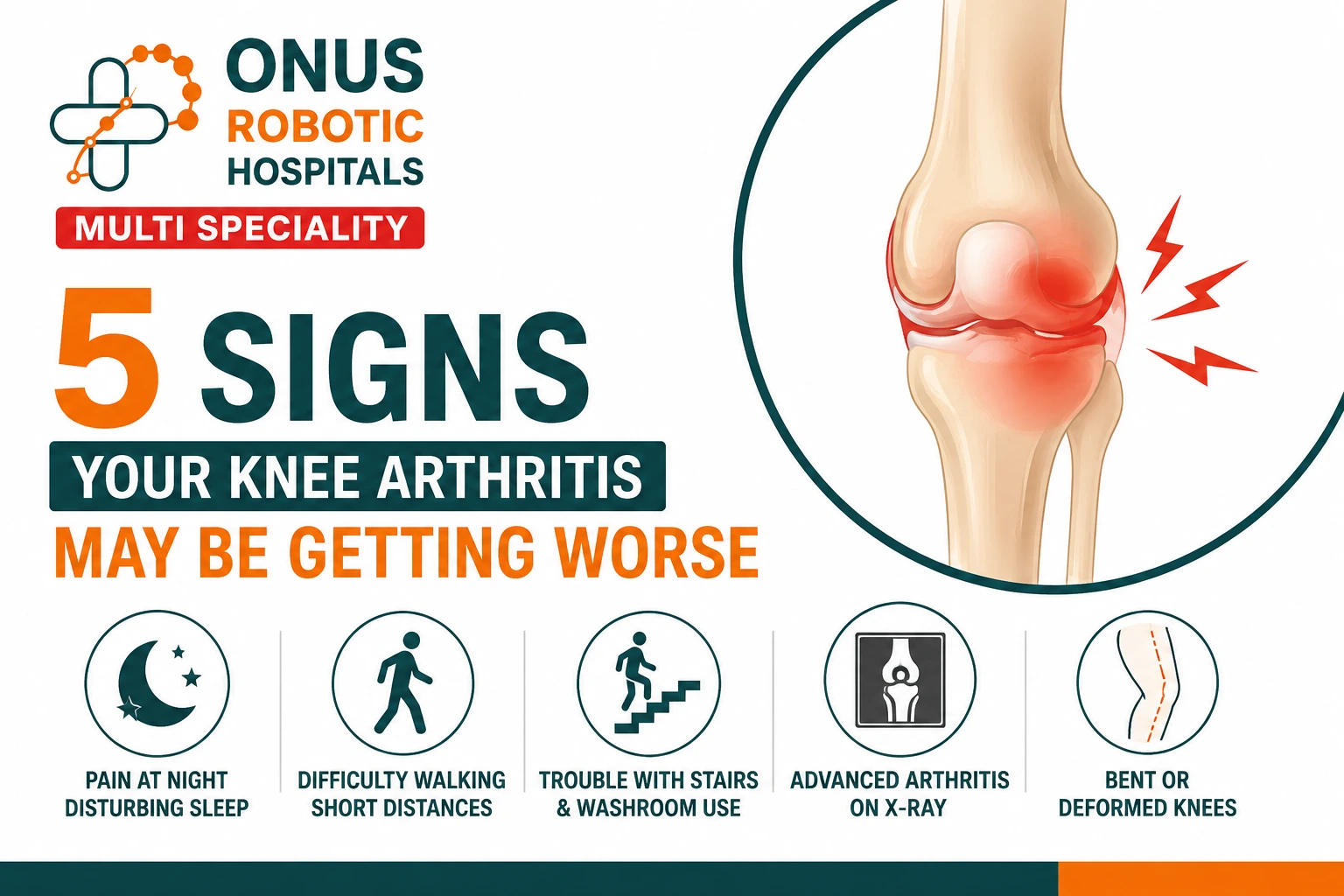
Sign 1: Knee Pain Is Disturbing Your Sleep
One of the most important warning signs of advancing knee arthritis is pain that begins to interfere with sleep.
Why Does This Happen?
In early arthritis, pain usually occurs during activity and improves with rest.
As arthritis progresses:
- Joint inflammation increases
- Cartilage loss becomes more significant
- Pain may continue even when resting
- Nighttime discomfort becomes common
Warning Symptoms
- Waking up because of knee pain
- Difficulty finding a comfortable sleeping position
- Pain that persists throughout the night
- Morning stiffness lasting longer than usual
Pain severe enough to disrupt sleep often suggests more advanced disease and should not be ignored.
Sign 2: Difficulty Walking Even Short Distances
Walking should not be painful.
If you find yourself struggling to walk short distances that were previously easy, your knee arthritis may be worsening.
Common Symptoms
- Pain after a few minutes of walking
- Needing frequent rest breaks
- Limping
- Reduced walking speed
- Fear of walking due to pain
As cartilage wears away, the knee joint loses its ability to absorb shock effectively, making walking increasingly uncomfortable.
Sign 3: Difficulty Climbing Stairs or Using the Washroom
Many patients notice worsening arthritis when performing everyday activities that require knee bending.
Activities That Become Difficult
- Climbing stairs
- Descending stairs
- Squatting
- Sitting on the floor
- Getting up from the toilet
- Using traditional Indian washrooms
Why This Happens
These activities place significant stress on the knee joint.
As arthritis progresses:
- Joint stiffness increases
- Pain intensifies
- Knee movement becomes restricted
- Muscle weakness may develop
Difficulty performing routine daily activities is an important indicator that the condition may be advancing.
Sign 4: Advanced Arthritis Visible on X-Rays
Symptoms alone do not always reveal the full extent of arthritis.
X-rays play an important role in assessing the condition of the knee joint.
What Doctors Look For
- Joint space narrowing
- Cartilage loss
- Bone spurs (osteophytes)
- Bone deformity
- Joint alignment changes
Why X-Rays Matter
Two patients may have similar symptoms but very different levels of joint damage.
Regular orthopedic evaluation and imaging help determine:
- Severity of arthritis
- Disease progression
- Appropriate treatment options
X-ray findings often guide decisions regarding injections, joint preservation treatments, or surgery.
Sign 5: Bent or Deformed Knees
One of the clearest signs of advanced arthritis is visible knee deformity.
Common Deformities
Bow-Legged Appearance (Varus Deformity)
The knees curve outward, creating a gap between the knees when standing.
Knock-Knee Appearance (Valgus Deformity)
The knees angle inward and may touch each other.
Why Deformity Occurs
As cartilage wears unevenly:
- Joint alignment changes
- Bones shift position
- Mechanical stress increases
- Further joint damage occurs
Deformity often indicates advanced arthritis and may significantly affect walking ability.
Treatment Options for Knee Arthritis
Treatment depends on the stage of arthritis, symptoms, activity level, age, and overall health.
Early-Stage Arthritis
Many patients can be managed successfully with:
Lifestyle Modifications
- Weight management
- Activity modification
- Joint protection strategies
Physiotherapy
- Strengthening exercises
- Flexibility training
- Balance improvement
Medications
- Pain relief medications
- Anti-inflammatory treatment when appropriate
Moderate Arthritis
Selected patients may benefit from:
Injection-Based Treatments
Depending on clinical evaluation, doctors may consider:
- Lubricant (Hyaluronic Acid) injections
- Platelet-Rich Plasma (PRP) injections
- Other targeted therapies
These treatments may help reduce symptoms and improve joint function in suitable candidates.
Severe Stage 4 Arthritis
When arthritis becomes advanced and significantly impacts daily life, surgical treatment may be considered.
Knee Replacement Surgery
Knee replacement may be recommended when:
- Pain is severe
- Daily activities are limited
- Non-surgical treatments no longer provide relief
- X-rays show advanced joint destruction
Modern knee replacement surgery can help restore mobility, reduce pain, and improve quality of life for appropriately selected patients.
When Should You See an Orthopedic Specialist?
Seek medical evaluation if:
- Knee pain is worsening
- Sleep is disturbed by pain
- Walking becomes difficult
- Stair climbing is challenging
- Knee deformity develops
- Daily activities are becoming limited
Early assessment allows more treatment options and may help delay disease progression.
Conclusion
Knee arthritis often progresses gradually, making it easy to overlook important warning signs. Persistent night pain, difficulty walking, problems climbing stairs, advanced X-ray changes, and knee deformity are all indicators that your arthritis may be getting worse.
Early-stage arthritis can often be managed with medications, physiotherapy, exercise, and lifestyle changes. More advanced cases may benefit from injections or, when necessary, knee replacement surgery.
If knee pain is affecting your sleep, mobility, or quality of life, consult an orthopedic specialist for a comprehensive evaluation and personalized treatment plan.
Dr. Balaraju Naidu, Robotic Orthopedic Surgeon, emphasizes that recognizing these warning signs early can help patients receive the right treatment at the right time and maintain an active, independent lifestyle.
For Appointments:
Dr. Balaraju Naidu, Robotic Orthopedic Surgeon
ONUS Robotic Hospitals – Hyderabad
👉 link: contact-us or book-appointment