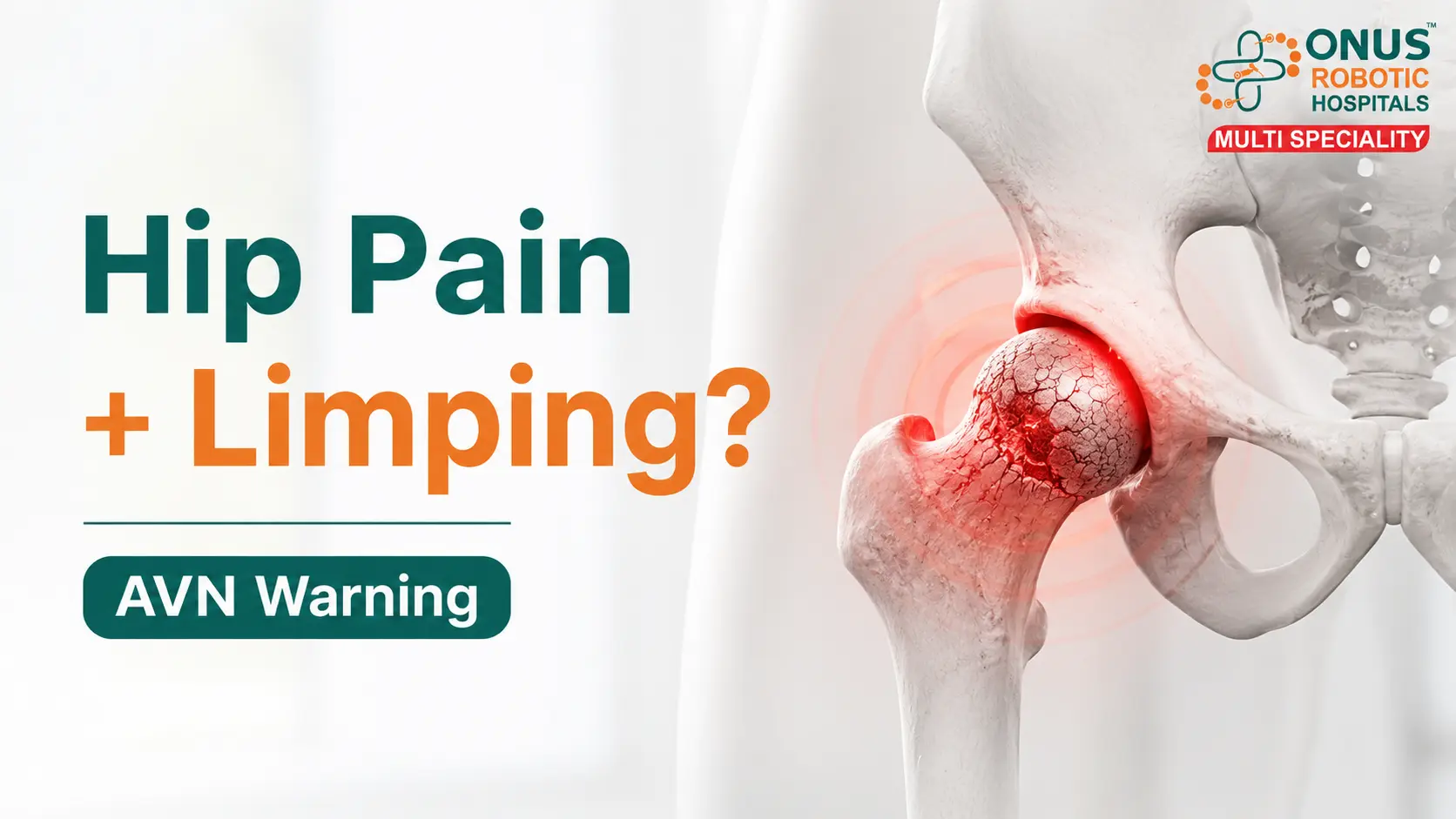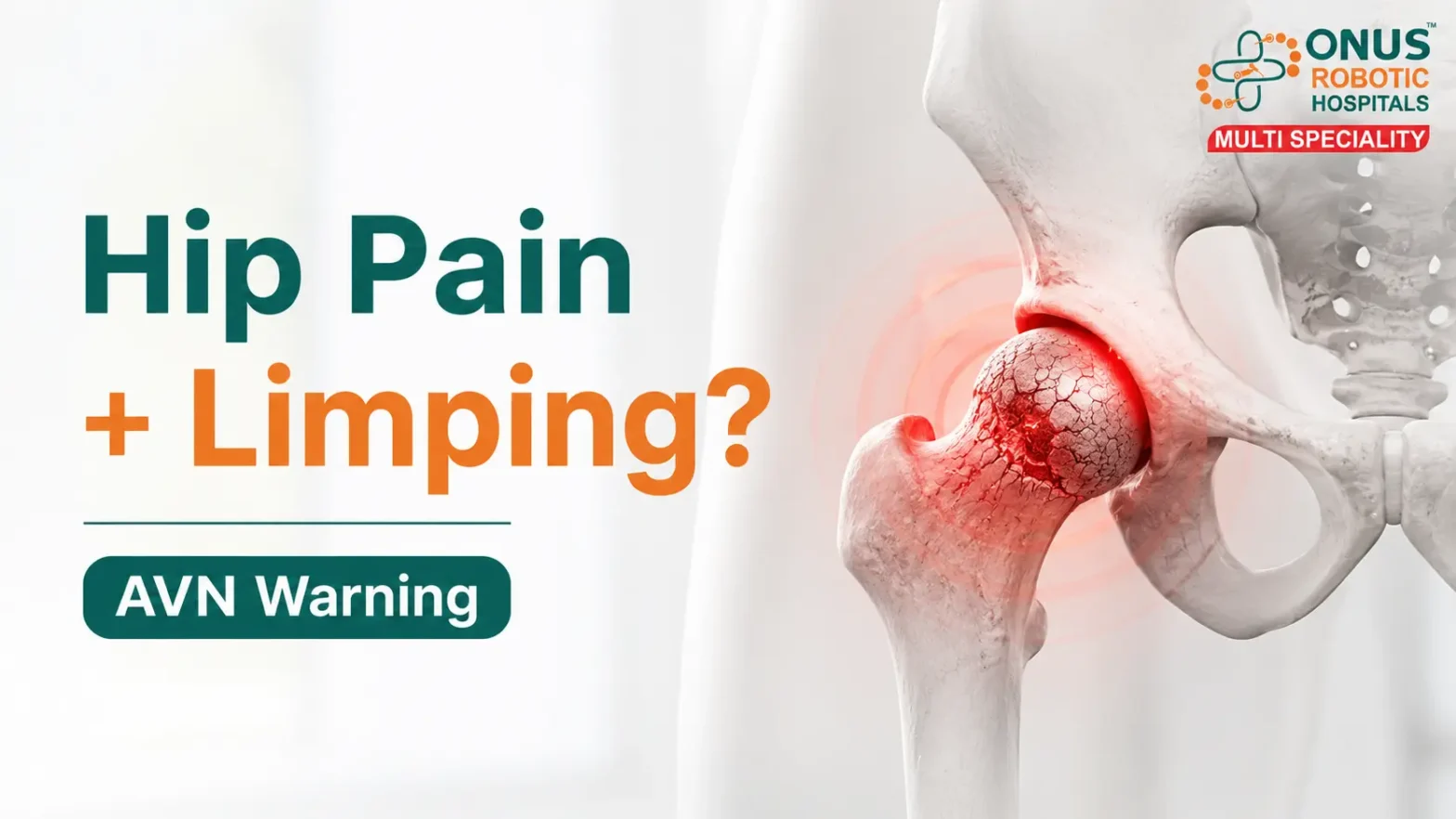
Hip pain, limping, difficulty walking, groin pain, thigh pain, or pain that increases while standing may be early warning signs of AVN – Avascular Necrosis of the Hip.
AVN happens when the blood supply to the hip bone is reduced. Over time, this can damage the bone and weaken the hip joint. If ignored, AVN may progress to hip joint collapse and severe arthritis. Early diagnosis is very important because early treatment is associated with better outcomes.
In this video, Dr. Balaraju Naidu, Consultant Robotic Orthopedic Surgeon at ONUS Robotic Hospitals, explains the symptoms, causes, diagnosis, and treatment options for AVN hip.
What Is AVN Hip?
AVN stands for Avascular Necrosis, also called Osteonecrosis. It means bone tissue damage due to reduced blood supply. When this happens in the hip, it usually affects the femoral head, which is the ball-shaped upper part of the thigh bone.
The hip is one of the most common joints affected by AVN. In advanced disease, the femoral head may collapse, damaging the joint surface and leading to arthritis.
Early Symptoms of AVN Hip
AVN can be silent in the early stage. Some patients may not have symptoms initially. As the condition progresses, pain may start while standing or walking and later may occur even at rest.
Common symptoms include:
Hip pain
Groin pain
Thigh pain
Limping
Difficulty walking
Pain while standing
Pain while climbing stairs
Difficulty sitting cross-legged
Reduced hip movement
Pain that slowly worsens over time
AAOS notes that hip pain is often the first symptom of osteonecrosis and may feel like a dull ache or throbbing pain in the groin or buttock area.
Why Hip Pain and Limping Should Not Be Ignored
Many patients ignore hip pain, thinking it is muscle pain or strain. But persistent hip pain with limping should be evaluated early, especially if it is associated with groin pain, thigh pain, or difficulty walking.
Delayed diagnosis may lead to:
Hip joint collapse
Severe hip arthritis
Chronic hip pain
Limping
Reduced mobility
Difficulty sitting and walking
Need for hip replacement
Early-stage AVN has more treatment options. Once the hip joint collapses, joint-preserving treatment becomes difficult.
Common Causes and Risk Factors of AVN
AVN can happen due to reduced blood supply to the bone. Common causes and risk factors include:
Long-term steroid use
Excess alcohol intake
Hip injury or fracture
Hip dislocation
Blood clotting disorders
Autoimmune diseases
Sickle cell disease
Smoking
Fatty liver and metabolic problems
Certain medical treatments
Unknown cause in some patients
Mayo Clinic lists joint or bone trauma, steroid use, excessive alcohol use, and fat deposits in blood vessels among important causes or risk factors for avascular necrosis.
Role of MRI in Early Diagnosis
X-rays may look normal in early AVN. This is why MRI is very important when AVN is suspected.
Mayo Clinic explains that X-rays may show bone changes in later stages, but early AVN may not show any problem on X-ray. MRI and CT scans can show early bone changes that may indicate avascular necrosis.
MRI helps in:
Detecting AVN early
Finding the exact location
Assessing the size of bone damage
Staging the disease
Planning treatment
Monitoring progression
Orthopedic references also note that MRI may be required to detect early or subclinical osteonecrosis.
Treatment Options for Early-Stage AVN
Treatment depends on the stage of AVN, size of the lesion, symptoms, age, activity level, and whether the hip joint has collapsed.
Early-stage treatment may include:
Activity modification
Protected weight bearing
Walking aids
Pain management
Physiotherapy
Treatment of underlying cause
Lifestyle correction
Core decompression in selected patients
Cleveland Clinic lists non-surgical care options such as rest, medicines, physical therapy, and walking aids, while surgical treatment may be advised depending on bone damage.
Core Decompression for Early AVN
In selected early-stage AVN cases, core decompression may be advised. This procedure aims to reduce pressure inside the bone, improve blood flow, and delay disease progression.
It is usually considered before collapse of the femoral head. Patient selection is important, and the decision depends on MRI findings and orthopedic evaluation.
When Hip Replacement May Be Required
If AVN has progressed to femoral head collapse, severe arthritis, deformity, or advanced joint damage, hip replacement may be required.
Hip replacement may be considered when:
Pain is severe
Walking is difficult
Hip joint has collapsed
Arthritis has developed
Daily activities are affected
Early-stage treatments are no longer suitable
In advanced disease with subchondral collapse, femoral head flattening, or degenerative joint disease, operative treatment is often considered.
Importance of Timely Orthopedic Consultation
AVN is a progressive condition. Waiting too long can reduce the chance of preserving the hip joint. Early consultation helps identify the stage and choose the right treatment plan.
Consult an orthopedic specialist if you have:
Persistent hip pain
Limping
Groin pain
Thigh pain
Pain while walking
Difficulty standing
Pain while climbing stairs
Difficulty sitting cross-legged
History of steroid use
History of alcohol use
Hip pain after injury or dislocation
Expert AVN Hip Care at ONUS Robotic Hospitals
At ONUS Robotic Hospitals, patients with hip pain, AVN hip, limping, hip arthritis, joint pain, trauma injuries, and advanced hip problems receive expert orthopedic evaluation and personalized treatment.
For Appointments:
Dr. Balaraju Naidu, Robotic Orthopedic Surgeon
ONUS Robotic Hospitals – Hyderabad
👉 link: contact-us or book-appointment