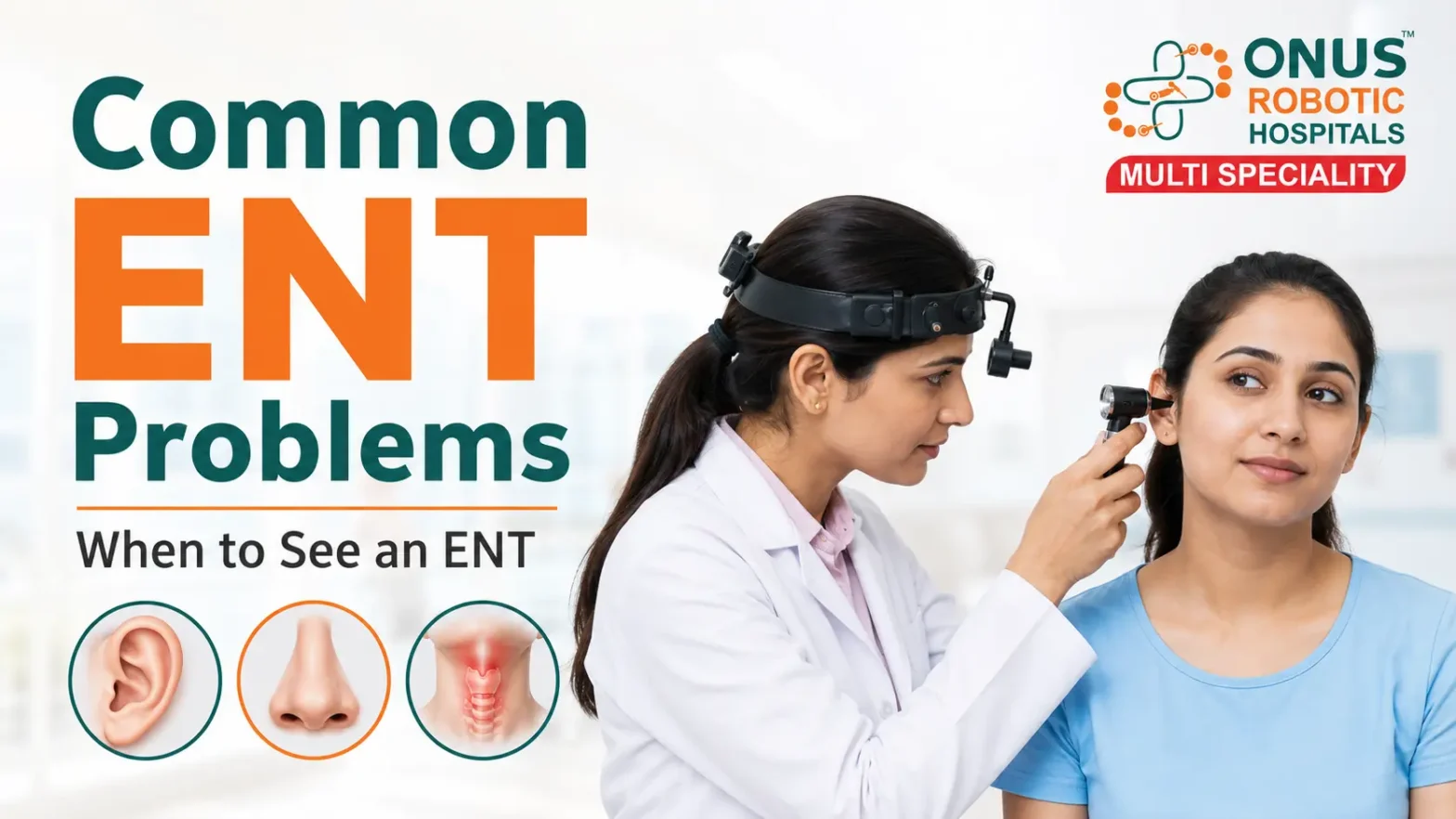
ENT Awareness: Common Nose, Throat, Voice, Ear & Airway Problems You Should Not Ignore- By Consultant ENT Head & Neck Surgeon, ONUS Robotic Hospitals

ENT Awareness: Common Nose, Throat, Voice, Ear & Airway Problems You Should Not Ignore- By Consultant ENT Head & Neck Surgeon, ONUS Robotic Hospitals

ENT problems are very common in children and adults, but many people ignore them until they become serious. Symptoms like nasal blockage, throat pain, voice change, choking episodes, foreign body in kids, ear pain, ear discharge, eardrum problems, nose bleeding, and breathing-related complaints need proper ENT evaluation.

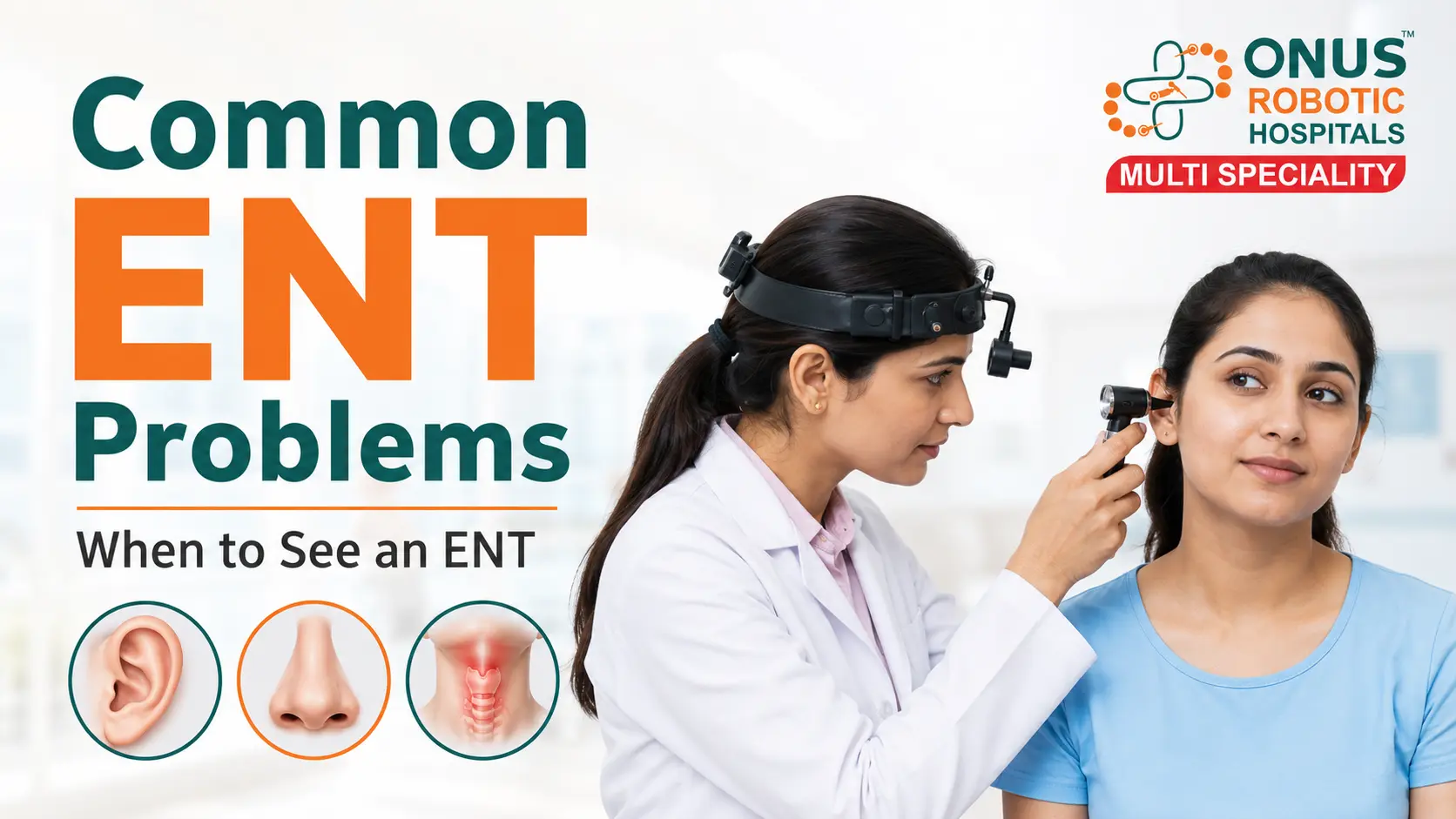
In this awareness session, Consultant ENT Head & Neck Surgeon at ONUS Robotic Hospitals, interacted with dentists and explained important ENT issues commonly seen in daily practice. She discussed how dentists and healthcare professionals can identify warning signs related to the nose, throat, voice, ear, and airway, and guide patients for timely ENT consultation.

Why ENT Awareness Is Important for Healthcare Professionals

Dentists and healthcare professionals often see patients with oral, throat, nasal, facial, and airway-related symptoms. Some symptoms may look simple but can indicate deeper ENT problems.

Early identification helps in:

Timely ENT referral
Prevention of complications
Better airway safety
Early diagnosis of infection or foreign body
Proper management of voice and throat symptoms
Safe treatment of ear and nose complaints
Better patient education

Common Nasal Complaints and Blocked Nose Issues

Blocked nose is one of the most common ENT complaints. It may occur due to allergy, sinusitis, deviated septum, nasal polyps, adenoids in children, infection, or foreign body in the nose.

Common nasal symptoms include:

Blocked nose
Repeated sneezing
Runny nose
Post-nasal drip
Facial pressure
Mouth breathing
Snoring
Reduced smell
One-sided foul-smelling nasal discharge in children

One-sided foul-smelling discharge in a child can sometimes indicate a nasal foreign body and should be evaluated by an ENT specialist.

Throat Pain, Voice Change and Hoarseness

Throat pain and voice change are commonly seen with infections, vocal strain, allergy, reflux, smoking, dehydration, or vocal cord problems. Hoarseness should not be ignored if it persists.

ENT Health notes that hoarseness lasting more than four weeks, severe voice changes, difficulty breathing, pain when speaking, or persistent voice problems in voice professionals should be evaluated by an otolaryngologist.

Warning signs include:

Hoarse voice lasting many days
Pain while speaking
Voice fatigue
Weak or breathy voice
Difficulty swallowing
Blood in sputum
Neck swelling
Breathing difficulty
Persistent throat irritation

Foreign Body in Kids: Nose, Ear and Throat

Children may put small objects into the nose or ear, or accidentally swallow or inhale objects. This is common in pediatric ENT practice and should be handled carefully.

Foreign bodies may include:

Beads
Seeds
Food particles
Small toy parts
Cotton buds
Eraser pieces
Coins
Fish bone
Button batteries

Foreign bodies in the ear, nose, and throat can cause pain, infection, bleeding, discharge, choking, breathing difficulty, and hearing issues. Foreign bodies in pediatric otorhinolaryngology commonly present with symptoms such as local pain, gagging, difficulty swallowing, vomiting, or drooling depending on location.

Parents and healthcare staff should not blindly try to remove foreign bodies at home because this can push the object deeper or cause injury.

Choking Emergencies and Warning Signs

Choking is an emergency, especially in children. It can happen due to food, small objects, toys, coins, nuts, or foreign bodies entering the airway.

Warning signs include:

Sudden coughing
Gagging
Inability to speak or cry
Noisy breathing
Wheezing
Bluish lips
Breathing difficulty
Panic or distress
Loss of consciousness in severe cases

Stanford Childrenโ€™s Health lists choking or gagging, coughing, stridor, and wheezing as possible symptoms of a foreign body in the airway.

Choking prevention includes cutting food into small pieces, keeping coins and small objects away from children, and not allowing children to run, play, or lie down while eating.


Ear Pain, Ear Discharge and Hearing Complaints

Ear pain and ear discharge should not be ignored. They may indicate ear infection, wax impaction, eardrum perforation, fungal infection, foreign body, trauma, or middle ear disease.

Common ear symptoms include:

Ear pain
Ear discharge
Blocked ear sensation
Reduced hearing
Itching
Ringing sound
Dizziness
Fever with ear pain
Pain after inserting objects into ear
Ear bleeding after trauma

Untreated ear foreign bodies can cause pain, infection, and hearing loss. Mayo Clinic notes that small children may not always know or communicate that something is stuck in the ear.

Eardrum Issues and When to Consult ENT

Eardrum problems may occur after infection, trauma, pressure changes, unsafe ear cleaning, or repeated ear discharge.

Possible signs include:

Ear discharge
Reduced hearing
Ear pain
Ringing sound
Blocked ear sensation
Ear bleeding
History of ear injury
Water entering ear followed by pain
Repeated ear infections

ENT evaluation helps identify whether the eardrum is intact, infected, perforated, or affected by chronic ear disease.

Nose Bleeding First-Aid Techniques

Nose bleeding is common but should be handled correctly. The first step is to keep the patient calm.

For a common nosebleed, Mayo Clinic advises sitting up, leaning forward, gently clearing clots, and pinching the nose shut while breathing through the mouth for 10 to 15 minutes.

Do not tilt the head backward because blood can go into the throat and cause choking or stomach upset.

Seek emergency care if bleeding does not stop, is heavy, follows trauma, or is associated with weakness, dizziness, or breathing difficulty. Mayo Clinic advises emergency medical care if a nosebleed does not stop within 30 minutes.

When ENT Evaluation Becomes Urgent

ENT consultation becomes urgent when symptoms are severe, repeated, or associated with breathing difficulty.

Do not delay ENT care if there is:

Choking
Breathing difficulty
Foreign body in nose, ear, or throat
Fish bone stuck in throat
Nose bleeding not stopping
Ear bleeding
Severe ear pain
Ear discharge with fever
Sudden hearing loss
Voice change with breathing difficulty
Hoarseness lasting many weeks
Swelling in neck
Repeated nasal blockage
Child with one-sided foul-smelling nasal discharge

Importance of Early Diagnosis and Treatment

Early ENT diagnosis can prevent complications such as:

Ear infection worsening
Hearing loss
Eardrum damage
Chronic sinus problems
Airway emergency
Foreign body complications
Voice-related complications
Repeated nose bleeding
Sleep and breathing issues
Delayed diagnosis of serious throat or airway problems

ENT problems may look small in the beginning, but correct evaluation helps identify the real cause and provide safe treatment.

Expert ENT Care at ONUS Robotic Hospitals

At ONUS Robotic Hospitals, patients with ENT problems, nasal blockage, throat pain, voice change, ear pain, ear discharge, eardrum issues, foreign bodies, choking concerns, nose bleeding, sinus problems, allergy, pediatric ENT complaints, and airway-related symptoms receive expert evaluation and personalized care.


For Appointments:

Consultant ENT Head & Neck Surgeon

ONUS Robotic Hospitals โ€“ Hyderabad

๐Ÿ‘‰ link: contact-us or book-appointment
ย 

Book Doctor Appointment
Book Free Appointment
Please enable JavaScript in your browser to complete this form.