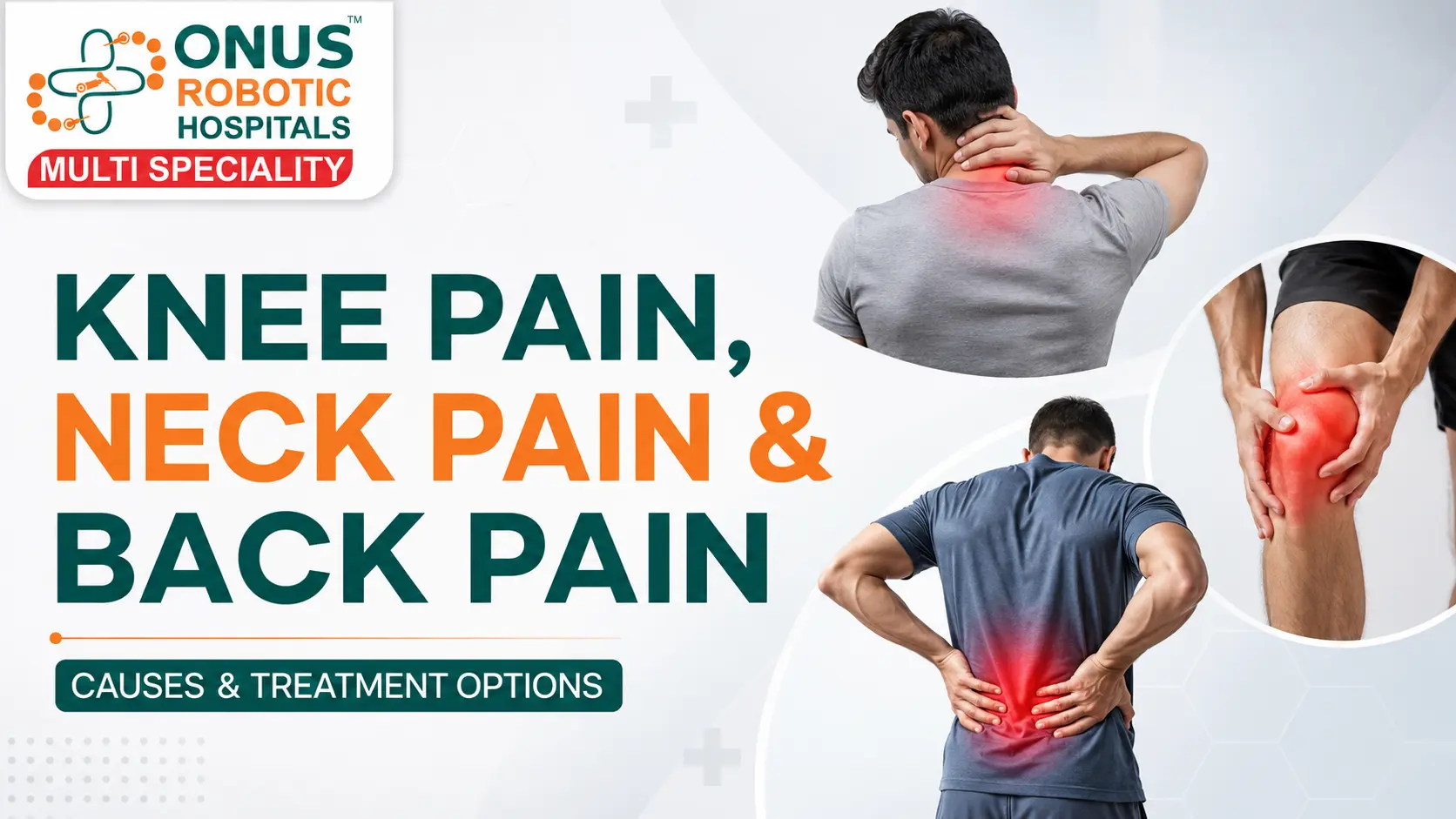
Knee pain, neck pain, and back pain are common problems, but the reason may be different for every patient. Pain may occur due to arthritis, injury, posture problems, disc issues, muscle weakness, nerve compression, obesity, age-related joint changes, or lifestyle habits.
Ignoring pain for a long time can increase stiffness, joint damage, weakness, mobility problems, and difficulty in daily activities. Early orthopedic consultation helps identify the exact cause and choose the right treatment plan.
In this patient interaction session, Senior Consultant Robotic Orthopedic Surgeon at ONUS Robotic Hospitals, explains the common causes of knee pain, neck pain, and back pain, along with available treatment options.
Common Reasons for Knee Pain
Knee pain may affect walking, stair climbing, sitting, standing, squatting, and daily movement. The cause may be simple strain or a serious joint problem.
Common causes include:
Knee arthritis
Age-related cartilage wear
Meniscus injury
Ligament injury
Sports injury
Obesity-related joint overload
Kneecap pain
Previous trauma
Muscle weakness
Poor walking pattern
Inflammation or swelling
Early osteoarthritis
Osteoarthritis is also called “wear-and-tear” arthritis, where the cartilage that cushions the bone ends gradually wears away, leading to pain and stiffness that can worsen over time.
Knee Pain Warning Signs
Consult an orthopedic specialist if knee pain is associated with:
Swelling
Stiffness
Pain while walking
Difficulty climbing stairs
Pain while standing from sitting
Clicking with pain
Knee locking
Knee giving way
Pain after injury
Reduced movement
Visible deformity
Difficulty doing daily activities
During knee evaluation, the doctor may check swelling, tenderness, range of motion, instability, pain while bearing weight, walking pattern, and signs of injury around the knee.
Common Causes of Neck Pain
Neck pain is frequently related to posture, muscle strain, long screen time, cervical spine changes, or nerve irritation. Many people develop neck pain due to prolonged mobile phone use, laptop work, poor sleeping posture, or lack of neck and shoulder strengthening.
Common causes include:
Poor posture
Long computer or mobile use
Muscle strain
Cervical spondylosis
Disc bulge
Nerve compression
Arthritis
Stress-related muscle tightness
Injury or whiplash
Weak neck and shoulder muscles
Mayo Clinic notes that poor posture, such as leaning over a computer or hunching over work, commonly strains neck muscles, while osteoarthritis can also cause neck pain.
Neck Pain Warning Signs
Neck pain should not be ignored if you have:
Pain radiating to shoulder or arm
Numbness or tingling in hands
Weakness in hand grip
Headache with neck stiffness
Pain after fall or accident
Difficulty turning the neck
Pain lasting many days
Balance problems
Pain worsening despite rest
Night pain or severe stiffness
These symptoms may suggest nerve compression, disc issues, arthritis, or other cervical spine problems that need evaluation.
Common Causes of Back Pain
Back pain can affect sitting, standing, bending, walking, sleeping, and work. It may be due to muscle strain, disc problems, arthritis, poor posture, spinal stenosis, nerve compression, or injury.
Common causes include:
Lumbar muscle strain
Disc bulge or disc prolapse
Sciatica
Nerve compression
Spinal arthritis
Poor posture
Long sitting
Weak core muscles
Obesity
Heavy lifting
Trauma or fall
Age-related spine changes
Most back pain improves with self-care over time, but medical evaluation is needed when pain is severe, persistent, or associated with nerve symptoms. Mayo Clinic advises consultation if back pain lasts longer than a few weeks, is severe and does not improve with rest, spreads down one or both legs, or causes weakness, numbness, or tingling.
Back Pain and Nerve Compression Symptoms
Nerve compression can cause symptoms beyond simple back pain.
Watch for:
Pain going down the leg
Tingling sensation
Numbness
Burning pain
Weakness in leg or foot
Difficulty walking
Pain increasing while sitting
Pain with coughing or bending
Loss of balance
Severe pain not improving
Pinched nerve symptoms may include numbness, sharp or burning pain radiating outward, tingling, muscle weakness, or a feeling that a hand or foot has “fallen asleep.”
When Pain Needs Orthopedic Consultation
You should consult an orthopedic specialist if:
Pain lasts more than a few days or keeps returning
Pain affects walking or sleep
Pain follows an injury or fall
There is swelling, deformity, or stiffness
Pain spreads to arm or leg
There is numbness, tingling, or weakness
Daily activities are affected
Pain worsens despite rest and medicines
There is difficulty climbing stairs or bending
You have repeated neck, back, or knee pain
Early diagnosis can prevent worsening and reduce the chance of long-term disability.
Diagnosis: How the Cause Is Identified
Treatment should not be started blindly. The exact cause must be identified first.
Diagnosis may include:
Clinical examination
Posture and gait assessment
Joint movement testing
Neurological examination
X-ray
MRI for disc, nerve, ligament, or soft tissue problems
Blood tests if inflammation or infection is suspected
Physical assessment by physiotherapist when needed
Each patient needs a personalized treatment plan based on age, pain severity, lifestyle, activity level, and diagnosis.
Non-Surgical Treatment Options
Most knee, neck, and back pain cases can be managed without surgery when diagnosed early.
Non-surgical treatment may include:
Medicines for pain and inflammation
Physiotherapy
Posture correction
Strengthening exercises
Weight reduction
Lifestyle modification
Hot or cold therapy
Activity correction
Ergonomic changes
Joint care education
Walking and mobility training
Injections in selected cases
For back pain, Mayo Clinic notes that bed rest is not recommended and that pain relievers and heat may be enough in many cases, while treatment depends on the cause and severity.
Role of Physiotherapy
Physiotherapy is important for long-term recovery and prevention of recurrence.
Physiotherapy may help with:
Muscle strengthening
Joint flexibility
Posture correction
Core strengthening
Knee stability
Neck mobility
Back support muscles
Pain reduction
Balance improvement
Return to activity
Prevention of stiffness
Exercise should be done under guidance, especially if pain is severe, radiating, or associated with weakness.
When Surgery May Be Required
Surgery is not required for every patient. It may be considered only when conservative treatment fails or when there is severe structural damage.
Surgery may be needed for:
Advanced knee arthritis
Severe ligament or meniscus injury
Severe disc prolapse with nerve compression
Progressive weakness
Spinal instability
Fracture or trauma
Severe deformity
Pain affecting daily life despite treatment
The decision depends on proper diagnosis, patient health condition, and functional limitation.
Importance of Early Diagnosis
Pain is a warning signal. Delaying evaluation can cause:
Joint stiffness
Reduced mobility
Muscle weakness
Nerve damage
Worsening arthritis
Poor posture habits
Difficulty walking
Dependence on painkillers
Reduced quality of life
Early consultation helps treat the cause, not just the symptom.
Expert Orthopedic Care at ONUS Robotic Hospitals
At ONUS Robotic Hospitals, patients with knee pain, neck pain, back pain, arthritis, disc pain, nerve compression, joint pain, trauma injuries, and spine-related orthopedic problems receive expert evaluation and personalized treatment.
For Appointments:
Senior Consultant – Robotic Orthopedic Surgeon
ONUS Robotic Hospitals – Hyderabad
👉 link: contact-us or book-appointment