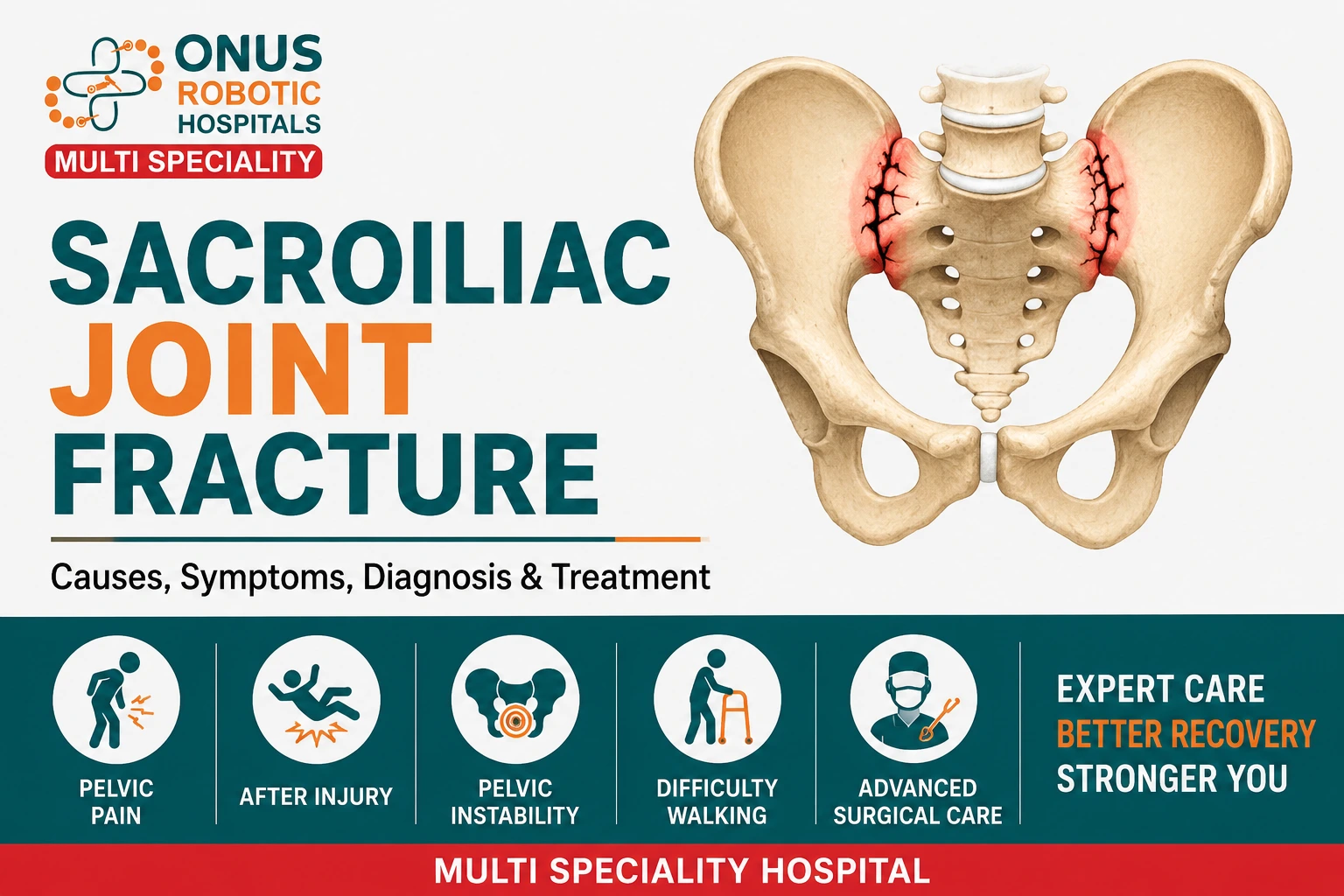
What Is a Sacroiliac Joint Fracture?
A Sacroiliac (SI) Joint Fracture is a serious pelvic injury involving the region where the sacrum (the triangular bone at the base of the spine) connects with the iliac bones of the pelvis. The sacroiliac joint plays a critical role in transferring body weight from the spine to the lower limbs and maintaining pelvic stability.
Fractures involving the sacroiliac joint usually occur following high-energy trauma such as road traffic accidents, falls from height, sports injuries, or crush injuries. In elderly individuals with osteoporosis, even low-impact falls can occasionally cause fractures around the sacroiliac region.
Because the pelvis supports the body’s weight and protects important nerves and blood vessels, sacroiliac joint fractures require prompt diagnosis and specialized orthopedic care.
Understanding the Sacroiliac Joint
The sacroiliac joints are located on either side of the lower spine where the sacrum meets the pelvic bones.
Their functions include:
- Supporting upper body weight
- Transferring force between the spine and legs
- Maintaining pelvic stability
- Assisting with walking and movement
An injury to this area can significantly affect mobility and daily activities.
Causes of Sacroiliac Joint Fractures
Road Traffic Accidents
Motor vehicle collisions are one of the most common causes of sacroiliac joint fractures.
Falls from Height
Falls from buildings, ladders, or stairs can transmit significant force through the pelvis.
Sports Injuries
High-impact sports may occasionally result in pelvic trauma.
Crush Injuries
Industrial accidents or heavy object compression can cause severe pelvic fractures.
Osteoporotic Fractures
In elderly patients, weakened bones due to osteoporosis can fracture even after minor falls.
Symptoms of a Sacroiliac Joint Fracture
Symptoms vary depending on the severity of the injury.
Common symptoms include:
Severe Lower Back or Pelvic Pain
Pain is typically felt in the lower back, buttock, or pelvic region.
Difficulty Standing or Walking
Patients often find it painful or impossible to bear weight.
Hip or Groin Pain
Pain may radiate into the hip, groin, or upper thigh.
Swelling and Bruising
Visible bruising may develop around the pelvis or buttocks.
Reduced Mobility
Movement becomes difficult due to instability and pain.
Numbness or Weakness
In severe injuries, nearby nerves may be affected, causing numbness or weakness in the legs.
Types of Sacroiliac Joint Fractures
Stable Fractures
The pelvic ring remains largely intact and stable.
Unstable Fractures
The pelvic ring is disrupted, leading to significant instability and requiring surgical intervention.
Associated Pelvic Fractures
Sacroiliac joint fractures often occur along with:
- Pelvic ring injuries
- Acetabular fractures
- Sacral fractures
- Pubic rami fractures
How Is a Sacroiliac Joint Fracture Diagnosed?
Clinical Examination
An orthopedic specialist evaluates:
- Pain location
- Pelvic stability
- Walking ability
- Neurological function
X-Rays
Initial imaging helps identify fractures and pelvic alignment.
CT Scan
A CT scan provides detailed visualization of:
- Fracture pattern
- Joint involvement
- Pelvic stability
CT imaging is often essential for surgical planning.
MRI Scan
MRI may be used to assess:
- Soft tissue injuries
- Ligament damage
- Nerve involvement
Treatment of Sacroiliac Joint Fractures
Treatment depends on:
- Fracture severity
- Pelvic stability
- Associated injuries
- Patient age and activity level
Non-Surgical Treatment
Stable fractures may be treated with:
- Pain management
- Activity modification
- Physiotherapy
- Walking aids
- Regular follow-up imaging
Surgical Treatment
Unstable fractures often require surgical stabilization.
Procedures may include:
Percutaneous Screw Fixation
Minimally invasive screws are inserted to stabilize the sacroiliac joint.
Pelvic Reconstruction Surgery
Complex fractures may require advanced fixation techniques using plates and screws.
Robotic-Assisted and Image-Guided Surgery
Modern orthopedic centers use advanced navigation systems to improve precision and outcomes in pelvic fracture surgery.
Recovery After Sacroiliac Joint Fracture
Recovery depends on:
- Severity of injury
- Treatment method
- Patient age
- Overall health
Early Recovery
The focus is on:
- Pain control
- Preventing complications
- Gradual mobilization
Rehabilitation
Physiotherapy helps restore:
- Strength
- Flexibility
- Balance
- Walking ability
Long-Term Recovery
Most patients continue improving over several months following treatment.
Possible Complications
Without proper treatment, complications may include:
- Chronic pelvic pain
- Difficulty walking
- Pelvic instability
- Nerve damage
- Arthritis of the sacroiliac joint
- Reduced quality of life
Early diagnosis significantly reduces these risks.
Preventing Pelvic Fractures
While not all injuries are preventable, risk can be reduced by:
- Wearing seat belts
- Using protective sports equipment
- Fall prevention measures
- Maintaining bone health
- Treating osteoporosis
When Should You Consult an Orthopedic Specialist?
Seek immediate medical attention if you experience:
- Severe pelvic pain after trauma
- Inability to stand or walk
- Hip or groin pain after an accident
- Numbness or weakness in the legs
- Significant bruising around the pelvis
Prompt evaluation can prevent complications and improve recovery outcomes.
For Appointments:
Dr. Balaraju Naidu, Robotic Orthopedic Surgeon
ONUS Robotic Hospitals – Hyderabad
👉 link: contact-us or book-appointment