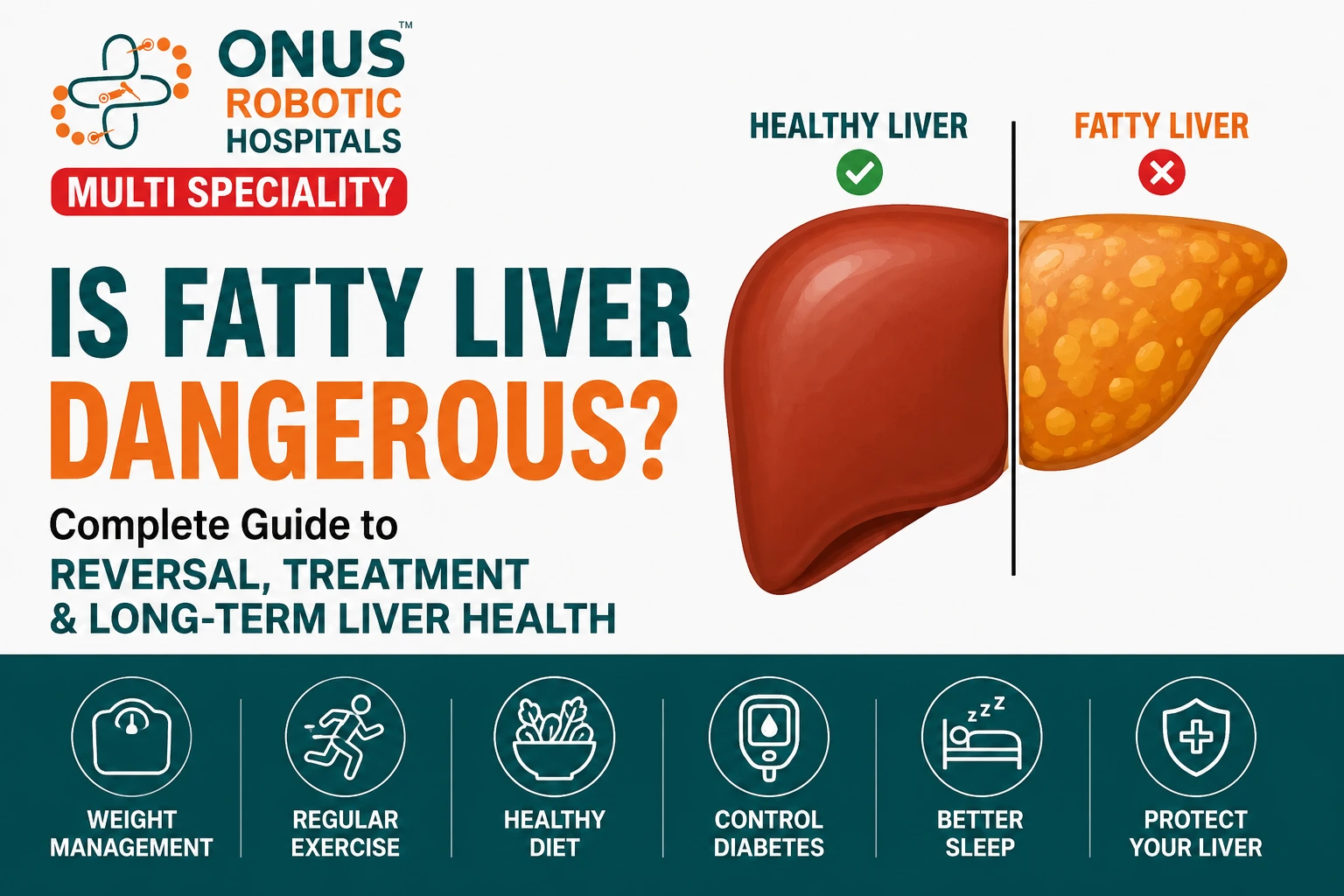
Is Fatty Liver Dangerous? Complete Guide to Fatty Liver Reversal, Treatment, and Long-Term Liver Health: Dr. Ravi Kiran | Diabetologist, Onus Robotic Hospital
Introduction
One of the most common questions patients ask after an ultrasound report is:
“Doctor, is fatty liver dangerous?”
Many people are diagnosed with Grade 1 fatty liver during routine health check-ups and assume it is a harmless condition. Since fatty liver often causes no symptoms in its early stages, it is frequently ignored until more serious complications develop.
The reality is that fatty liver can be either a reversible metabolic condition or a progressive disease that may lead to liver fibrosis, cirrhosis, liver failure, and even liver cancer if left untreated. Early detection and timely intervention make all the difference.
What Is Fatty Liver Disease?
Fatty liver disease occurs when excessive fat accumulates inside liver cells. While a small amount of fat in the liver is normal, excessive fat deposition can interfere with liver function and trigger inflammation.
The condition is broadly classified into:
Non-Alcoholic Fatty Liver Disease (NAFLD)
NAFLD is the most common form of fatty liver disease and is closely linked to:
- Obesity
- Type 2 diabetes
- Insulin resistance
- High cholesterol
- High triglycerides
- Metabolic syndrome
- Sedentary lifestyle
Alcoholic Fatty Liver Disease
This occurs due to excessive alcohol consumption and can progress to severe liver damage if alcohol intake continues.
Why Fatty Liver Is Often Called a Silent Disease
One of the most concerning aspects of fatty liver disease is that it often causes no noticeable symptoms during the early stages.
Many patients have:
- Normal daily activities
- Normal liver function tests
- No pain or discomfort
Despite this, liver damage may continue silently over several years. By the time symptoms develop, significant inflammation or scarring may already be present.
How Dangerous Is Fatty Liver?
The risk depends largely on the stage of disease progression.
Stage 1: Simple Fatty Liver (Steatosis)
This is the earliest stage, characterized by excess fat accumulation without significant inflammation.
At this stage:
- The condition is usually reversible
- Long-term complications can be prevented
- Lifestyle modification is highly effective
Stage 2: Non-Alcoholic Steatohepatitis (NASH)
NASH develops when fatty liver causes inflammation and liver cell injury.
This stage increases the risk of:
- Progressive liver damage
- Fibrosis
- Long-term liver complications
Stage 3: Liver Fibrosis
Persistent inflammation leads to scar tissue formation within the liver.
Fibrosis can result in:
- Reduced liver function
- Increased liver stiffness
- Higher risk of cirrhosis
Stage 4: Liver Cirrhosis
Cirrhosis represents advanced scarring of the liver.
Potential complications include:
- Fluid accumulation in the abdomen
- Internal bleeding
- Liver failure
- Hospitalization
- Need for liver transplantation
Stage 5: Liver Cancer
Long-standing fatty liver disease, especially when associated with NASH and cirrhosis, increases the risk of hepatocellular carcinoma (liver cancer).
Fatty Liver Affects More Than Just the Liver
Fatty liver is increasingly recognized as a manifestation of broader metabolic dysfunction.
Research has shown strong associations between fatty liver disease and:
Cardiovascular Disease
Patients with NAFLD have a higher risk of:
- Heart attack
- Stroke
- High blood pressure
Type 2 Diabetes
Fatty liver worsens insulin resistance and contributes to poor blood sugar control.
Chronic Kidney Disease
Studies suggest a link between fatty liver and declining kidney function.
Metabolic Syndrome
Fatty liver is often considered the liver component of metabolic syndrome.
Who Is Most at Risk?
You may be at higher risk of developing fatty liver if you have:
- Type 2 diabetes
- Prediabetes
- Obesity
- Excess abdominal fat
- High triglycerides
- High cholesterol
- PCOS
- Sleep apnea
- Sedentary lifestyle
Regular screening is particularly important for individuals with these risk factors.
Symptoms of Fatty Liver Disease
Many people have no symptoms at all.
When symptoms occur, they may include:
- Fatigue
- Low energy levels
- Bloating
- Abdominal discomfort
- Brain fog
- Reduced exercise tolerance
- Mild pain in the upper right abdomen
Advanced liver disease may cause:
- Jaundice
- Swelling of the legs
- Fluid accumulation in the abdomen
- Muscle wasting
These symptoms often indicate more advanced disease and require immediate medical attention.
Can Fatty Liver Be Reversed?
The encouraging news is that fatty liver reversal is possible, especially in:
- Grade 1 fatty liver
- Grade 2 fatty liver
- Early NASH
The earlier treatment begins, the greater the likelihood of complete reversal.
Best Strategies for Fatty Liver Reversal
1. Achieve Healthy Weight Loss
Studies consistently show that losing 7–10% of body weight can significantly reduce liver fat and inflammation.
Benefits include:
- Improved insulin sensitivity
- Better liver function
- Reduced inflammation
2. Reduce Sugar Consumption
Limit:
- Soft drinks
- Fruit juices
- Sweets
- Processed foods
Reducing sugar intake is one of the most effective strategies for reversing fatty liver.
3. Increase Protein Intake
A balanced high-protein diet can:
- Preserve muscle mass
- Improve metabolism
- Reduce liver fat accumulation
4. Exercise Regularly
Recommended activities include:
- Walking
- Strength training
- Cycling
- Swimming
- Resistance exercises
5. Control Diabetes
Managing blood sugar effectively helps reduce ongoing liver damage.
6. Improve Sleep Quality
Poor sleep contributes to:
- Obesity
- Insulin resistance
- Fatty liver progression
Aim for 7–8 hours of quality sleep each night.
How Is Fatty Liver Diagnosed?
Ultrasound Abdomen
The most commonly used screening test.
FibroScan
Measures:
- Liver fat content
- Liver stiffness
- Fibrosis severity
Liver Function Tests
May remain normal despite significant fatty liver disease.
HbA1c
Evaluates blood sugar control and diabetes risk.
Lipid Profile
Assesses cholesterol and triglyceride levels.
When Should You See a Liver Specialist?
Consult a specialist if:
- You have diabetes
- You are overweight or obese
- Your ultrasound shows fatty liver
- You have elevated triglycerides
- You have a family history of liver disease
Early evaluation can prevent progression and improve long-term outcomes.
Final Takeaway
So, is fatty liver dangerous?
The answer is simple:
Yes, if ignored.
No, if detected early and managed properly.
Fatty liver disease is often a warning sign of underlying metabolic dysfunction, insulin resistance, obesity, and future cardiovascular risk. The good news is that early-stage fatty liver is frequently reversible through lifestyle modifications, weight management, exercise, and proper medical guidance.
Taking action today can help protect your liver, improve your overall metabolic health, and prevent serious complications in the future.
Consultation
📍 Dr. Ravi Kiran
Diabetologist & Preventive Medicine Specialist
Onus Robotic Hospital, Hyderabad