What Is Fibrous Dysplasia?
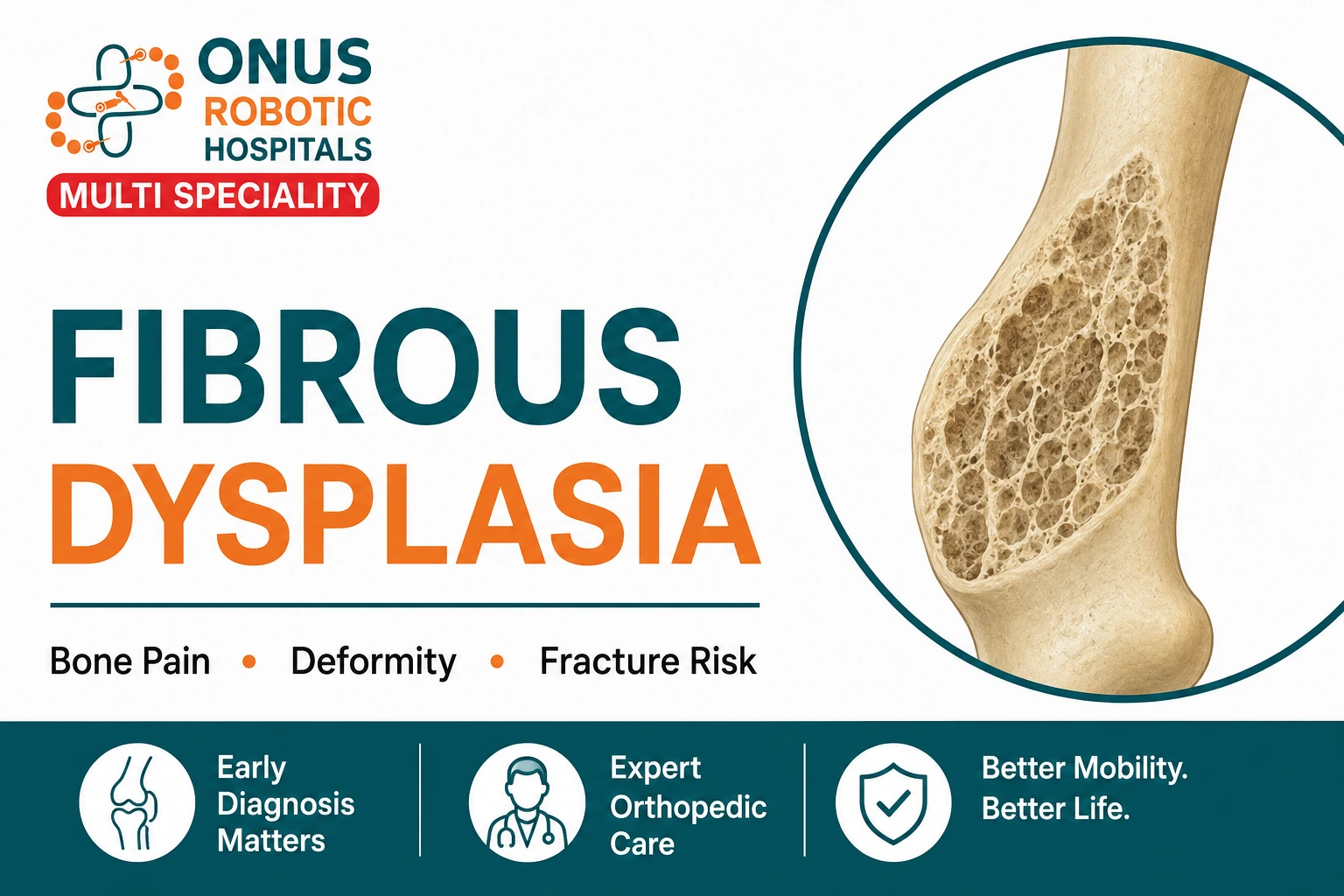
Fibrous Dysplasia is a rare bone disorder in which normal bone is replaced by abnormal fibrous (scar-like) tissue. This abnormal tissue weakens the bone, making it more prone to pain, deformity, and fractures.
Although Fibrous Dysplasia is not cancer, it can affect the strength and structure of bones, leading to significant orthopedic problems if left untreated.
The condition most commonly develops during childhood or adolescence and may affect one bone or multiple bones throughout the body.
How Does Fibrous Dysplasia Occur?
Fibrous Dysplasia occurs due to a genetic mutation that affects bone-forming cells. This mutation happens after conception and is not inherited from parents.
As a result, normal bone is gradually replaced with fibrous tissue, causing:
- Weakening of the bone
- Abnormal bone growth
- Bone deformity
- Increased fracture risk
The severity of the disease varies from person to person.
Types of Fibrous Dysplasia
Monostotic Fibrous Dysplasia
This is the most common form and affects only one bone.
Commonly affected bones include:
- Femur (thigh bone)
- Tibia (shin bone)
- Ribs
- Skull
- Upper arm bone (humerus)
Polyostotic Fibrous Dysplasia
This form affects multiple bones and may cause more significant skeletal deformities and complications.
Which Bones Are Commonly Affected?
Fibrous Dysplasia can affect any bone but is most frequently seen in:
- Femur
- Tibia
- Pelvis
- Ribs
- Skull and facial bones
- Humerus
- Spine
The femur is one of the most commonly affected bones and may develop a characteristic bowing deformity known as “Shepherd’s Crook Deformity.”
Symptoms of Fibrous Dysplasia
Some patients may have no symptoms and discover the condition incidentally during imaging studies.
Others may experience:
Bone Pain
Persistent pain is one of the most common symptoms.
Swelling
Abnormal enlargement of the affected bone may occur.
Bone Deformity
As the abnormal tissue expands, bones may become curved or misshapen.
Limping
Patients with lower limb involvement may develop walking difficulties.
Recurrent Fractures
Weakened bones are more susceptible to fractures, sometimes even after minor injuries.
Facial Asymmetry
When skull or facial bones are involved, visible facial deformities may develop.
What Is McCune-Albright Syndrome?
In some patients, Fibrous Dysplasia occurs as part of a rare condition called McCune-Albright Syndrome.
This syndrome may include:
- Fibrous Dysplasia
- Skin pigmentation (café-au-lait spots)
- Hormonal abnormalities
These patients require multidisciplinary management.
How Is Fibrous Dysplasia Diagnosed?
Clinical Examination
An orthopedic specialist evaluates:
- Pain
- Bone deformity
- Limb length differences
- Walking pattern
X-Rays
X-rays often show a characteristic “ground-glass” appearance within the affected bone.
CT Scan
Provides detailed information about:
- Bone architecture
- Extent of disease
- Facial bone involvement
MRI Scan
Helps evaluate:
- Soft tissue involvement
- Extent of lesions
- Complications
Bone Scan
A bone scan can determine whether multiple bones are involved.
Biopsy
In selected cases, a biopsy may be performed to confirm the diagnosis and rule out other bone conditions.
Complications of Fibrous Dysplasia
Without appropriate management, complications may include:
- Pathological fractures
- Progressive deformity
- Limb length discrepancy
- Chronic pain
- Joint problems
- Mobility limitations
Early diagnosis helps reduce these risks.
Treatment of Fibrous Dysplasia
Treatment depends on:
- Patient age
- Bone involved
- Severity of symptoms
- Presence of fractures or deformity
Observation
Patients with mild disease and no symptoms may only require periodic monitoring.
Medications
Pain-relieving medications may help manage symptoms.
In selected cases, bisphosphonate therapy may be recommended to reduce bone pain.
Fracture Management
Pathological fractures require prompt orthopedic treatment.
Corrective Surgery
Surgery may be recommended for:
- Severe deformity
- Recurrent fractures
- Significant bone weakness
- Functional limitations
Internal Fixation
Specialized implants such as rods, plates, or screws may be used to stabilize weakened bones.
Bone Reconstruction
Advanced reconstructive procedures may be necessary in complex cases.
Can Fibrous Dysplasia Turn into Cancer?
Malignant transformation is extremely rare.
Most patients live normal lives with appropriate monitoring and treatment.
However, any sudden increase in pain, swelling, or rapid changes in the affected bone should be evaluated immediately.
Living with Fibrous Dysplasia
Patients can improve bone health by:
- Attending regular follow-up visits
- Avoiding high-risk activities when advised
- Maintaining adequate calcium and vitamin D intake
- Following physiotherapy recommendations
- Seeking early treatment for pain or fractures
When Should You Consult an Orthopedic Specialist?
Seek medical attention if you experience:
- Persistent bone pain
- Recurrent fractures
- Bone deformity
- Limping
- Facial asymmetry
- Unexplained swelling of a bone
Early intervention can help prevent complications and improve long-term outcomes.
For Appointments:
Dr. Balaraju Naidu, Robotic Orthopedic Surgeon
ONUS Robotic Hospitals – Hyderabad
👉 link: contact-us or book-appointment