Difficulty Swallowing: When Is It More Than Just a Minor Problem?
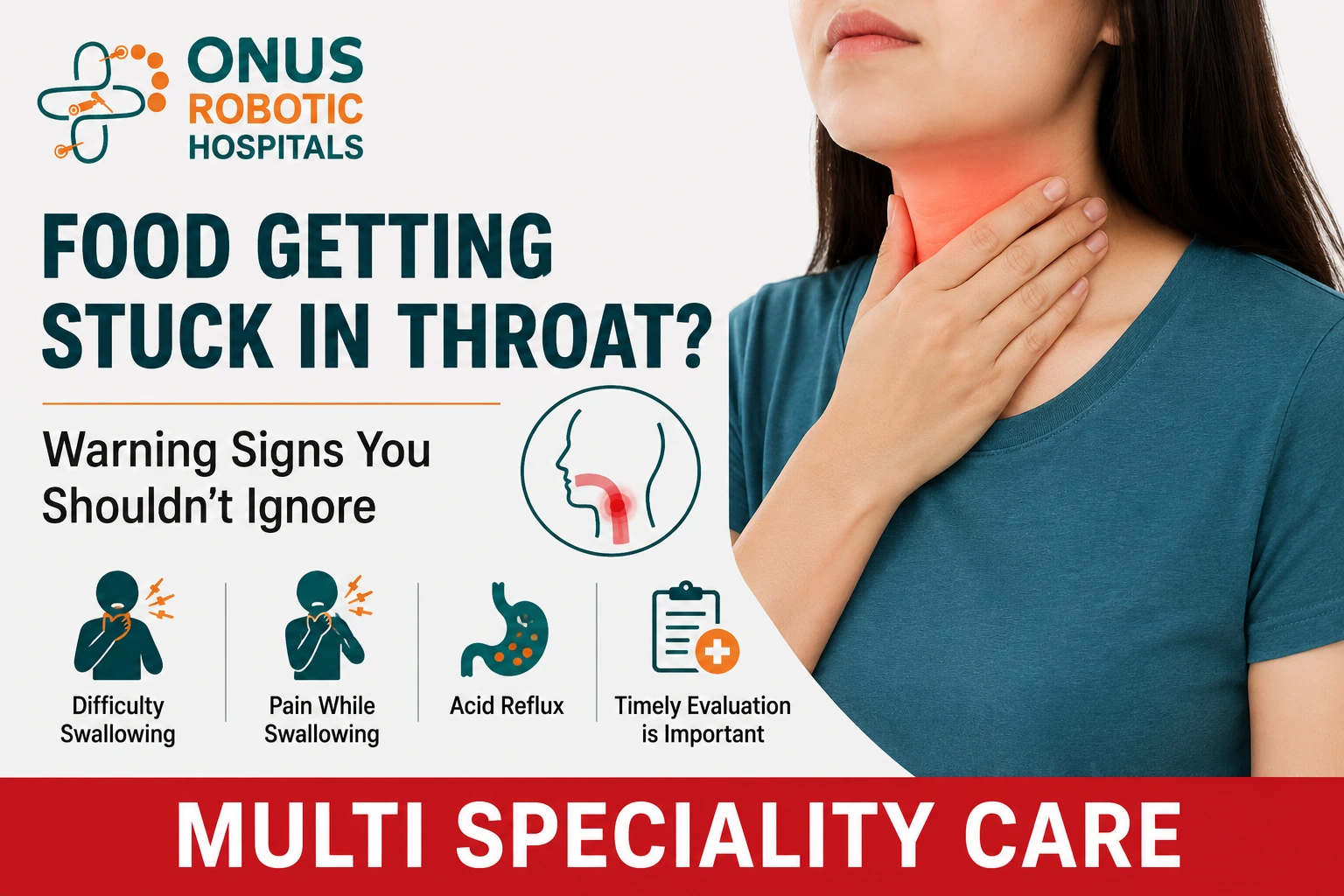
Have you ever felt like food gets stuck in your throat while eating? While this may occasionally happen when eating too quickly, frequent difficulty swallowing should never be ignored. This condition, known as dysphagia, can sometimes indicate an underlying disorder involving the throat, esophagus, or nervous system.
In this article, we explain the common causes of food getting stuck in the throat, warning signs, available treatments, and when you should consult an ENT specialist.
What Is Dysphagia?
Dysphagia is the medical term for difficulty swallowing. It may affect swallowing solid foods, liquids, or both. Some people experience the sensation that food is stuck in the throat or chest, while others may cough or choke during meals.
Although occasional swallowing difficulty can occur, persistent or worsening symptoms require medical evaluation.
Common Causes of Food Getting Stuck in the Throat
Several conditions can make swallowing difficult, including:
1. Acid Reflux (GERD)
Long-term acid reflux can irritate the food pipe (esophagus), causing inflammation, narrowing, or scarring that makes swallowing difficult.
2. Esophageal Stricture
Repeated inflammation may lead to narrowing of the esophagus, making solid foods difficult to swallow.
3. Esophageal Motility Disorders
Conditions like achalasia prevent the normal movement of food into the stomach, causing food to remain in the esophagus.
4. Throat or Esophageal Cancer
Persistent difficulty swallowing, especially with weight loss or pain, should be evaluated promptly to rule out serious conditions.
5. Neurological Disorders
Stroke, Parkinson’s disease, multiple sclerosis, and other neurological conditions may affect the muscles involved in swallowing.
6. Enlarged Tonsils or Adenoids
In children and some adults, enlarged tonsils or adenoids may interfere with swallowing.
7. Infections and Inflammation
Severe throat infections, abscesses, or inflammation can temporarily make swallowing painful and difficult.
Symptoms You Should Never Ignore
Seek medical attention if you experience:
- Food getting stuck repeatedly
- Pain while swallowing
- Difficulty swallowing solids or liquids
- Choking during meals
- Frequent coughing while eating
- Feeling of a lump in the throat
- Regurgitation of undigested food
- Unexplained weight loss
- Hoarseness of voice
- Persistent heartburn with swallowing difficulty
Who Is at Higher Risk?
You may be at increased risk if you:
- Are over 50 years of age
- Have chronic acid reflux (GERD)
- Smoke or consume alcohol regularly
- Have neurological diseases
- Have undergone neck or chest surgery
- Have a history of throat or esophageal disorders
How Is the Cause Diagnosed?
An ENT specialist or gastroenterologist may recommend:
- Detailed medical history and physical examination
- Flexible nasal endoscopy
- Upper GI endoscopy
- Barium swallow X-ray
- Esophageal manometry
- CT scan or MRI (when required)
- Swallowing assessment
Early diagnosis helps prevent complications and improves treatment outcomes.
Treatment Options
Treatment depends on the underlying cause and may include:
Lifestyle Changes
- Eat slowly and chew food thoroughly.
- Take small bites.
- Drink adequate water with meals.
- Avoid lying down immediately after eating.
- Manage acid reflux with dietary modifications.
Medications
Depending on the diagnosis, medications may be prescribed for:
- Acid reflux
- Esophageal inflammation
- Infection
- Muscle relaxation disorders
Endoscopic Procedures
Some narrowed areas of the esophagus can be widened using endoscopic dilation.
Surgery
If tumors, severe narrowing, or structural abnormalities are present, surgical treatment may be necessary.
When Should You See an ENT Specialist?
Consult an ENT doctor immediately if:
- Food gets stuck repeatedly.
- Swallowing becomes progressively worse.
- You experience choking episodes.
- There is blood while coughing or vomiting.
- You have persistent throat pain or hoarseness.
- Difficulty swallowing is associated with weight loss.
Prompt medical evaluation can help identify serious conditions early and prevent complications.
Tips to Prevent Swallowing Problems
- Eat slowly without rushing.
- Chew food properly before swallowing.
- Stay hydrated.
- Avoid smoking and excessive alcohol.
- Treat acid reflux early.
- Maintain regular ENT check-ups if symptoms persist.
Conclusion
Difficulty swallowing should never be dismissed as a minor inconvenience. While it may result from simple conditions like acid reflux, it can also signal more serious disorders involving the throat or esophagus. Early diagnosis and timely treatment can prevent complications and improve quality of life.
If you frequently feel that food is getting stuck in your throat, consult an ENT specialist for a thorough evaluation.
Consultant ENT Head & Neck Surgeon
ONUS Robotic Hospitals – Hyderabad
👉 link: contact-us or book-appointment