
Introduction
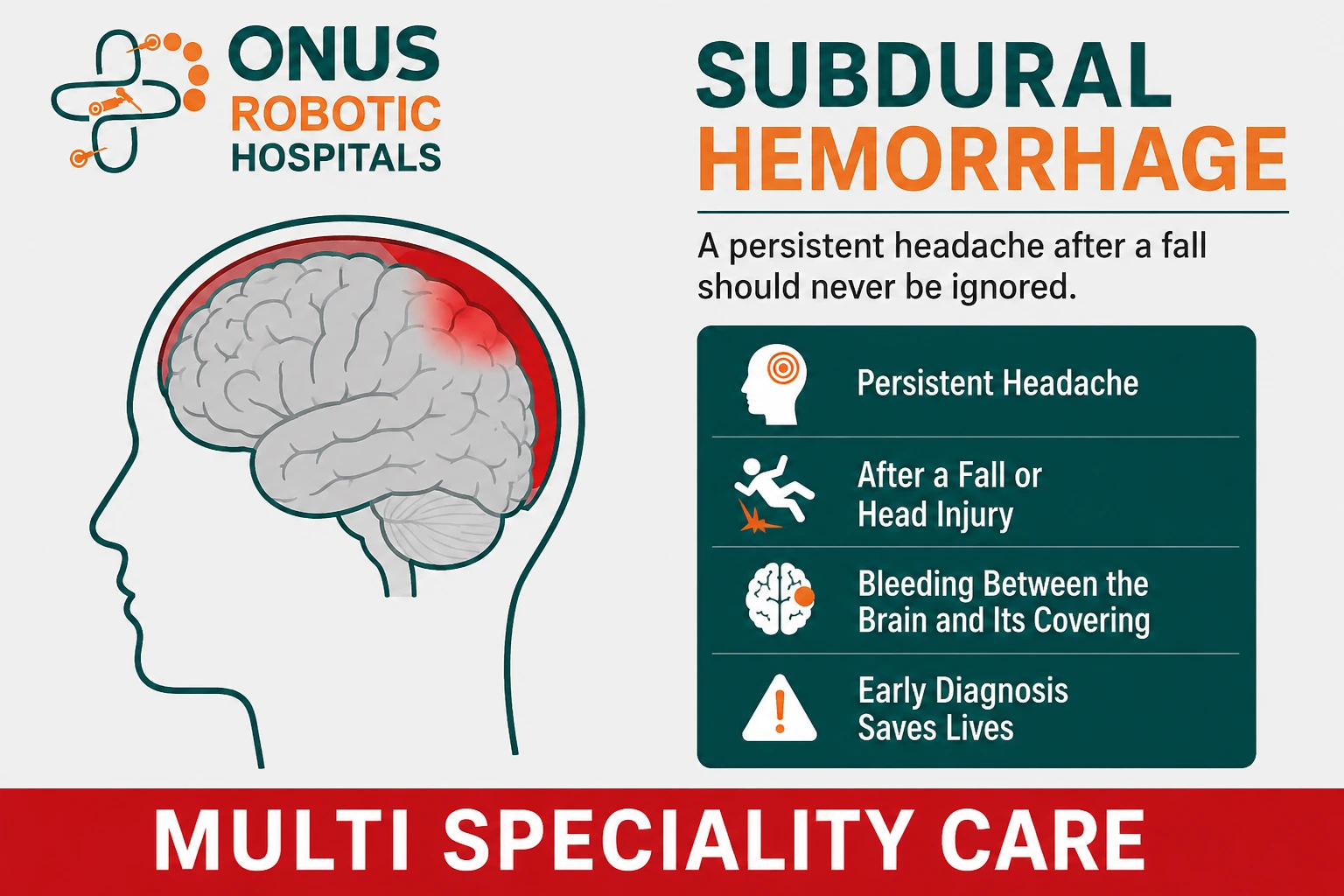
A headache after a minor fall or head injury may seem harmless, but in some cases it can be a warning sign of Subdural Hemorrhage (Subdural Hematoma)—a potentially life-threatening condition in which blood collects between the brain and its outer protective covering (the dura mater).
This bleeding increases pressure inside the skull and may gradually damage the brain if left untreated. Early diagnosis and prompt medical treatment can significantly improve outcomes and reduce the risk of permanent neurological damage.
At ONUS Robotic Hospitals, our emergency and neurology teams provide rapid diagnosis and advanced treatment for patients with head injuries and brain hemorrhages.
What is Subdural Hemorrhage?
A subdural hemorrhage occurs when blood vessels—usually veins—tear following a head injury, allowing blood to accumulate between the brain and the dura mater.
The bleeding may develop:
- Immediately after a severe injury (Acute Subdural Hemorrhage)
- Over several days (Subacute)
- Slowly over weeks after even a minor fall (Chronic Subdural Hemorrhage)
The condition is especially common in elderly individuals, people taking blood-thinning medications, and those with repeated falls.
Common Causes
Subdural hemorrhage can occur due to:
- Falls, especially in older adults
- Road traffic accidents
- Sports-related head injuries
- Assault or physical trauma
- Workplace accidents
- Head injury while taking blood thinners
- Alcohol-related falls
- Repeated minor head injuries
Even a seemingly minor bump to the head should not be ignored if symptoms develop later.
Warning Signs and Symptoms
Symptoms may appear immediately or gradually over hours, days, or even weeks.
Common symptoms include:
- Persistent or worsening headache
- Dizziness
- Nausea or vomiting
- Confusion
- Drowsiness
- Difficulty speaking
- Weakness or numbness in the arms or legs
- Problems with balance or walking
- Blurred or double vision
- Memory problems
- Seizures
- Loss of consciousness
Any worsening neurological symptoms after a head injury require immediate medical attention.
Who Is at Higher Risk?
The risk of subdural hemorrhage is higher in:
- Adults over 60 years of age
- People taking blood-thinning medications
- Individuals with bleeding disorders
- Chronic alcohol users
- Patients with repeated falls
- Athletes involved in contact sports
- Individuals with previous brain injuries
Older adults are particularly vulnerable because age-related brain shrinkage places more tension on the veins inside the skull.
How is Subdural Hemorrhage Diagnosed?
Early diagnosis is critical.
Doctors may perform:
Medical Evaluation
Assessment of symptoms, neurological status, and history of head injury.
CT Scan of the Brain
The fastest and most commonly used test to identify bleeding inside the skull.
MRI Scan
Provides detailed images in selected patients, especially in chronic cases.
Blood Tests
May be performed to evaluate clotting function and overall health.
Prompt imaging helps determine the size of the bleed and the most appropriate treatment.
Treatment Options
Treatment depends on the size of the hemorrhage, symptoms, and the patient’s overall condition.
Observation
Small hemorrhages without significant symptoms may only require:
- Close monitoring
- Repeat brain scans
- Rest
- Regular neurological assessment
Medications
Doctors may prescribe medications to:
- Reduce brain swelling
- Control seizures if necessary
- Manage pain safely
Surgery
Large or symptomatic hemorrhages may require emergency surgery to remove the accumulated blood and relieve pressure on the brain.
Common procedures include:
- Burr hole drainage
- Craniotomy
Early surgical intervention can be life-saving in severe cases.
Possible Complications
Without treatment, subdural hemorrhage can lead to:
- Permanent brain damage
- Paralysis
- Memory impairment
- Seizures
- Speech problems
- Coma
- Death
Prompt medical care greatly reduces the risk of serious complications.
When Should You Go to the Emergency Department?
Seek emergency medical care immediately if you or someone else experiences:
- Severe or worsening headache after a fall
- Loss of consciousness
- Repeated vomiting
- Difficulty speaking
- Sudden weakness
- Confusion
- Seizures
- Difficulty waking up
- Unequal pupil size
- Persistent drowsiness after a head injury
Do not wait for symptoms to improve on their own.
Can Subdural Hemorrhage Be Prevented?
Although not all cases are preventable, you can reduce the risk by:
- Wearing helmets while riding bikes or motorcycles
- Using seat belts in vehicles
- Preventing falls at home
- Installing handrails in bathrooms and staircases
- Using walking aids if balance is poor
- Exercising to improve strength and balance
- Reviewing blood-thinning medications regularly with your doctor
Fall prevention is especially important for older adults.
Recovery
Recovery depends on:
- The size of the hemorrhage
- Age of the patient
- Overall health
- How quickly treatment was received
- Presence of other brain injuries
Many patients recover well with timely diagnosis, appropriate treatment, rehabilitation, and regular follow-up.
Conclusion
A persistent headache after a fall should never be ignored. It may be an early warning sign of Subdural Hemorrhage, a serious condition that requires immediate medical evaluation.
Early diagnosis through a CT scan and prompt treatment can prevent permanent brain injury and save lives. If you or a loved one develops headache, confusion, weakness, or any neurological symptoms after a head injury, seek emergency medical care without delay.
For Appointments:
Dr. Balaraju Naidu, Robotic Orthopedic Surgeon
ONUS Robotic Hospitals – Hyderabad
👉 link: contact-us or book-appointment
