Introduction
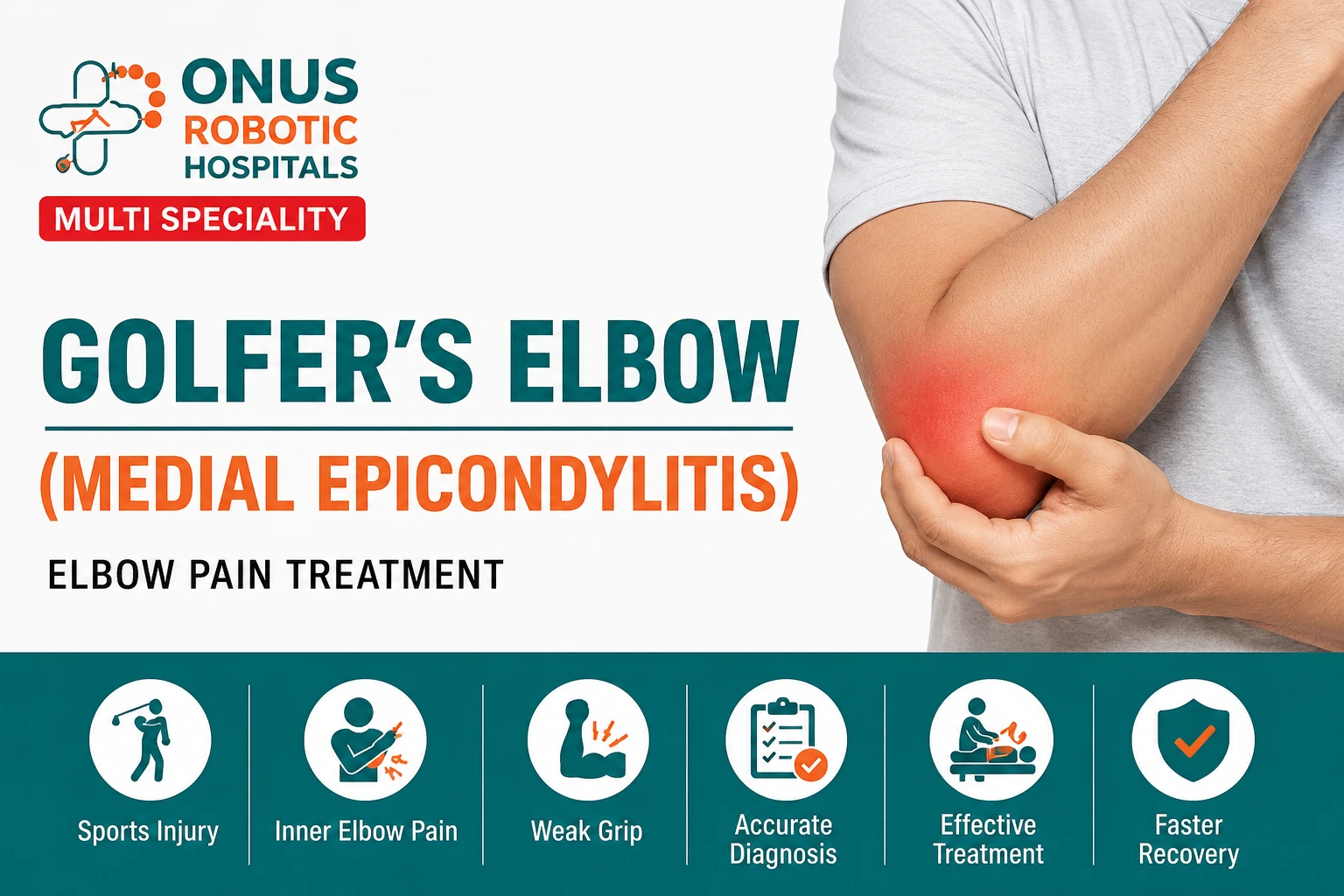
Do you experience pain on the inside of your elbow while lifting objects, shaking hands, gripping tools, or playing sports? You may be suffering from Golfer’s Elbow, medically known as Medial Epicondylitis.
Despite its name, this condition doesn’t affect only golfers. Anyone who repeatedly uses their wrist, hand, or forearm muscles can develop Golfer’s Elbow. Office workers, carpenters, plumbers, mechanics, gym enthusiasts, gardeners, and athletes are also at risk.
At ONUS Robotic Hospitals, our orthopedic specialists provide advanced diagnosis, personalized treatment, physiotherapy, and minimally invasive surgical options to help patients recover from elbow pain and return to their normal activities.
What is Golfer’s Elbow?
Golfer’s Elbow (Medial Epicondylitis) is a condition caused by irritation or tiny tears in the tendons that attach the forearm muscles to the bony prominence on the inside of the elbow (medial epicondyle).
These tendons help control wrist flexion and gripping movements. Repetitive stress or overuse can lead to inflammation, pain, and weakness.
Causes of Golfer’s Elbow
Golfer’s Elbow usually develops due to repetitive movements rather than a single injury.
Common causes include:
- Repetitive gripping activities
- Frequent wrist bending
- Heavy lifting
- Playing golf with improper technique
- Weight training
- Racquet sports
- Carpentry and plumbing work
- Typing for long hours
- Gardening
- Repetitive manual labor
Poor posture and improper exercise techniques may also increase the risk.
Symptoms of Golfer’s Elbow
Symptoms often develop gradually and may worsen over time.
Common symptoms include:
- Pain on the inside of the elbow
- Tenderness near the medial epicondyle
- Pain while gripping objects
- Weak hand grip
- Wrist pain during movement
- Stiffness in the elbow
- Pain while lifting heavy objects
- Difficulty shaking hands
- Discomfort while turning door handles
- Pain during sports activities
Some patients may also experience numbness or tingling in the ring and little fingers if the nearby ulnar nerve becomes irritated.
Who is at Risk?
Golfer’s Elbow is more common in:
- Golf players
- Cricket players
- Tennis players
- Baseball players
- Weightlifters
- Construction workers
- Electricians
- Carpenters
- Mechanics
- Office workers
- People aged between 35–60 years
Anyone performing repetitive wrist and forearm movements is at increased risk.
How is Golfer’s Elbow Diagnosed?
An orthopedic specialist will evaluate:
- Medical history
- Symptoms
- Physical examination
- Tenderness over the inner elbow
- Grip strength
- Wrist movement
- Pain during resisted wrist flexion
If necessary, imaging studies such as X-rays, ultrasound, or MRI may be recommended to rule out fractures, arthritis, ligament injuries, or tendon tears.
Treatment Options for Golfer’s Elbow
Most patients improve with non-surgical treatment.
1. Activity Modification
Avoid activities that worsen pain and allow the tendon to heal.
2. Rest and Ice Therapy
Applying ice packs for 15–20 minutes several times a day can reduce pain and inflammation.
3. Medications
Your doctor may prescribe medications to relieve pain and reduce inflammation.
4. Physiotherapy
A structured rehabilitation program can help by:
- Stretching tight muscles
- Strengthening forearm muscles
- Improving flexibility
- Correcting posture
- Enhancing grip strength
- Preventing recurrence
5. Elbow Brace
A counterforce brace may reduce stress on the affected tendon during daily activities.
6. Advanced Non-Surgical Treatments
In selected patients, your orthopedic specialist may recommend:
- Platelet-Rich Plasma (PRP) therapy
- Ultrasound-guided injections
- Shockwave therapy
- Other regenerative treatment options where appropriate
7. Surgery
Surgery is rarely needed but may be considered if symptoms persist despite several months of conservative treatment.
Surgical treatment aims to remove damaged tendon tissue and repair healthy tendon attachments.
Recovery Time
Recovery depends on the severity of the condition.
- Mild cases: 4–8 weeks
- Moderate cases: 2–4 months
- Severe cases: Several months
Following your rehabilitation program improves recovery and reduces the risk of recurrence.
Can Golfer’s Elbow Be Prevented?
Yes. Preventive measures include:
- Warm up before sports
- Stretch forearm muscles regularly
- Strengthen wrist and forearm muscles
- Use proper sports techniques
- Take frequent breaks during repetitive work
- Maintain good posture
- Avoid sudden increases in activity
- Use ergonomic tools and equipment
When Should You See a Doctor?
Seek medical evaluation if you experience:
- Persistent inner elbow pain
- Weak grip strength
- Difficulty lifting objects
- Pain lasting more than two weeks
- Swelling around the elbow
- Pain interfering with work or sports
- Numbness or tingling in the fingers
Early diagnosis can prevent long-term tendon damage and improve treatment outcomes.
Why Choose ONUS Robotic Hospitals?
At ONUS Robotic Hospitals, patients benefit from:
- Experienced orthopedic specialists
- Comprehensive musculoskeletal evaluation
- Advanced diagnostic imaging
- Personalized physiotherapy programs
- Minimally invasive treatment options
- Robotic-assisted orthopedic expertise
- Complete rehabilitation and follow-up care
Our goal is to relieve pain, restore elbow function, and help patients return to their normal lifestyle safely and efficiently.
Conclusion
Golfer’s Elbow (Medial Epicondylitis) is a common overuse injury that causes pain on the inside of the elbow. Although it is often associated with golfers, it can affect anyone performing repetitive hand, wrist, or forearm movements. With early diagnosis, appropriate treatment, physiotherapy, and activity modification, most patients recover successfully without surgery.
If you’re experiencing persistent elbow pain or difficulty performing everyday tasks, consult the orthopedic experts at ONUS Robotic Hospitals for a comprehensive evaluation and personalized treatment plan.
For Appointments:
Dr. Balaraju Naidu, Robotic Orthopedic Surgeon
ONUS Robotic Hospitals – Hyderabad
👉 link: contact-us or book-appointment