Frequent Nose Block? Understanding Deviated Nasal Septum (DNS) & Septoplasty Treatment- By Consultant ENT Head & Neck Surgeon, ONUS Robotic Hospitals

Frequent Nose Block? Understanding Deviated Nasal Septum (DNS) & Septoplasty Treatment- By Consultant ENT Head & Neck Surgeon, ONUS Robotic Hospitals

Introduction

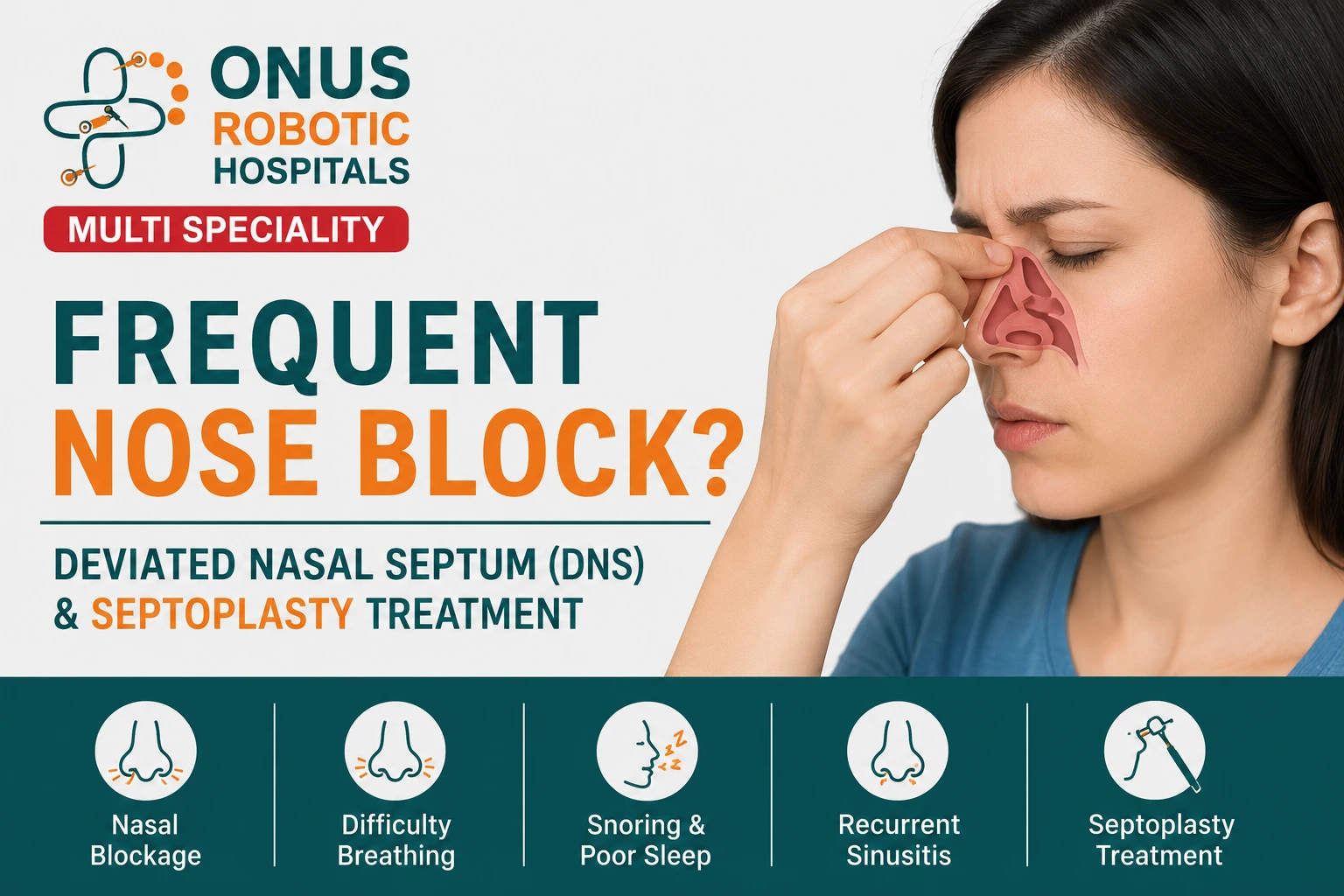
Do you constantly struggle with a blocked nose, especially on one side? Do you breathe through your mouth while sleeping, snore loudly, or frequently suffer from sinus infections? These symptoms may indicate a Deviated Nasal Septum (DNS).

A deviated nasal septum is one of the most common causes of chronic nasal blockage. While many people have a slightly deviated septum without symptoms, a significant deviation can interfere with breathing and affect overall quality of life.

Fortunately, Septoplasty is a safe and effective surgical procedure that can correct the deviation and restore normal airflow.

At ONUS Robotic Hospitals, our experienced ENT specialists provide advanced diagnosis and personalized treatment for nasal obstruction using modern surgical techniques.


What is a Deviated Nasal Septum (DNS)?

The nasal septum is the thin wall made of bone and cartilage that divides the nose into two passages.

Normally, the septum is positioned in the center. When it shifts to one side, it is called a Deviated Nasal Septum (DNS).

A severely deviated septum can partially or completely block one nasal passage, making it difficult to breathe normally.


What Causes a Deviated Nasal Septum?

A deviated septum may occur due to:

Congenital Causes

Some people are born with a deviated septum that develops during fetal growth.

Nose Injury

Injury from:

  • Sports accidents
  • Falls
  • Road traffic accidents
  • Physical trauma

can cause the septum to shift.

Aging

As people age, natural changes in nasal structures may worsen an existing deviation.


Symptoms of Deviated Nasal Septum

Symptoms vary depending on the severity of the deviation.

Common symptoms include:

  • Frequent nose blockage
  • Difficulty breathing through one or both nostrils
  • Mouth breathing
  • Loud snoring
  • Sleep disturbances
  • Recurrent sinus infections
  • Frequent headaches
  • Facial pressure
  • Nosebleeds
  • Reduced sense of smell
  • Postnasal drip
  • Difficulty exercising due to poor airflow

Many people notice that one side of the nose is consistently more blocked than the other.


How Does a Deviated Septum Affect Daily Life?

Chronic nasal blockage can interfere with several aspects of daily living, including:

  • Poor sleep quality
  • Daytime tiredness
  • Difficulty concentrating
  • Reduced exercise capacity
  • Frequent ENT infections
  • Snoring that affects family members

If left untreated, severe nasal obstruction can contribute to chronic sinusitis and sleep-related breathing problems.


Deviated Septum and Sinusitis

A deviated septum can block normal sinus drainage.

When mucus cannot drain properly, bacteria may grow, leading to repeated sinus infections.

Symptoms of sinusitis include:

  • Facial pain
  • Thick nasal discharge
  • Fever
  • Bad breath
  • Headache
  • Persistent nasal congestion

Treating the underlying septal deviation often reduces recurrent sinus infections.

How is Deviated Nasal Septum Diagnosed?

An ENT specialist can diagnose DNS through:

Medical History

Your doctor will ask about:

  • Duration of nasal blockage
  • Snoring
  • Allergies
  • Previous injuries
  • Sinus infections

Physical Examination

The inside of the nose is examined using a nasal speculum or endoscope.


Nasal Endoscopy

A thin camera is inserted into the nose to evaluate:

  • Septal deviation
  • Nasal polyps
  • Sinus openings
  • Turbinate enlargement

CT Scan (If Needed)

A CT scan may be recommended for patients with chronic sinus disease or before surgery.


Can Medicines Correct a Deviated Septum?

No.

Medicines cannot straighten a deviated septum.

However, medications may temporarily relieve symptoms caused by associated allergies or inflammation.

These include:

  • Nasal sprays
  • Antihistamines
  • Saline nasal irrigation
  • Decongestants (short-term use)

If the structural problem is significant, surgery is usually the most effective solution.


What is Septoplasty?

Septoplasty is a surgical procedure performed to straighten the deviated nasal septum.

The surgery improves airflow by repositioning the bone and cartilage inside the nose.

Unlike cosmetic rhinoplasty, septoplasty focuses on improving breathing rather than changing the appearance of the nose.


Who Needs Septoplasty?

Your ENT specialist may recommend septoplasty if you have:

  • Persistent nasal blockage
  • Difficulty breathing through the nose
  • Frequent sinus infections
  • Loud snoring caused by nasal obstruction
  • Recurrent nosebleeds
  • Poor sleep due to blocked nasal passages
  • Failure of medical treatment

Benefits of Septoplasty

Septoplasty can provide several benefits, including:

  • Improved nasal breathing
  • Better sleep quality
  • Reduced snoring
  • Fewer sinus infections
  • Improved exercise tolerance
  • Better quality of life
  • Easier breathing during daily activities

Most patients experience significant improvement after recovery.


Recovery After Septoplasty

Recovery is generally quick.

Patients can expect:

  • Mild swelling for a few days
  • Temporary nasal congestion
  • Minimal discomfort
  • Return to office work within a few days
  • Full healing over several weeks

Your ENT surgeon will provide instructions regarding medications, nasal care, and follow-up visits.


When Should You Consult an ENT Specialist?

Seek medical evaluation if you have:

  • Constant nasal blockage
  • Difficulty breathing through your nose
  • Recurrent sinus infections
  • Loud snoring
  • Frequent nosebleeds
  • Mouth breathing
  • Persistent headaches due to nasal obstruction

Early diagnosis helps prevent complications and improves long-term breathing.


Why Choose ONUS Robotic Hospitals?

At ONUS Robotic Hospitals, our ENT specialists provide comprehensive care for nasal and sinus disorders using advanced diagnostic and surgical techniques.

Our Expertise Includes:

  • Advanced ENT evaluation
  • Nasal endoscopy
  • Septoplasty surgery
  • Sinus disease management
  • Allergy evaluation
  • Minimally invasive ENT procedures
  • Personalized treatment plans

Frequently Asked Questions (FAQs)

Can a deviated septum heal on its own?

No. A deviated septum does not straighten naturally.

Is septoplasty painful?

Septoplasty is usually performed under anesthesia, and most patients experience only mild discomfort during recovery.

Will septoplasty change the shape of my nose?

No. Septoplasty is performed to improve breathing and generally does not alter the external appearance of the nose.

How long does recovery take?

Most people return to normal activities within a week, although complete healing may take several weeks.

Can children have a deviated septum?

Yes. Some children are born with a deviated septum, while others develop it after an injury.


Conclusion

Frequent nasal blockage should never be ignored. A Deviated Nasal Septum (DNS) is a common condition that can affect breathing, sleep quality, and overall well-being. While medications may provide temporary symptom relief, Septoplasty offers a long-term solution by correcting the structural problem.

If you experience chronic nasal obstruction, recurrent sinus infections, or difficulty breathing through your nose, consult the ENT specialists at ONUS Robotic Hospitals for expert evaluation and personalized treatment.

Breathe easier and enjoy a better quality of life with timely diagnosis and advanced ENT care.

For Appointments:

Consultant ENT Head & Neck Surgeon

ONUS Robotic Hospitals – Hyderabad

👉 link: contact-us or book-appointment


Book Doctor Appointment
Book Free Appointment
Please enable JavaScript in your browser to complete this form.
WhatsApp