Introduction
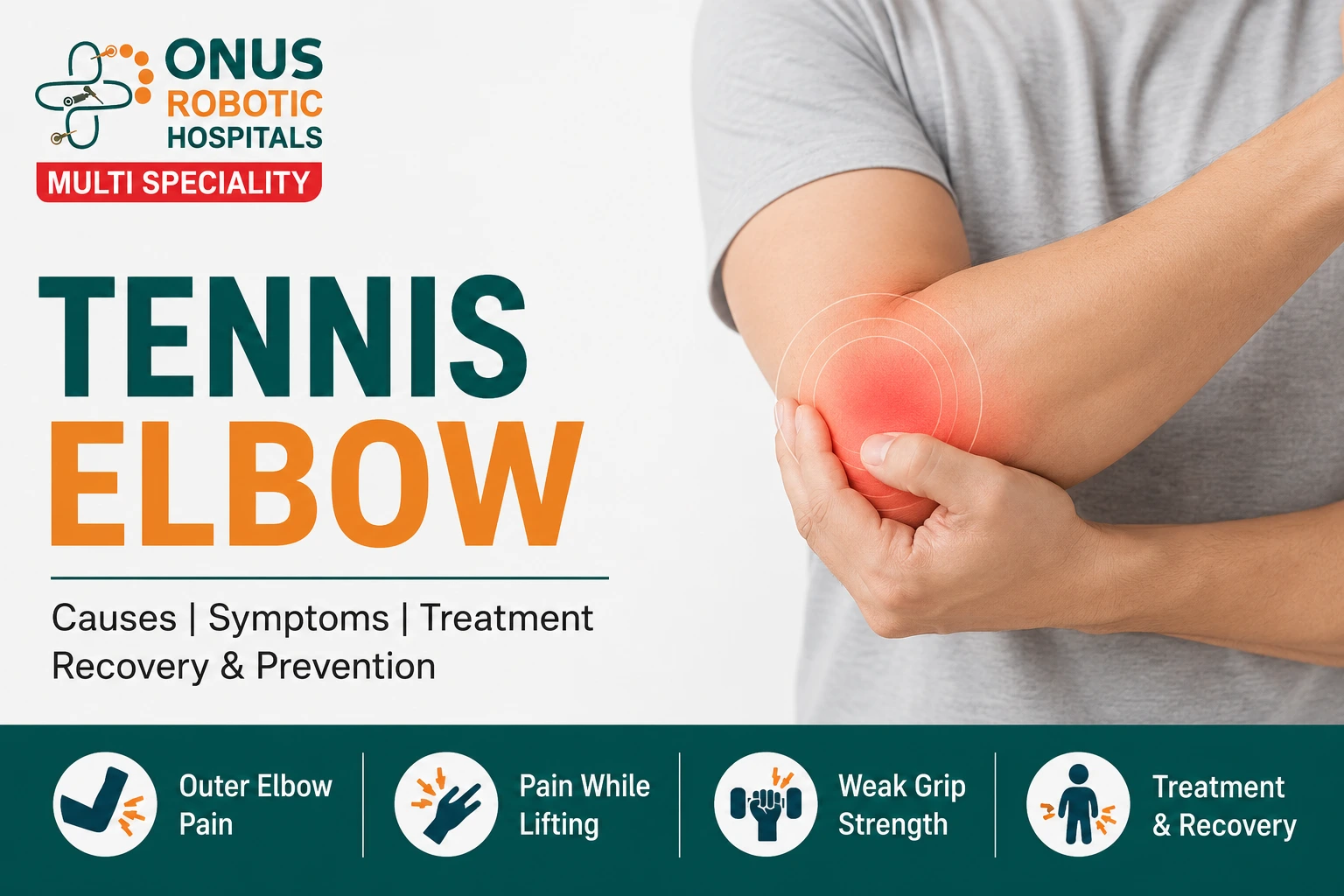
Do you experience pain on the outer side of your elbow while lifting objects, shaking hands, opening a jar, or typing on a keyboard? If yes, you may be suffering from Tennis Elbow, medically known as Lateral Epicondylitis.
Despite its name, Tennis Elbow does not affect only tennis players. It is a common condition caused by repetitive use of the forearm muscles and tendons. Office workers, carpenters, painters, mechanics, gym enthusiasts, homemakers, and people who perform repetitive hand movements are also at risk.
At ONUS Robotic Hospitals, our orthopedic specialists provide comprehensive diagnosis and personalized treatment plans, including advanced physiotherapy and minimally invasive procedures, to help patients return to pain-free daily activities.
What is Tennis Elbow?
Tennis Elbow is an overuse injury affecting the tendons that connect the forearm muscles to the outer part of the elbow (lateral epicondyle).
Repeated stress causes tiny tears in the tendon, leading to inflammation, pain, weakness, and reduced grip strength.
Although many cases are mild initially, untreated Tennis Elbow can become chronic and interfere with everyday tasks.
Causes of Tennis Elbow
The condition usually develops due to repetitive strain on the forearm muscles.
Common causes include:
- Playing tennis, badminton, squash, or racquet sports
- Repetitive computer and mouse use
- Typing for prolonged periods
- Painting
- Carpentry
- Plumbing
- Gardening
- Weight lifting
- Repetitive lifting at work
- Using hand tools frequently
Even everyday activities like carrying grocery bags or lifting a child may worsen symptoms.
Risk Factors
You may be more likely to develop Tennis Elbow if you:
- Are between 30 and 55 years of age
- Perform repetitive hand movements daily
- Play racquet sports regularly
- Have improper sports technique
- Work in manual labor occupations
- Lift heavy objects repeatedly
Symptoms of Tennis Elbow
Symptoms often develop gradually and worsen over time.
Common symptoms include:
- Pain on the outer side of the elbow
- Tenderness around the elbow joint
- Weak grip strength
- Pain while lifting objects
- Difficulty opening jars or bottles
- Pain when shaking hands
- Discomfort while typing or writing
- Pain during sports activities
- Increased pain after repetitive arm use
The pain may radiate down the forearm toward the wrist.
When Should You See a Doctor?
Consult an orthopedic specialist if:
- Pain lasts for more than two weeks
- Home remedies are not helping
- You experience significant weakness
- Daily activities become difficult
- Pain affects work or sports
- Swelling or severe tenderness develops
Early diagnosis helps prevent long-term tendon damage.
How is Tennis Elbow Diagnosed?
Diagnosis is based on:
Medical History
Your doctor will ask about:
- Nature of your work
- Sports activities
- Duration of pain
- Previous injuries
Physical Examination
The orthopedic specialist may check:
- Tenderness over the lateral epicondyle
- Pain during wrist extension
- Grip strength
- Range of motion
Imaging Tests
If necessary, investigations may include:
- X-rays
- Ultrasound
- MRI scan
These help rule out fractures, arthritis, or ligament injuries.
Treatment for Tennis Elbow
Treatment depends on the severity of symptoms.
Conservative Treatment
Most patients improve without surgery.
Treatment options include:
- Activity modification
- Rest
- Ice application
- Elbow brace
- Anti-inflammatory medications
- Stretching exercises
- Physiotherapy
Physiotherapy
Physiotherapy plays a major role in recovery.
Exercises focus on:
- Stretching tight muscles
- Strengthening forearm muscles
- Improving flexibility
- Restoring function
- Preventing recurrence
Advanced rehabilitation programs can significantly improve recovery.
Injections
For persistent pain, doctors may recommend:
- Corticosteroid injections (in selected cases)
- Platelet-Rich Plasma (PRP) injections
These are considered after careful clinical evaluation.
Surgery
Surgery is rarely required.
It may be recommended if:
- Symptoms persist for 6–12 months
- Conservative treatment fails
- Tendon damage is severe
Modern minimally invasive techniques can help repair damaged tendons and restore function.
Recovery Time
Recovery varies depending on the severity of the condition.
Approximate recovery timelines:
- Mild cases: 6–8 weeks
- Moderate cases: 2–4 months
- Severe cases: Up to 6 months
Following your doctor’s advice and completing physiotherapy can speed recovery.
Preventing Tennis Elbow
You can reduce your risk by:
- Taking frequent breaks during repetitive work
- Using proper sports techniques
- Strengthening forearm muscles
- Stretching before exercise
- Maintaining good posture
- Using ergonomic equipment
- Avoiding sudden increases in workload
- Warming up before sports
Why Choose ONUS Robotic Hospitals?
At ONUS Robotic Hospitals, we provide advanced orthopedic care using evidence-based treatment approaches.
Our services include:
- Expert orthopedic specialists
- Comprehensive clinical evaluation
- Digital imaging and diagnostics
- Advanced physiotherapy
- Sports injury rehabilitation
- PRP therapy (when appropriate)
- Personalized recovery programs
- Patient-focused care
Our goal is to relieve pain, restore strength, and help you return to your normal lifestyle as quickly and safely as possible.
Frequently Asked Questions (FAQs)
Is Tennis Elbow caused only by playing tennis?
No. Most patients with Tennis Elbow do not play tennis. The condition is commonly caused by repetitive hand and forearm movements during work or daily activities.
Can Tennis Elbow heal without surgery?
Yes. Most cases improve with rest, physiotherapy, activity modification, and appropriate medical treatment.
How long does recovery take?
Recovery may take from a few weeks to several months, depending on the severity and adherence to treatment.
Can Tennis Elbow return?
Yes. Without proper rehabilitation or if repetitive strain continues, symptoms can recur. Strengthening exercises and ergonomic adjustments help reduce the risk.
Conclusion
Tennis Elbow is a common but treatable condition that can significantly affect your daily life if left untreated. Early diagnosis, appropriate treatment, and guided rehabilitation can relieve pain, restore strength, and prevent long-term complications.
If you are experiencing persistent elbow pain or weakness, consult the orthopedic specialists at ONUS Robotic Hospitals for expert evaluation and personalized care.
For Appointments:
Dr. Balaraju Naidu, Robotic Orthopedic Surgeon
ONUS Robotic Hospitals – Hyderabad
👉 link: contact-us or book-appointment