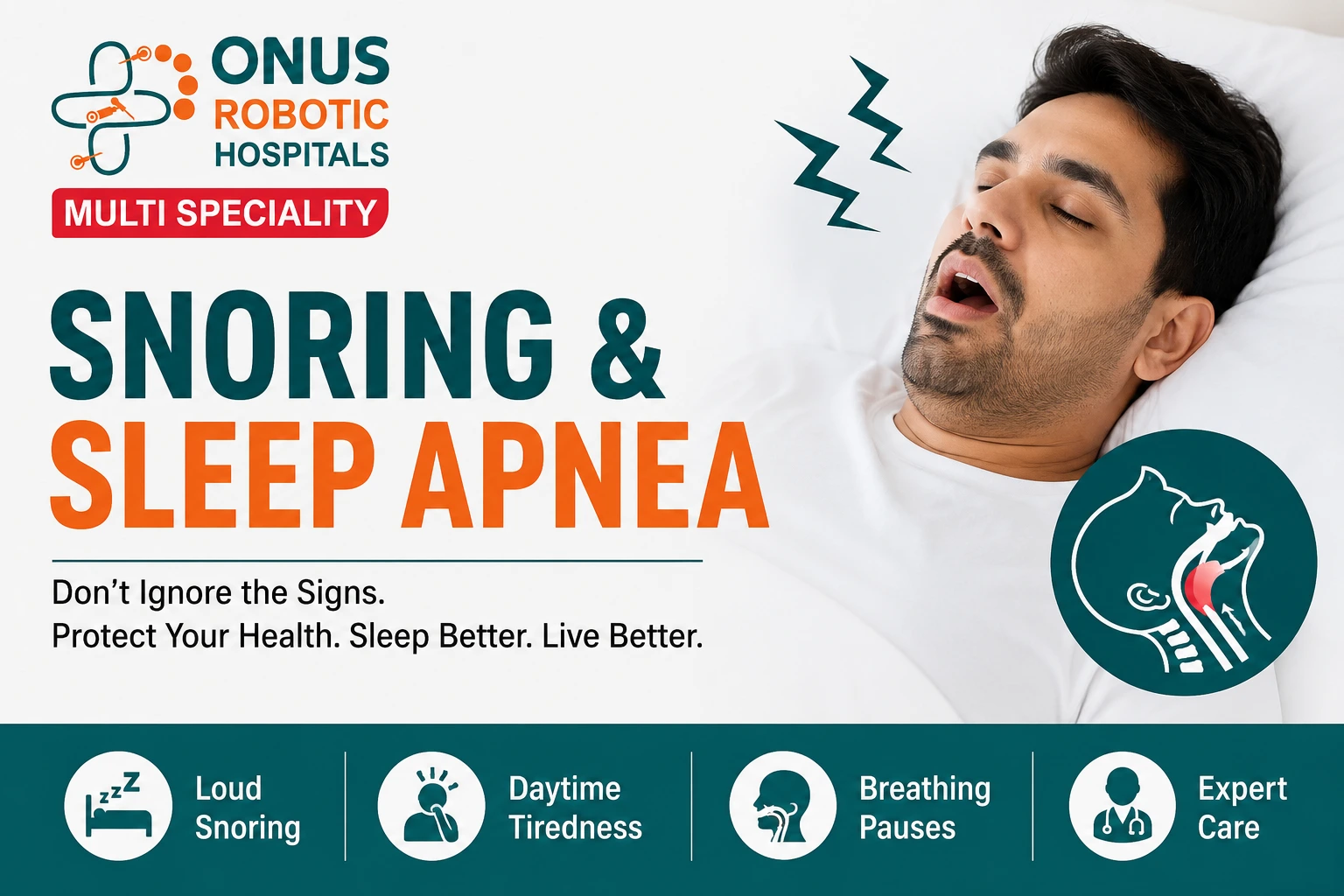
Introduction
Do you snore loudly during sleep? Do you wake up feeling tired even after sleeping for 7–8 hours? Does your partner notice that you stop breathing for a few seconds while sleeping?
Many people think snoring is harmless. While occasional snoring may not be a cause for concern, loud and persistent snoring can sometimes be a sign of Obstructive Sleep Apnea (OSA)—a serious sleep disorder that affects breathing during sleep.
Sleep apnea can impact your heart, brain, blood pressure, energy levels, and overall quality of life. Early diagnosis and proper treatment can significantly improve sleep quality and reduce the risk of long-term health complications.
At ONUS Robotic Hospitals, our ENT specialists evaluate patients with chronic snoring and sleep apnea using advanced diagnostic techniques and provide personalized treatment options.
What Is Snoring?
Snoring is the sound produced when air flows through a partially blocked airway during sleep. The tissues in the throat vibrate as air passes through, creating the familiar snoring noise.
Occasional snoring is common and may occur due to:
- Sleeping on your back
- Nasal congestion
- Allergies
- Alcohol consumption before bedtime
- Fatigue
- Temporary upper respiratory infections
However, loud snoring accompanied by breathing pauses should never be ignored.
What Is Sleep Apnea?
Sleep apnea is a condition in which breathing repeatedly stops and starts during sleep due to blockage or narrowing of the upper airway.
The most common type is Obstructive Sleep Apnea (OSA), where the muscles of the throat relax excessively, causing the airway to collapse temporarily.
These breathing interruptions may occur dozens or even hundreds of times during the night, preventing restful sleep.
Common Symptoms of Sleep Apnea
Symptoms may include:
- Loud, persistent snoring
- Pauses in breathing noticed by family members
- Gasping or choking during sleep
- Morning headaches
- Dry mouth upon waking
- Excessive daytime sleepiness
- Difficulty concentrating
- Poor memory
- Irritability or mood changes
- Poor work performance
- Frequent nighttime awakenings
Many patients are unaware they have sleep apnea until a partner notices their breathing interruptions.
Risk Factors for Sleep Apnea
Several factors increase the risk of developing sleep apnea, including:
Obesity
Excess fat around the neck can narrow the airway.
Large Neck Circumference
A thicker neck increases the likelihood of airway obstruction.
Age
The risk increases with age, especially after 40 years.
Male Gender
Men are more commonly affected, though women may develop sleep apnea after menopause.
Enlarged Tonsils or Adenoids
These are common causes in children.
Nasal Obstruction
A deviated nasal septum, nasal polyps, or chronic allergies may contribute to airway blockage.
Smoking and Alcohol
Both can relax throat muscles and worsen airway collapse during sleep.
Family History
A genetic predisposition may increase risk.
Why Is Sleep Apnea Dangerous?
Untreated sleep apnea affects more than just sleep quality. Repeated interruptions in breathing reduce oxygen supply to the body, placing stress on multiple organs.
Possible complications include:
- High blood pressure (Hypertension)
- Heart disease
- Irregular heart rhythm (Arrhythmias)
- Stroke
- Type 2 diabetes
- Poor memory and concentration
- Depression and anxiety
- Increased risk of road traffic accidents due to daytime sleepiness
- Reduced work productivity
Early treatment can help reduce these risks significantly.
Consultant ENT Head & Neck Surgeon
ONUS Robotic Hospitals – Hyderabad
👉 link: contact-us or book-appointment