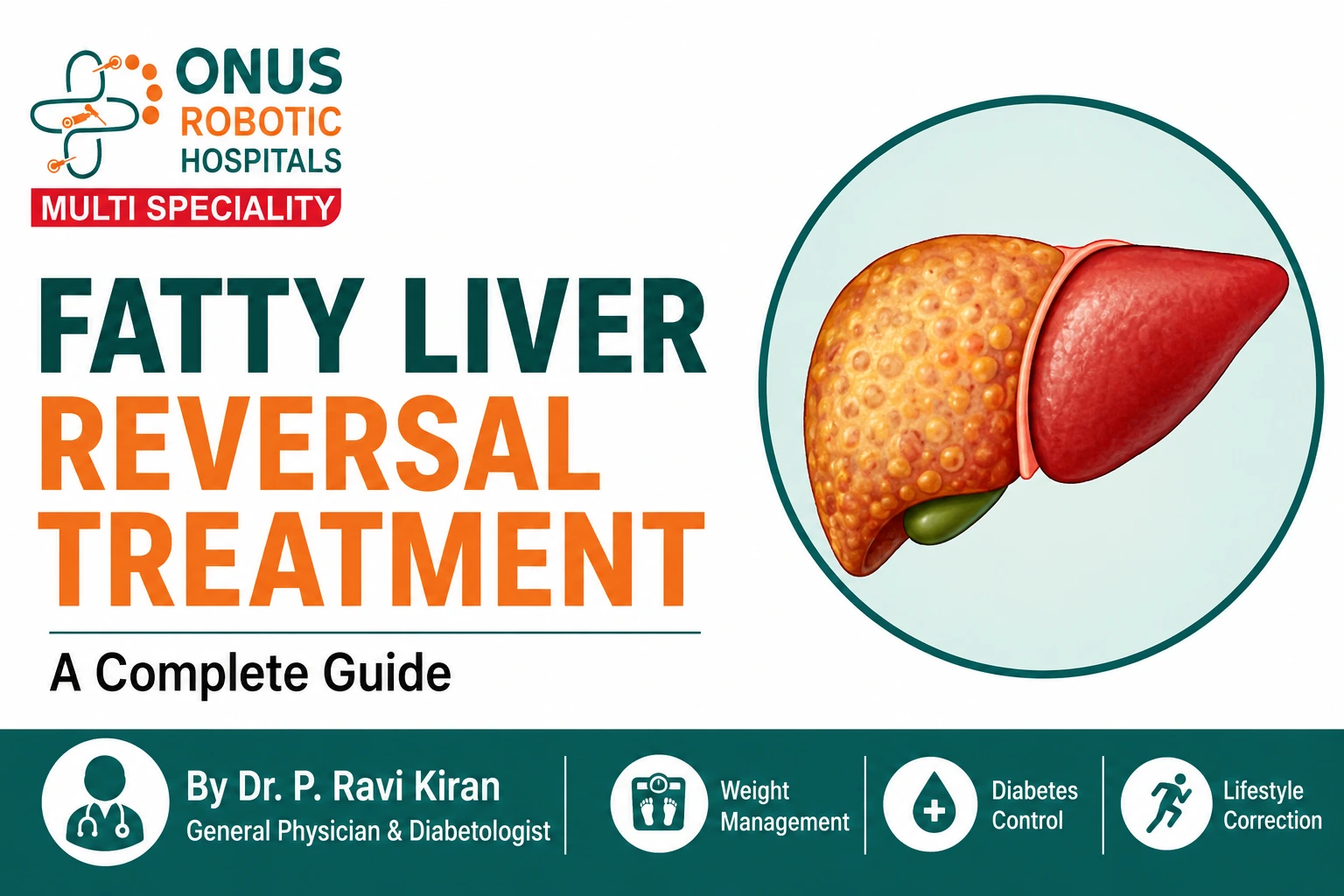
Fatty Liver Reversal Treatment: A Complete Guide – By Dr. Ravi Kiran | Diabetologist, Onus Robotic Hospital
Introduction
Fatty liver disease has become one of the fastest-growing lifestyle-related health conditions worldwide, with India witnessing a significant increase due to changing dietary habits, sedentary lifestyles, obesity, and diabetes. Many individuals discover they have fatty liver only during a routine ultrasound scan, often without experiencing any noticeable symptoms.
Unfortunately, because fatty liver is common, many people ignore the diagnosis. However, untreated fatty liver can progress to liver inflammation, fibrosis, cirrhosis, and even liver failure in severe cases.
The encouraging news is that fatty liver disease is often reversible, especially when detected early and managed with a structured medical approach. Through healthy weight loss, lifestyle modification, proper nutrition, blood sugar control, and regular medical supervision, patients can significantly improve liver health.
In this guide, Dr. P. Ravi Kiran, Senior General Physician & Diabetologist at ONUS Robotic Hospitals, explains everything you need to know about fatty liver reversal and how early intervention can protect your long-term health.
What Is Fatty Liver Disease?
Fatty liver disease occurs when excessive fat accumulates inside liver cells. While a healthy liver contains only a small amount of fat, a buildup beyond normal levels affects the liver’s ability to function efficiently.
The condition is now medically referred to as Metabolic Dysfunction-Associated Steatotic Liver Disease (MASLD), replacing the older term Non-Alcoholic Fatty Liver Disease (NAFLD). When fatty liver progresses to inflammation and liver cell damage, it may develop into Non-Alcoholic Steatohepatitis (NASH).
Since the liver performs hundreds of essential functions—including detoxification, digestion, and metabolism—maintaining liver health is crucial for overall well-being.
Why Is Fatty Liver Increasing in India?
The rising prevalence of fatty liver disease is closely linked to modern lifestyle changes. Factors contributing to this increase include:
- Sedentary lifestyles with limited physical activity
- Excess body weight and obesity
- Increased consumption of processed and high-calorie foods
- High intake of sugary beverages and refined carbohydrates
- Poor sleep quality
- Long working hours and stress
- Type 2 diabetes
- Insulin resistance
- Metabolic syndrome
As obesity and diabetes continue to rise in India, fatty liver disease has become a major public health concern.
What Causes Fatty Liver?
Fatty liver develops when the liver stores more fat than it can process. Common causes include:
Obesity
Excess body fat, especially abdominal or belly fat, increases fat deposition within the liver.
Insulin Resistance
When the body’s cells become resistant to insulin, excess glucose is converted into fat and stored in the liver.
Type 2 Diabetes
Poor blood sugar control significantly increases the risk of fatty liver progression.
Metabolic Syndrome
Individuals with multiple metabolic risk factors are particularly vulnerable, including:
- High blood pressure
- Elevated blood sugar
- High triglycerides
- Low HDL (“good”) cholesterol
- Increased waist circumference
Symptoms of Fatty Liver Disease
One of the biggest challenges is that fatty liver often develops silently.
Many people experience no symptoms at all during the early stages.
When symptoms do occur, they may include:
- Persistent fatigue
- Low energy levels
- Abdominal discomfort
- Feeling of fullness in the upper abdomen
- Difficulty losing weight
- Elevated liver enzymes in blood tests
- Increased waist size
Because symptoms are subtle or absent, routine health screenings play a vital role in early diagnosis.
Grades of Fatty Liver
Grade 1 Fatty Liver
This is the mildest stage, with minimal fat accumulation. It is often reversible through healthy lifestyle changes.
Grade 2 Fatty Liver
Moderate fat accumulation requires structured intervention, regular monitoring, and lifestyle correction.
Grade 3 Fatty Liver
Severe fat accumulation increases the risk of liver inflammation, fibrosis, and long-term liver damage. Early medical treatment becomes essential.
📍 Dr. Ravi Kiran
Diabetologist & Preventive Medicine Specialist
Onus Robotic Hospital, Hyderabad