Introduction
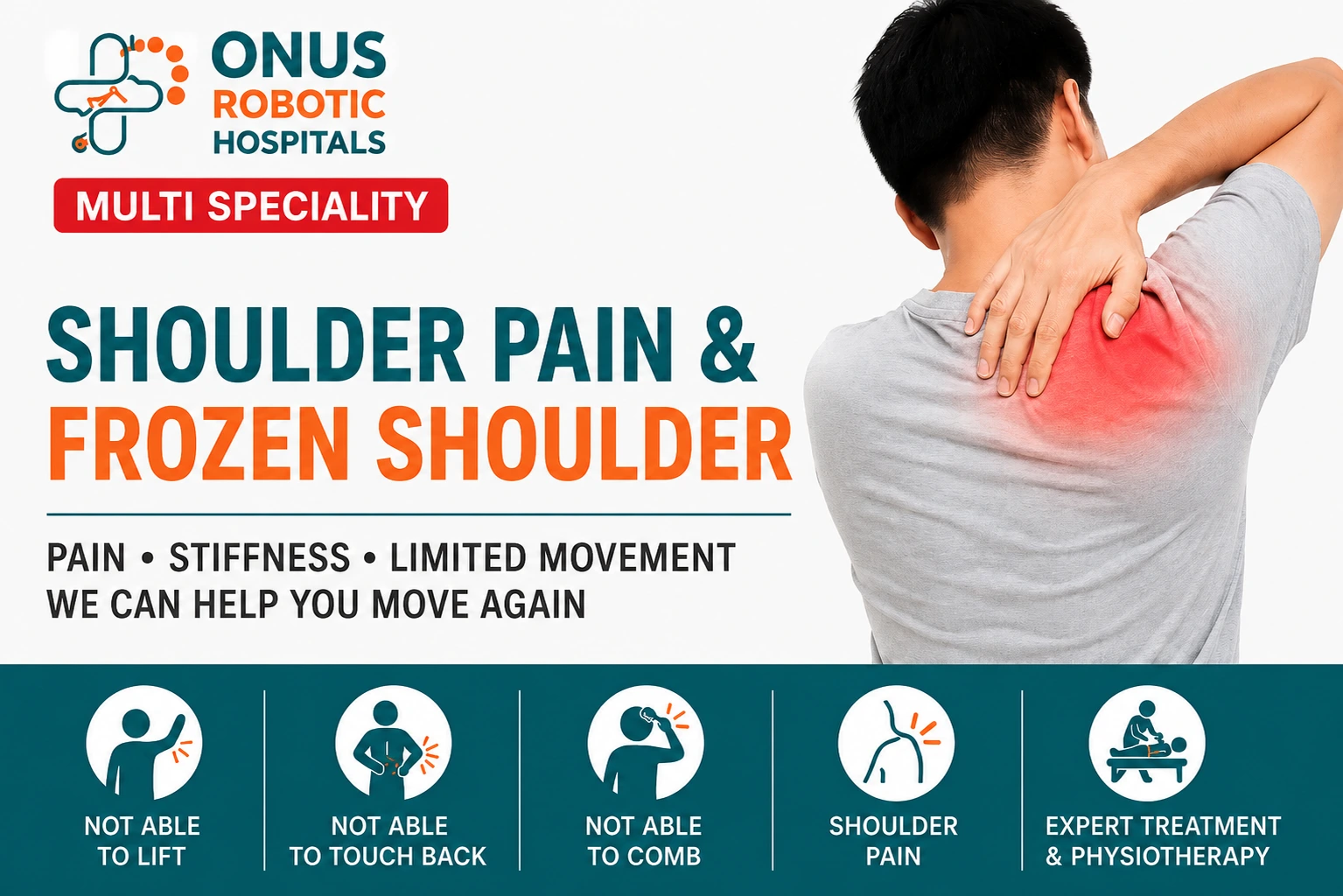
Do you struggle to lift your arm above your shoulder? Is it painful to comb your hair, wear a shirt, or reach behind your back? If simple daily activities have become difficult due to shoulder pain and stiffness, you may be suffering from Frozen Shoulder, also known as Adhesive Capsulitis.
Frozen shoulder is a common condition that causes pain, stiffness, and restricted movement in the shoulder joint. It usually develops gradually and can significantly affect your quality of life if left untreated.
At ONUS Robotic Hospitals, our orthopedic specialists provide comprehensive evaluation, advanced diagnostic services, personalized physiotherapy, pain management, and minimally invasive treatment options to restore shoulder function and relieve pain.
What is Frozen Shoulder?
Frozen shoulder is a condition in which the capsule surrounding the shoulder joint becomes inflamed, thickened, and tight. This restricts movement of the shoulder and causes persistent pain.
The condition often develops slowly over several months and may take time to recover if not treated early.
Common Symptoms of Frozen Shoulder
Patients with frozen shoulder often experience:
- Persistent shoulder pain
- Shoulder stiffness
- Difficulty lifting the arm overhead
- Inability to touch the back
- Difficulty combing hair
- Difficulty wearing clothes
- Pain while reaching for objects
- Difficulty sleeping on the affected shoulder
- Reduced shoulder movement
- Pain during daily activities
Many patients initially ignore these symptoms until routine tasks become increasingly difficult.
Why Can’t You Lift Your Arm?
As the shoulder capsule tightens, the joint loses its normal range of motion. This makes movements such as lifting your arm, rotating your shoulder, or reaching behind your back painful and restricted.
Without proper treatment, the stiffness can worsen over time.
Common Causes of Frozen Shoulder
Frozen shoulder may occur due to:
- Diabetes
- Shoulder injury
- Previous shoulder surgery
- Prolonged shoulder immobilization
- Rotator cuff disorders
- Thyroid disorders
- Increasing age
- Lack of shoulder movement after pain
People between 40 and 60 years of age are more commonly affected, especially women and individuals with diabetes.
Stages of Frozen Shoulder
Stage 1: Freezing Stage
- Increasing shoulder pain
- Gradual loss of movement
- Pain worsens at night
Stage 2: Frozen Stage
- Severe stiffness
- Pain may reduce slightly
- Shoulder movement becomes extremely limited
Stage 3: Thawing Stage
- Gradual improvement in movement
- Pain decreases
- Shoulder function slowly returns
How is Frozen Shoulder Diagnosed?
An orthopedic specialist will evaluate:
- Medical history
- Symptoms
- Shoulder movement
- Physical examination
- Range of motion
If required, imaging tests such as:
- X-rays
- Ultrasound
- MRI
may be recommended to rule out arthritis, tendon injuries, or rotator cuff tears.
Treatment Options
Most patients improve with early treatment.
1. Medications
Pain-relieving and anti-inflammatory medications may help reduce discomfort.
2. Physiotherapy
Physiotherapy is one of the most important treatments for frozen shoulder.
Exercises help:
- Improve shoulder flexibility
- Increase range of motion
- Reduce stiffness
- Strengthen shoulder muscles
- Restore normal function
3. Activity Modification
Avoid sudden heavy lifting while continuing gentle shoulder movements as advised by your doctor.
4. Shoulder Injections
In selected patients, corticosteroid injections may reduce inflammation and improve mobility.
5. Minimally Invasive Procedures
For patients who do not improve with conservative treatment, procedures such as:
- Hydrodilatation
- Manipulation under anesthesia
- Arthroscopic shoulder release
may be recommended by an orthopedic specialist.
Recovery
Recovery varies from person to person.
With early diagnosis and proper physiotherapy, many patients regain excellent shoulder function over several months.
Following your doctor’s advice and exercise program is essential for successful recovery.
Can Frozen Shoulder Be Prevented?
While not all cases can be prevented, you can reduce your risk by:
- Staying physically active
- Performing regular shoulder exercises
- Managing diabetes effectively
- Beginning shoulder movement early after injury or surgery
- Maintaining good posture
- Avoiding prolonged immobilization
When Should You See a Doctor?
Consult an orthopedic specialist if you have:
- Shoulder pain lasting more than two weeks
- Difficulty lifting your arm
- Inability to touch your back
- Difficulty combing your hair
- Severe shoulder stiffness
- Pain that disturbs sleep
- Reduced shoulder movement affecting daily life
Early treatment often leads to faster recovery and better long-term outcomes.
Why Choose ONUS Robotic Hospitals?
At ONUS Robotic Hospitals, we provide:
- Experienced orthopedic specialists
- Advanced diagnostic imaging
- Personalized physiotherapy programs
- Comprehensive pain management
- Minimally invasive shoulder procedures
- Robotic-assisted orthopedic expertise
- Complete rehabilitation and follow-up care
Our goal is to relieve pain, restore shoulder mobility, and help you return to your normal daily activities as quickly and safely as possible.
Conclusion
Frozen shoulder is a common but treatable condition that can make everyday activities like lifting your arm, combing your hair, or reaching behind your back extremely difficult. Early diagnosis, physiotherapy, and appropriate medical treatment can significantly improve recovery and prevent long-term stiffness.
If you’re experiencing persistent shoulder pain or limited movement, don’t ignore the symptoms. Consult the orthopedic experts at ONUS Robotic Hospitals for timely evaluation and personalized treatment.
For Appointments:
Dr. Balaraju Naidu, Robotic Orthopedic Surgeon
ONUS Robotic Hospitals – Hyderabad
👉 link: contact-us or book-appointment