Introduction
Most fractures heal successfully with proper treatment and rehabilitation. However, in some patients, the bone may fail to heal correctly or may heal in an abnormal position. These conditions are known as Non-Union and Malunion. If left untreated, they can lead to chronic pain, deformity, reduced mobility, and difficulty performing everyday activities.
At ONUS Robotic Hospitals, our orthopedic specialists provide comprehensive evaluation and advanced revision orthopedic care to help patients regain bone strength, function, and quality of life.
What Is a Non-Union Fracture?
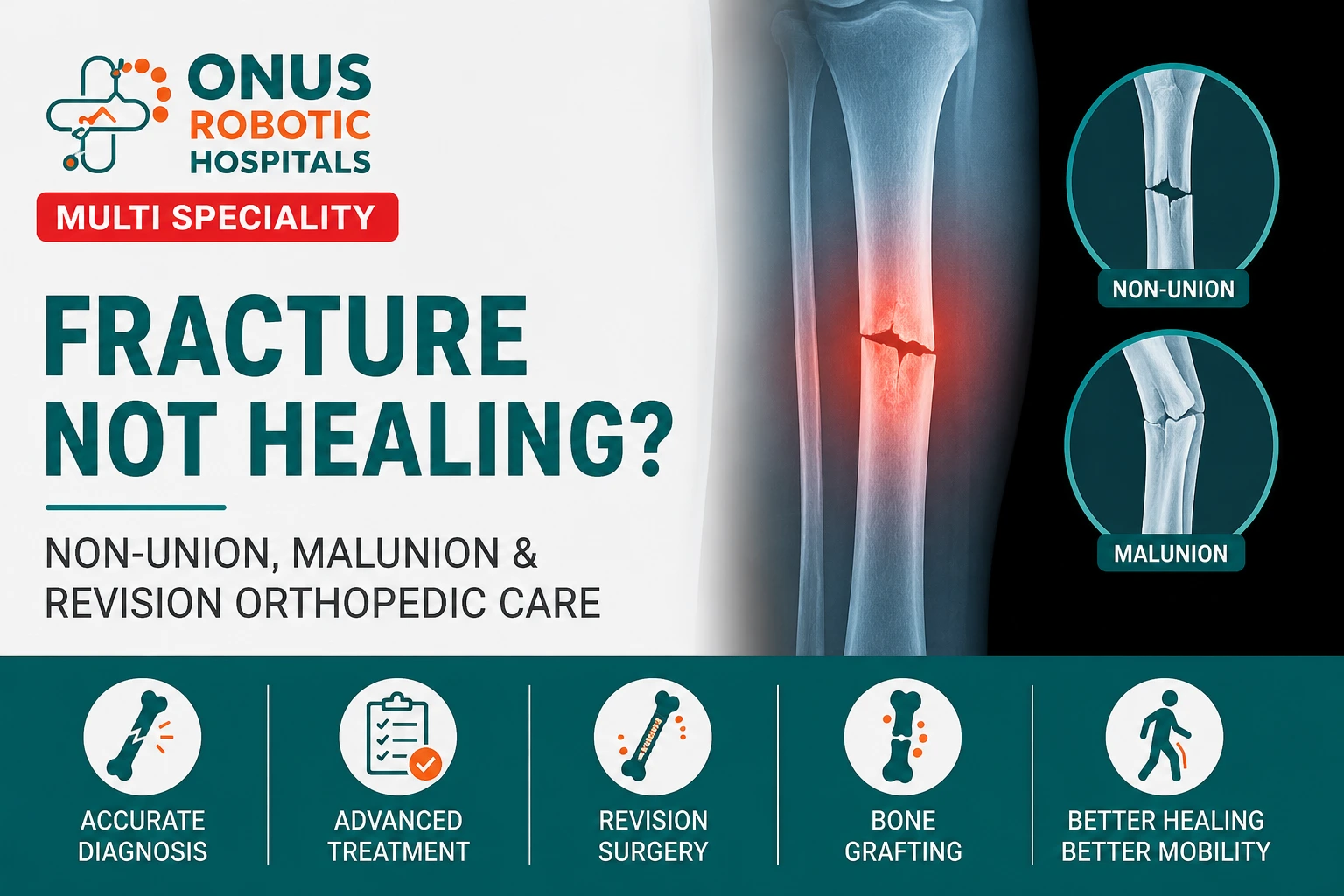
A Non-Union occurs when a broken bone fails to heal even after several months. Instead of forming a strong bridge of new bone, the fracture ends remain separated, preventing complete healing.
Without proper treatment, a non-union fracture can result in persistent pain and instability.
What Is a Malunion Fracture?
A Malunion occurs when a fractured bone heals in the wrong position. The bone may heal with improper alignment, rotation, or shortening, affecting the normal function of the affected limb.
Malunion can lead to deformity, joint stiffness, abnormal walking patterns, and long-term arthritis if not corrected.
Why Do Some Fractures Fail to Heal?
Several factors can interfere with normal bone healing, including:
- Severe fractures with extensive bone damage
- Poor blood supply to the fracture site
- Infection after injury or surgery
- Smoking and tobacco use
- Diabetes and poor blood sugar control
- Osteoporosis or weak bones
- Nutritional deficiencies
- Inadequate immobilization
- Early weight-bearing before complete healing
- Certain medications that affect bone healing
Identifying the underlying cause is essential for successful treatment.
Symptoms of Non-Union or Malunion
Patients with delayed or abnormal bone healing may experience:
- Persistent pain months after the fracture
- Swelling around the injury site
- Difficulty walking or using the affected limb
- Instability or abnormal movement
- Visible deformity
- Shortening or angulation of the limb
- Reduced strength
- Limited range of motion
- Difficulty performing daily activities
These symptoms should not be ignored and require orthopedic evaluation.
Which Bones Are Commonly Affected?
Non-union and malunion can occur in almost any fractured bone but are more commonly seen in:
- Femur (Thigh Bone)
- Tibia (Shin Bone)
- Humerus (Upper Arm)
- Forearm Bones
- Clavicle (Collar Bone)
- Wrist Bones
- Ankle Fractures
- Hip Fractures
How Is It Diagnosed?
An orthopedic specialist will perform a detailed clinical examination and recommend appropriate investigations such as:
- Digital X-rays
- CT Scan for detailed bone assessment
- MRI if soft tissue evaluation is needed
- Blood tests to rule out infection or metabolic disorders
These tests help determine the severity of the problem and guide treatment planning.
Treatment Options
Treatment depends on the type of fracture, location, and cause of poor healing.
Non-Surgical Treatment
In selected patients, treatment may include:
- Bone stimulators
- Activity modification
- Nutritional supplementation
- Vitamin D and calcium correction
- Physiotherapy
- Close monitoring with periodic imaging
However, many established non-union and malunion cases require surgery.
Revision Orthopedic Surgery
Revision surgery aims to restore proper bone alignment and stimulate healing.
Depending on the condition, treatment may involve:
- Removal of failed implants
- Realignment of the fractured bone
- Revision plating or intramedullary nailing
- Bone grafting
- Bone substitutes or biological healing agents
- Correction of deformity
- Treatment of bone infection if present
These advanced procedures help improve bone stability and encourage successful healing.
Importance of Bone Grafting
Bone grafting may be recommended when there is bone loss or poor healing potential.
Bone grafts help by:
- Stimulating new bone formation
- Filling bone defects
- Improving fracture stability
- Supporting long-term healing
The graft may be taken from the patient’s own bone or use specialized synthetic materials depending on individual needs.
Rehabilitation After Revision Surgery
Recovery continues beyond surgery. A structured rehabilitation program may include:
- Pain management
- Physiotherapy
- Muscle strengthening exercises
- Gradual weight-bearing
- Joint mobility exercises
- Regular follow-up X-rays
- Lifestyle modifications to support bone healing
Patient commitment to rehabilitation plays a vital role in achieving the best outcomes.
Can Non-Union and Malunion Be Prevented?
Many fractures heal well with proper care. To improve healing:
- Follow your orthopedic surgeon’s advice
- Avoid smoking and tobacco
- Maintain good diabetes control
- Eat a protein-rich, calcium-rich diet
- Take prescribed medications regularly
- Attend all follow-up appointments
- Avoid excessive strain before the bone heals completely
When Should You See an Orthopedic Specialist?
Seek medical attention if you experience:
- Persistent pain after a fracture
- Fracture not healing after several months
- Swelling that does not improve
- Difficulty bearing weight
- Visible deformity
- Loose implants or abnormal movement
- Reduced function of the affected limb
Early diagnosis can prevent long-term complications and improve treatment success.
Why Choose ONUS Robotic Hospitals?
At ONUS Robotic Hospitals, we provide advanced orthopedic care for complex fractures and failed fracture healing.
Our services include:
- Expert orthopedic surgeons
- Comprehensive fracture evaluation
- Advanced imaging facilities
- Revision fracture surgery
- Bone grafting procedures
- Personalized rehabilitation programs
- Patient-centered follow-up care
Our goal is to restore bone healing, improve mobility, and help patients return to their daily activities with confidence.
Conclusion
A fracture that does not heal properly should never be ignored. Conditions such as Non-Union and Malunion can significantly affect mobility, independence, and quality of life. Fortunately, with timely diagnosis and advanced revision orthopedic care, many patients can achieve successful bone healing and regain normal function.
If you continue to experience pain, swelling, or difficulty using a limb after a fracture, consult an orthopedic specialist. Early intervention can make a significant difference in recovery and long-term outcomes.
For Appointments:
Dr. Balaraju Naidu, Robotic Orthopedic Surgeon
ONUS Robotic Hospitals – Hyderabad
👉 link: contact-us or book-appointment