Introduction
Sinus infections are common and often caused by viruses or bacteria. However, in certain individuals, particularly those with poorly controlled diabetes or weakened immunity, fungal infections can also affect the sinuses. These infections can range from mild and chronic forms to more serious conditions that require urgent medical attention.
Because the symptoms often resemble ordinary sinusitis, fungal sinus infections may sometimes go unnoticed until they become more severe. This makes early diagnosis and timely treatment extremely important.
In this article, ENT Specialist at ONUS Robotic Hospitals, explains the connection between diabetes and fungal sinusitis, warning symptoms, diagnostic approaches, and the importance of prompt medical evaluation.
What Is Fungal Sinusitis?
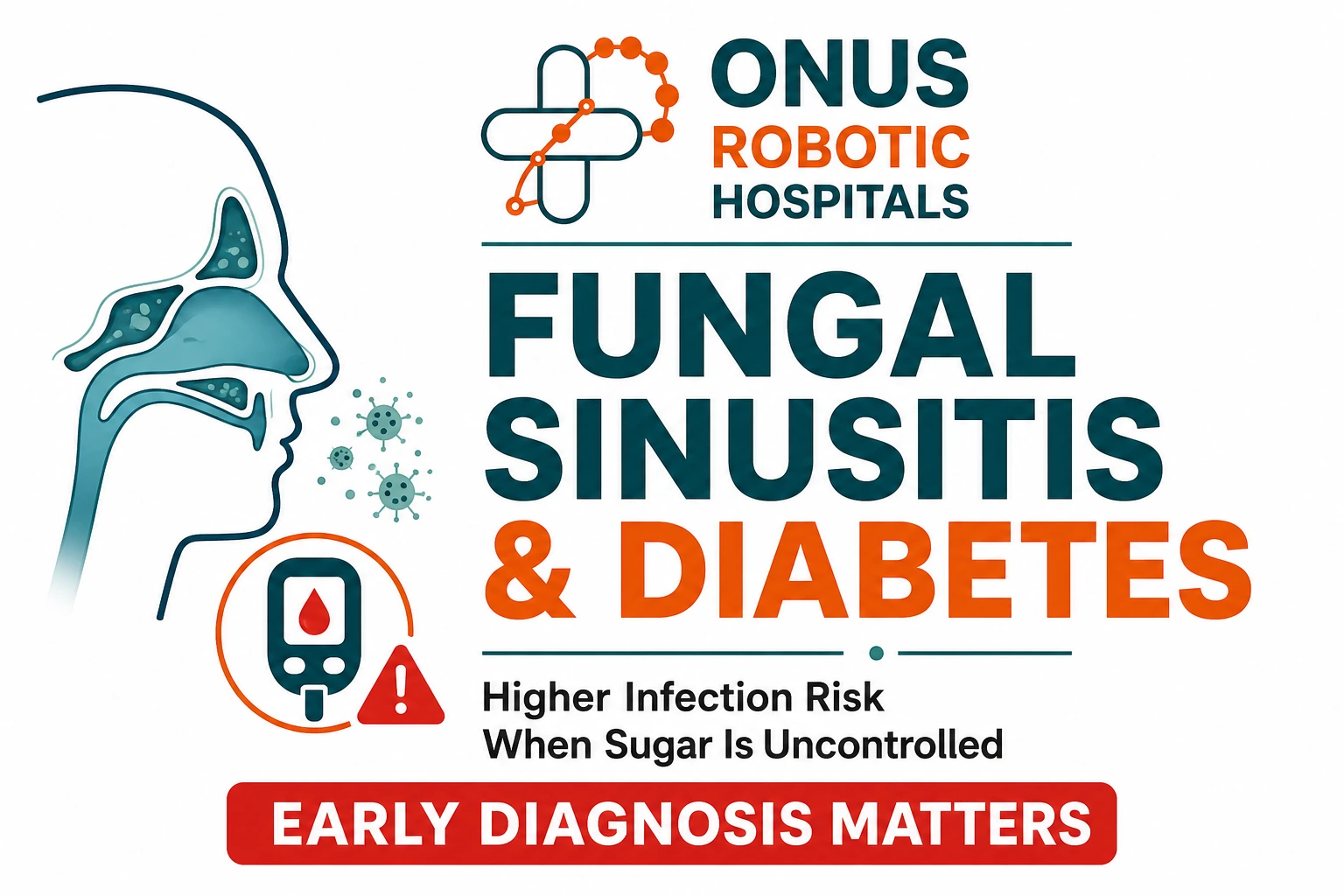
Fungal sinusitis occurs when fungi grow within the nasal passages and sinus cavities.
The sinuses are air-filled spaces located around the nose, cheeks, forehead, and eyes. Under normal circumstances, the body’s immune system helps prevent fungal growth. However, when immunity is compromised or blood sugar levels remain uncontrolled, certain fungi may multiply and cause infection.
Fungal sinusitis can occur in different forms, ranging from relatively mild allergic fungal sinus disease to more aggressive invasive fungal infections that require urgent treatment.
Why Does Diabetes Increase the Risk?
Diabetes can affect the body’s ability to fight infections effectively.
When blood sugar levels remain elevated:
- Immune system function may be impaired
- White blood cells may become less effective at fighting infections
- Healing processes may slow down
- Certain fungi may find favorable conditions for growth
As a result, people with uncontrolled diabetes may have a higher risk of developing fungal infections, including fungal sinusitis.
The risk can be even greater in individuals who have additional factors affecting immunity.
Common Symptoms of Fungal Sinusitis
The symptoms may initially resemble those of routine sinus infections.
Common warning signs include:
Persistent Nasal Blockage
Ongoing nasal congestion that does not improve with routine treatment.
Facial Pain or Pressure
Pain around the cheeks, eyes, forehead, or nose.
Facial Swelling
Swelling around the face or eyes should never be ignored.
Headache
Persistent headaches associated with sinus pressure.
Nasal Discharge
Thick nasal discharge, sometimes with an unpleasant odor.
Reduced Sense of Smell
Difficulty detecting odors or a noticeable reduction in smell perception.
Recurrent or Worsening Sinus Symptoms
Symptoms that repeatedly return or continue despite treatment.
People with diabetes who develop these symptoms should seek medical evaluation promptly.
Why Early Diagnosis Is Important
Early diagnosis plays a crucial role in achieving better outcomes.
If fungal sinusitis is identified and treated early:
- Infection can be controlled more effectively
- Complications may be prevented
- Recovery may be faster
- Damage to surrounding structures can be minimized
Ignoring persistent symptoms may allow the infection to progress, making treatment more complex.
When Should You Be Concerned?
You should consider ENT evaluation if you have:
- Diabetes and persistent sinus symptoms
- Chronic nasal blockage
- Facial pain that does not improve
- Recurrent sinus infections
- Reduced sense of smell
- Facial swelling
- Persistent headaches associated with sinus problems
Prompt medical assessment is particularly important for individuals with poorly controlled blood sugar levels.
Consultant ENT Head & Neck Surgeon
ONUS Robotic Hospitals – Hyderabad
👉 link: contact-us or book-appointment