Introduction
Knee pain is one of the most common orthopedic problems affecting people of all ages. While many patients worry that surgery is their only option, several non-surgical treatments may help manage symptoms, especially during the early stages of knee arthritis.
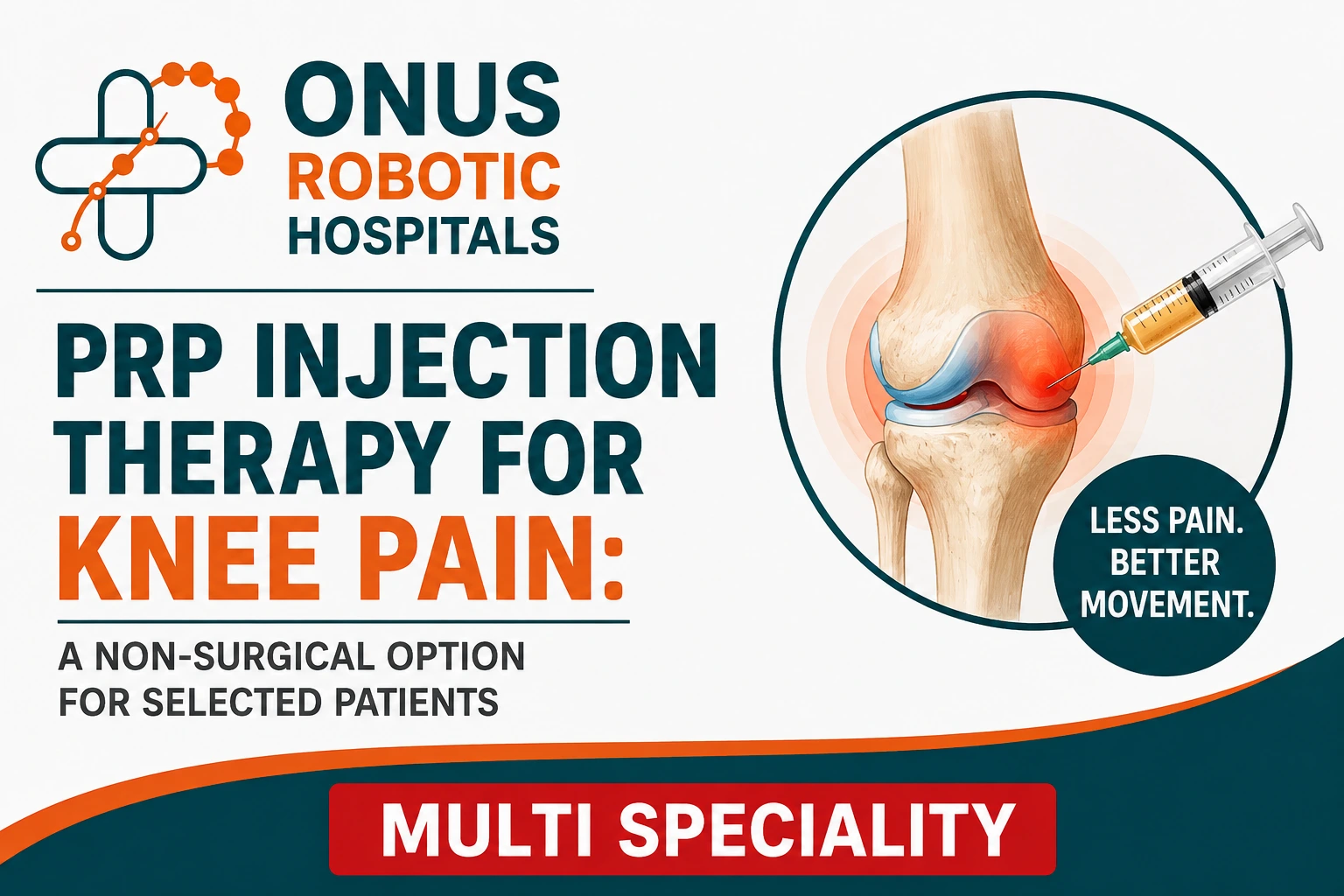
One treatment that has gained attention in recent years is PRP (Platelet-Rich Plasma) therapy. PRP is often promoted as a treatment for knee pain, sports injuries, and early arthritis. However, many patients have questions:
- Can PRP cure knee arthritis?
- Is PRP suitable for everyone?
- Can PRP prevent knee replacement surgery?
- How effective is PRP treatment?
According to Dr. Balaraju Naidu, Robotic Joint Replacement Surgeon at ONUS Robotic Hospitals, the answer depends largely on the stage of arthritis and the individual patient’s condition.
Understanding who may benefit from PRP and who may require other treatments is essential for making informed healthcare decisions.
What Is PRP (Platelet-Rich Plasma)?
PRP stands for Platelet-Rich Plasma.
Platelets are natural components of blood that contain growth factors involved in tissue healing and repair.
During PRP treatment:
- A small amount of the patient’s blood is collected.
- The blood is processed to concentrate the platelets.
- The platelet-rich portion is injected into the affected joint.
The goal is to utilize the body’s own biological healing mechanisms to help reduce symptoms and improve joint function.
Why Is PRP Used for Knee Pain?
PRP is primarily considered for patients experiencing:
- Early knee arthritis
- Mild to moderate cartilage wear
- Persistent knee pain
- Reduced mobility
- Symptoms that have not improved adequately with conservative treatment
The treatment aims to reduce pain and improve function in selected patients.
Understanding Knee Arthritis Stages
Before deciding whether PRP is appropriate, it is important to understand the stages of knee arthritis.
Stage 1 Arthritis
- Minimal cartilage damage
- Mild symptoms
- Early joint changes
Stage 2 Arthritis
- Mild to moderate cartilage wear
- Increasing pain during activities
- Occasional stiffness
Stage 3 Arthritis
- Significant cartilage loss
- Frequent pain
- Reduced mobility
- Joint narrowing visible on X-rays
Stage 4 Arthritis
- Severe cartilage destruction
- Bone-on-bone contact
- Persistent pain
- Significant functional limitation
The effectiveness of treatment options varies significantly depending on the stage of arthritis.
Who May Benefit from PRP Treatment?
PRP may be considered for selected patients who have:
Early-Stage Knee Arthritis
Patients with Stage 1 or Stage 2 arthritis often have the greatest potential to benefit.
Mild to Moderate Symptoms
Individuals experiencing pain but still maintaining reasonable joint function.
Active Lifestyle
Patients who wish to maintain mobility and delay progression of symptoms.
Inadequate Relief from Conservative Measures
Those who continue to experience discomfort despite exercise, physiotherapy, weight management, and medications.
Every patient should undergo proper orthopedic evaluation before considering PRP treatment.
Can PRP Cure Knee Arthritis?
One of the most common misconceptions is that PRP permanently cures arthritis.
The reality is that:
- PRP is not a cure for arthritis.
- PRP cannot completely restore severely damaged cartilage.
- PRP does not reverse advanced joint degeneration.
Instead, PRP may help reduce symptoms and improve quality of life in selected patients.
The primary goal is symptom management and functional improvement.
Is PRP Suitable for Every Patient?
No.
PRP is not appropriate for every individual with knee pain.
The decision depends on:
- Arthritis stage
- X-ray findings
- Clinical examination
- Severity of symptoms
- Age
- Activity level
- Overall joint condition
This is why a detailed orthopedic assessment is essential before treatment.
Why PRP Is Less Effective in Advanced Arthritis
In Stage 4 knee arthritis:
- Cartilage loss is extensive
- Joint damage is severe
- Bone-on-bone contact may occur
- Joint deformity may develop
At this stage, biological treatments such as PRP often provide limited benefit because the structural damage within the joint is too advanced.
Patients should have realistic expectations regarding outcomes.
Can PRP Replace Knee Replacement Surgery?
This is another common question.
The answer is:
No, PRP is not a replacement for knee replacement surgery in advanced arthritis.
Patients with severe Stage 4 arthritis often require surgical intervention when:
- Pain is severe
- Walking becomes difficult
- Daily activities are affected
- Conservative treatments no longer provide relief
In these situations, knee replacement surgery may offer better long-term improvement in pain and function.
Other Non-Surgical Treatments for Knee Arthritis
PRP is only one component of a comprehensive treatment approach.
Other options may include:
Physiotherapy
Strengthening the muscles around the knee helps improve stability and reduce stress on the joint.
Weight Management
Reducing excess body weight decreases pressure on the knee joint.
Medications
Pain-relieving and anti-inflammatory medications may help control symptoms.
Activity Modification
Adjusting daily activities may reduce strain on the knee.
Lifestyle Changes
Regular exercise and joint-friendly habits can help maintain function.
Other Injection Therapies
Selected patients may be candidates for alternative injection treatments depending on their condition.
Importance of Proper Evaluation Before Treatment
Many patients seek PRP treatment after hearing success stories from friends or online sources.
However, treatment decisions should never be based solely on advertisements or recommendations.
Proper evaluation should include:
Clinical Examination
Assessment of pain, mobility, stability, and function.
X-rays
Evaluation of cartilage loss and arthritis severity.
Medical History
Review of symptoms, previous treatments, and activity levels.
Individualized Treatment Planning
The best treatment is determined by the patient’s unique condition rather than a one-size-fits-all approach.
When Should You Consult an Orthopedic Specialist?
Seek medical evaluation if you experience:
- Persistent knee pain
- Difficulty walking
- Swelling of the knee
- Stiffness
- Reduced mobility
- Pain while climbing stairs
- Difficulty performing daily activities
Early diagnosis often provides more treatment options and may help delay disease progression.
Right Patient. Right Treatment. Right Time.
One of the most important principles in orthopedic care is selecting the right treatment for the right patient at the right stage of disease.
PRP may offer meaningful benefits for carefully selected patients with early-stage arthritis. However, it is not a universal solution and cannot replace appropriate treatment for advanced arthritis.
The key to successful management lies in accurate diagnosis, realistic expectations, and individualized treatment planning.
Conclusion
PRP treatment is an exciting non-surgical option that may help selected patients with early-stage knee arthritis and chronic knee pain. It can provide symptom relief and improve function when used appropriately.
However, PRP is not suitable for every patient and should not be considered a replacement for knee replacement surgery in advanced Stage 4 arthritis.
A thorough orthopedic evaluation, including clinical assessment and imaging studies, is essential to determine the most appropriate treatment approach.
Dr. Balaraju Naidu emphasizes that successful knee arthritis management depends on choosing the right treatment at the right time, based on the patient’s individual condition and stage of disease.
For Appointments:
Dr. Balaraju Naidu, Robotic Orthopedic Surgeon
ONUS Robotic Hospitals – Hyderabad
👉 link: contact-us or book-appointment