Why Indians Are More Prone to Diabetes: Understanding the Indian Metabolic Risk – By Dr. Ravi Kiran | Diabetologist, Onus Robotic Hospital
Introduction
India is often referred to as the “Diabetes Capital of the World” due to the rapidly increasing number of people affected by Type 2 diabetes. What surprises many people is that diabetes often develops in Indians at a younger age and sometimes even in individuals who do not appear significantly overweight. This unique pattern has attracted considerable attention from healthcare experts worldwide.
According to Dr. P. Ravi Kiran, General Physician and Diabetologist at ONUS Robotic Hospitals, the explanation lies in a combination of genetic susceptibility, insulin resistance, abdominal obesity, dietary changes, sedentary lifestyles, and modern-day stress. Understanding these factors can help individuals take preventive action before diabetes develops.
Why Is Diabetes So Common Among Indians?
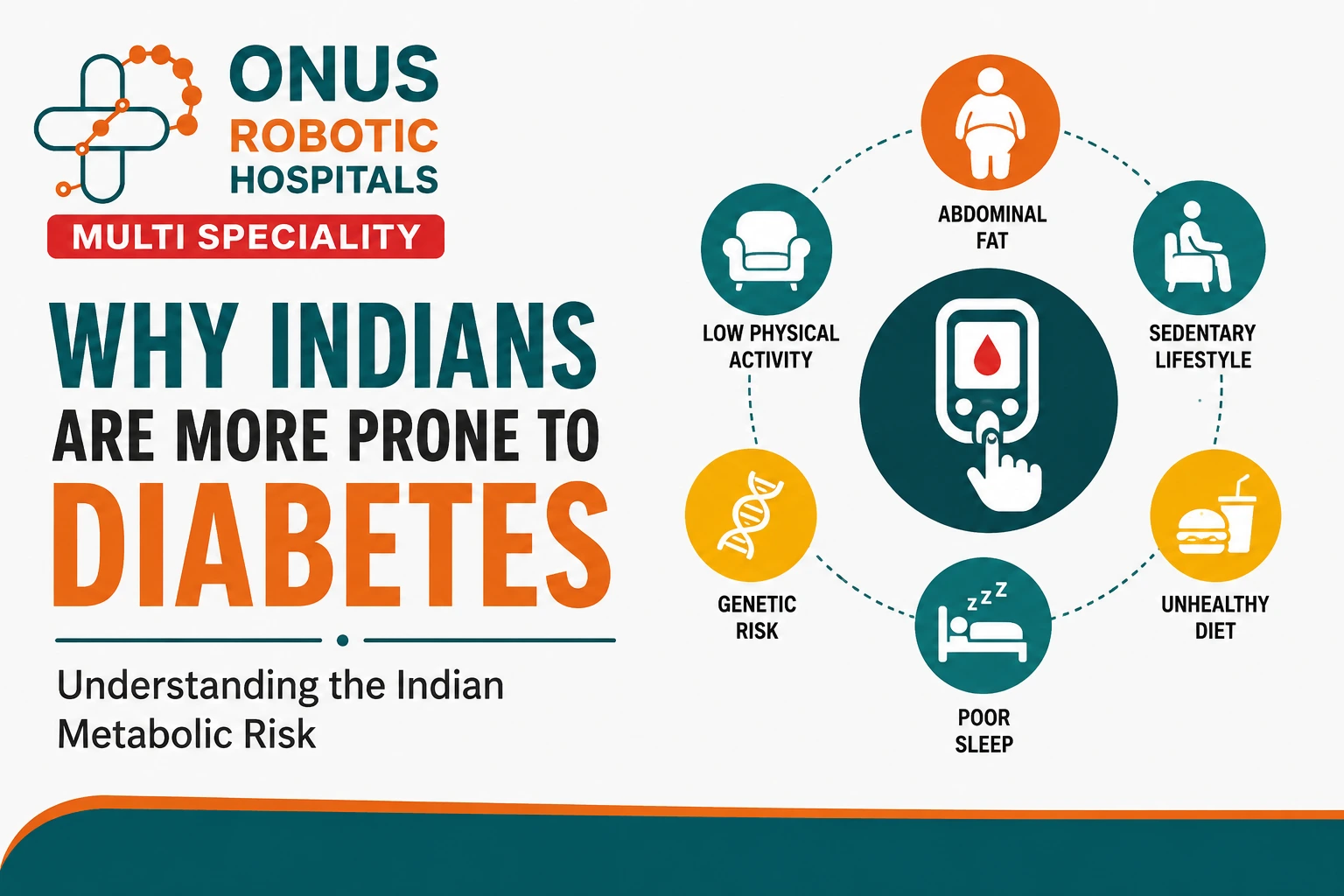
There is no single reason why diabetes is more prevalent among Indians. Instead, multiple factors interact to increase metabolic risk.
These include:
- Genetic predisposition
- Insulin resistance
- Excess abdominal fat
- Sedentary lifestyles
- Refined carbohydrate-rich diets
- Stress
- Poor sleep habits
- Urbanization
- Family history
- Obesity and overweight
The combination of inherited risk and modern lifestyle changes creates an environment where diabetes develops more easily.
The “Thin-Fat” Indian Phenomenon
One of the most unique aspects of diabetes risk in South Asians is the tendency to develop metabolic problems even at relatively lower body weights.
Many Indians may appear lean or only mildly overweight but still have:
- Increased abdominal fat
- High visceral fat
- Fatty liver
- Prediabetes
- Insulin resistance
- Elevated triglycerides
This phenomenon is often referred to as the “Thin-Fat Indian” pattern. While body weight may appear normal, excess fat accumulates around internal organs, increasing the risk of diabetes and cardiovascular disease.
Why Belly Fat Is More Dangerous Than Overall Weight
When discussing diabetes risk, waist circumference may be more important than total body weight.
The fat stored deep inside the abdomen, known as visceral fat, surrounds vital organs such as:
- Liver
- Pancreas
- Intestines
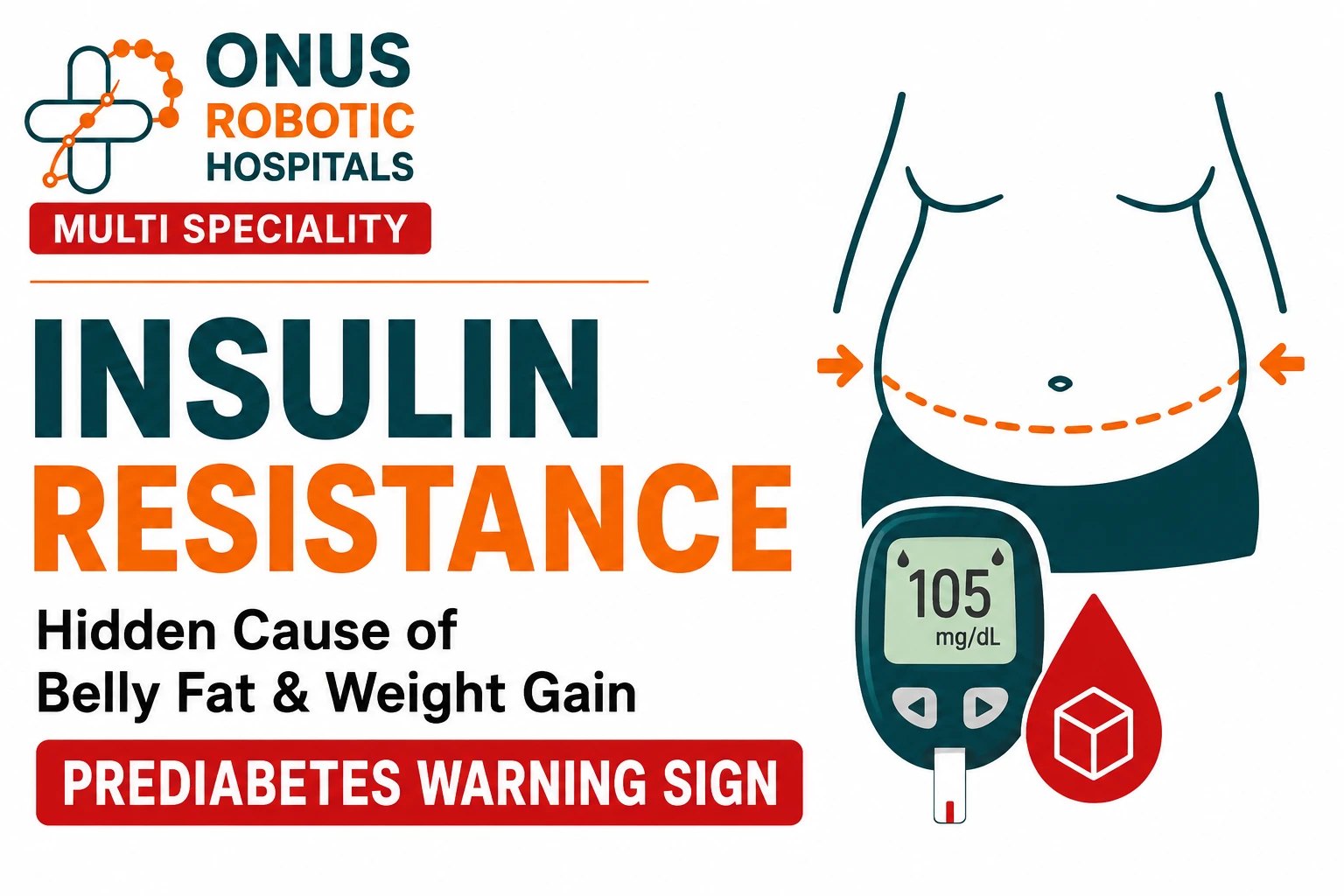
Excess visceral fat contributes to insulin resistance, which is one of the major drivers of prediabetes and Type 2 diabetes.
Visceral fat is also associated with:
- Fatty liver disease
- High blood pressure
- Elevated triglycerides
- Heart disease
- Metabolic syndrome
This is why increasing belly size should never be ignored.
Understanding Insulin Resistance
Insulin is the hormone responsible for helping glucose enter the body’s cells.
In insulin resistance:
- Cells become less responsive to insulin
- The pancreas produces more insulin
- Blood sugar gradually begins to rise
- Prediabetes develops
- Eventually, Type 2 diabetes may occur
Many Indians develop insulin resistance years before diabetes is diagnosed, making early screening essential.
Is Rice Responsible for Diabetes?
Many people believe that rice directly causes diabetes.
The reality is more complex.
Rice itself does not automatically cause diabetes. The problem often arises from:
- Large portion sizes
- Frequent consumption of refined carbohydrates
- Lack of protein and fibre in meals
- Sedentary lifestyles
Instead of completely eliminating rice, a better strategy may involve:
- Portion control
- Adding vegetables
- Including adequate protein
- Increasing fibre intake
- Remaining physically active
Sustainable dietary changes are usually more effective than extreme restrictions.
What About Chapatis?
Chapatis are often viewed as healthier than rice, but the overall meal composition is what matters most.
A plate filled with multiple chapatis and very little protein or vegetables may still result in a significant carbohydrate load.
A balanced meal should include:
- Vegetables
- Protein sources
- Fibre-rich foods
- Healthy fats
- Controlled carbohydrate portions
The focus should be on balance rather than labeling individual foods as “good” or “bad.”