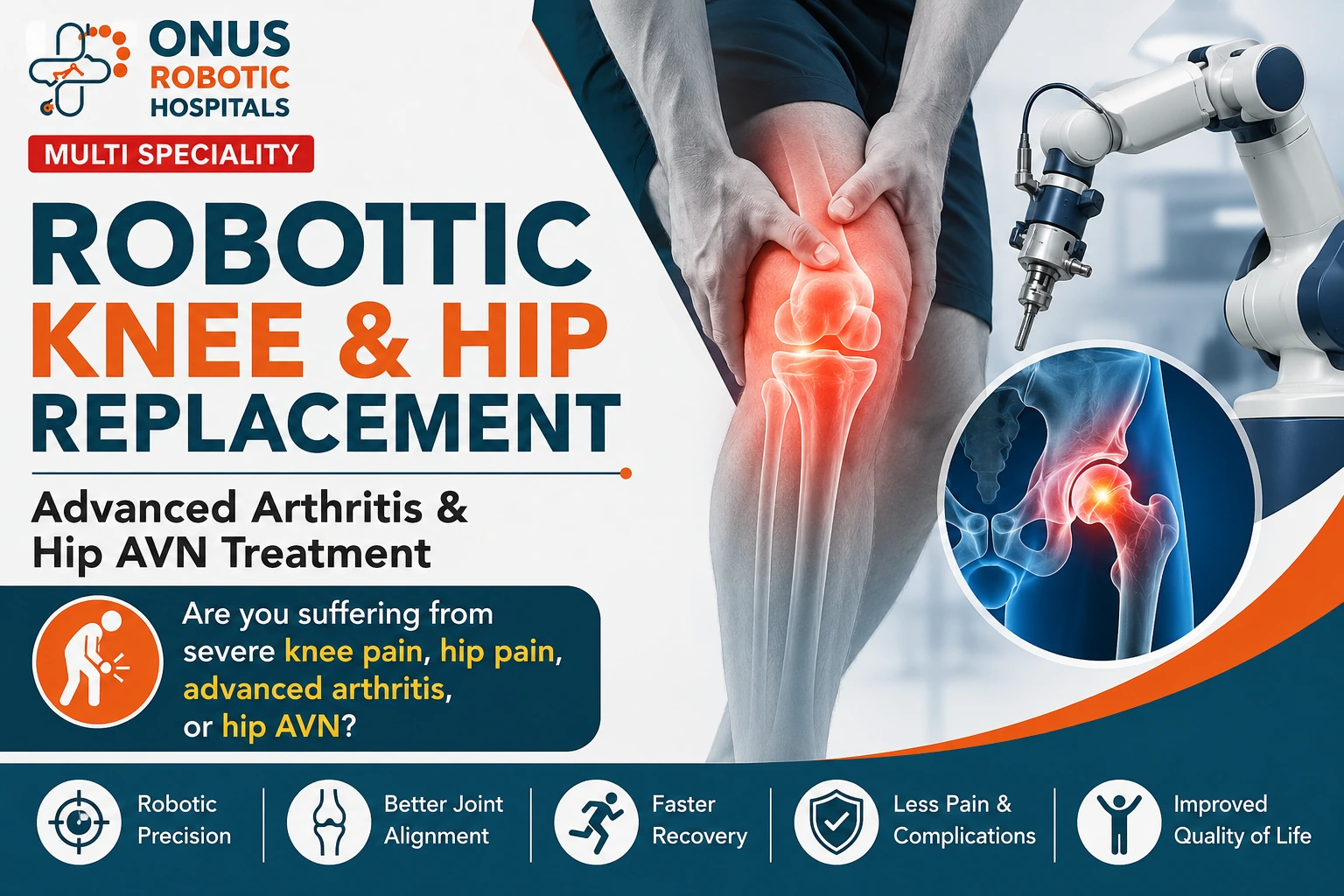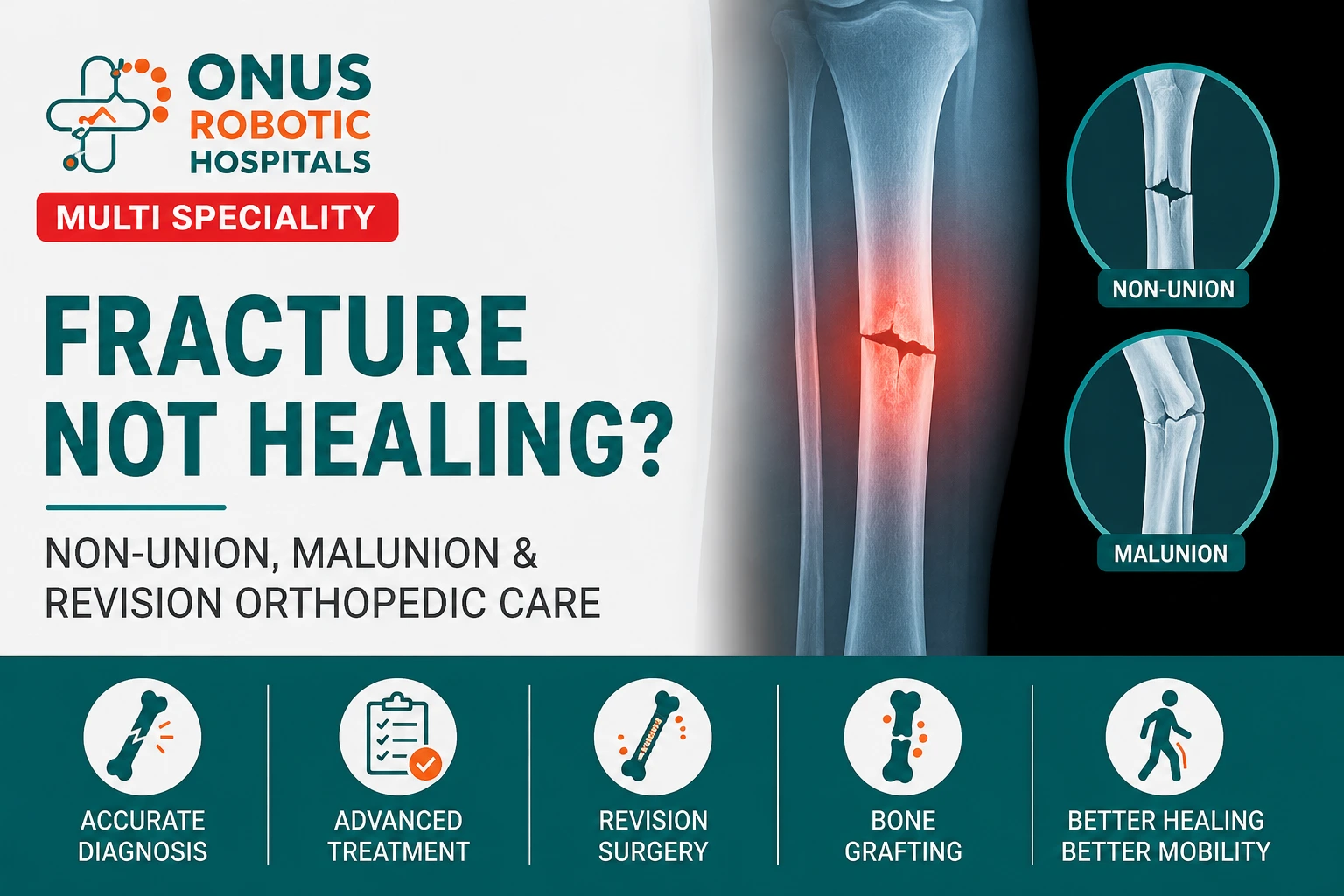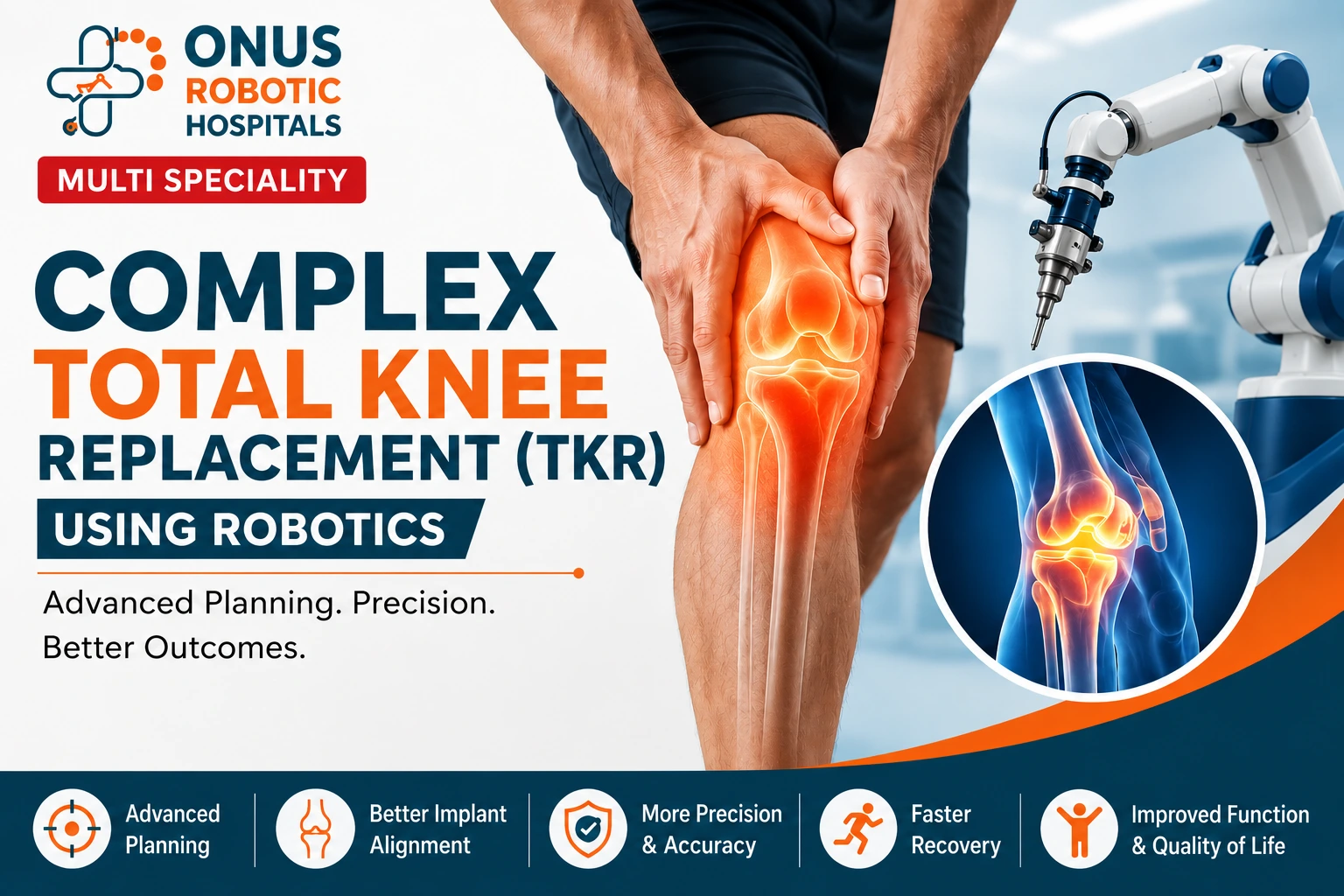
Are You Struggling with Severe Knee Arthritis or Complex Knee Problems?
Not every knee replacement surgery is the same. Some patients have severe arthritis, significant deformities, previous surgeries, or stiff knees that require advanced planning and specialized surgical expertise.
In this video, Dr. Balaraju Naidu, Robotic Orthopaedic Surgeon, explains how Complex Total Knee Replacement (TKR) using robotic technology helps manage difficult knee conditions with greater precision, personalized planning, and improved outcomes.
At ONUS Robotic Hospitals, we combine advanced robotic technology with expert surgical skills to restore mobility and improve the quality of life for patients with complex knee disorders.
What is Complex Total Knee Replacement?
Complex Total Knee Replacement is an advanced knee replacement procedure performed for patients whose knee condition is more challenging than routine arthritis.
These surgeries require:
- Detailed pre-operative planning
- Advanced imaging
- Precise implant positioning
- Soft tissue balancing
- Correction of deformities
- Experienced orthopedic expertise
Robotic-assisted technology helps surgeons achieve higher levels of accuracy during these demanding procedures.
Who Needs Complex Knee Replacement?
Complex TKR may be recommended for patients with:
Severe Osteoarthritis
When knee cartilage is completely worn out, causing persistent pain and loss of movement.
Knee Deformities
Patients with bow legs (Varus deformity) or knock knees (Valgus deformity) often require careful correction during surgery.
Severe Knee Stiffness
Limited knee movement due to arthritis or previous injuries may require specialized surgical techniques.
Previous Knee Surgery
Patients who have undergone earlier knee surgeries may have altered anatomy, making replacement surgery more complex.
Advanced Joint Damage
Significant bone loss or damaged ligaments often require customized surgical planning.
Common Symptoms
Patients may experience:
- Persistent knee pain
- Difficulty walking
- Inability to climb stairs
- Knee deformity
- Joint stiffness
- Swelling
- Knee instability
- Difficulty standing from a chair
- Reduced mobility
- Poor quality of life
Why Robotic Technology Matters in Complex Knee Replacement
Robotic-assisted surgery allows surgeons to create a patient-specific surgical plan before the procedure.
During surgery, robotic guidance assists the surgeon in making precise bone cuts and implant positioning based on the patient’s unique anatomy.
It is important to understand that the surgeon performs the operation, while robotic technology serves as an advanced guidance system to enhance precision.
Benefits of Robotic Complex TKR
Robotic-assisted surgery offers several potential advantages:
- Greater surgical precision
- Improved implant alignment
- Personalized surgical planning
- Better soft tissue balancing
- More natural joint movement
- Reduced bone removal
- Enhanced implant longevity
- Improved functional outcomes
- Faster rehabilitation
- Better patient satisfaction
Why Precision is Important
Even small differences in implant alignment can affect:
- Knee movement
- Stability
- Implant lifespan
- Walking pattern
- Long-term function
Robotic technology helps surgeons achieve consistent accuracy during every stage of surgery.
The Surgical Journey
Comprehensive Evaluation
Your orthopedic specialist performs a detailed clinical examination along with imaging studies.
Personalized Planning
Advanced robotic software creates a customized surgical plan tailored to your anatomy.
Robotic-Assisted Surgery
The surgeon performs the procedure with robotic guidance to improve precision and implant positioning.
Rehabilitation
Early physiotherapy and rehabilitation help patients regain strength, flexibility, and confidence after surgery.
Recovery After Complex Knee Replacement
Recovery depends on:
- Patient’s overall health
- Severity of arthritis
- Existing deformity
- Rehabilitation participation
- Surgeon recommendations
Many patients begin walking with assistance soon after surgery and gradually resume daily activities through structured physiotherapy.
Why Choose ONUS Robotic Hospitals?
ONUS Robotic Hospitals is dedicated to delivering advanced orthopedic care using cutting-edge robotic technology.
Our Strengths
- Experienced Robotic Orthopaedic Surgeons
- Advanced Robotic Knee Replacement Technology
- Personalized Surgical Planning
- Comprehensive Rehabilitation Programs
- Modern Infrastructure
- Patient-Centered Care
- Focus on Long-Term Joint Function
When Should You Consult an Orthopaedic Surgeon?
Seek expert evaluation if you have:
- Knee pain lasting several months
- Difficulty walking
- Severe arthritis diagnosed on X-rays
- Bow legs or knock knees
- Increasing knee deformity
- Knee stiffness affecting daily life
- Poor response to medications or physiotherapy
Early consultation helps identify the most suitable treatment before joint damage progresses further.
Conclusion
Complex knee problems require more than routine treatment—they demand expertise, careful planning, and advanced technology.
With Complex Total Knee Replacement using Robotics, surgeons can achieve greater precision, improved implant positioning, and better functional outcomes for patients with severe arthritis, deformities, stiffness, and challenging knee conditions.
If chronic knee pain is affecting your mobility and quality of life, consult the orthopedic experts at ONUS Robotic Hospitals to explore whether robotic-assisted knee replacement is the right option for you.
Frequently Asked Questions (FAQs)
Is Complex Knee Replacement different from regular knee replacement?
Yes. Complex TKR is performed for patients with severe deformities, advanced arthritis, previous surgeries, bone loss, or difficult knee anatomy.
Does the robot perform the surgery?
No. The orthopedic surgeon performs the surgery, while robotic technology provides advanced planning and precise guidance.
Is robotic knee replacement safer?
Robotic-assisted surgery helps improve surgical precision and implant positioning, which may contribute to improved functional outcomes in appropriate patients.
How long does recovery take?
Recovery varies depending on the patient’s condition, age, overall health, and commitment to rehabilitation.
Who is a good candidate for robotic Complex TKR?
Patients with severe arthritis, knee deformities, stiffness, failed previous surgeries, or complex knee anatomy may benefit from robotic-assisted knee replacement after evaluation by an orthopedic specialist.
For Appointments:
Dr. Balaraju Naidu, Robotic Orthopedic Surgeon
ONUS Robotic Hospitals – Hyderabad
👉 link: contact-us or book-appointment