Introduction
Do you often experience wrist pain, tingling in your fingers, or numbness in your hand, especially during the night or while using your phone, computer, or driving?
These symptoms may be caused by Carpal Tunnel Syndrome (CTS), one of the most common nerve compression disorders affecting the hand and wrist.
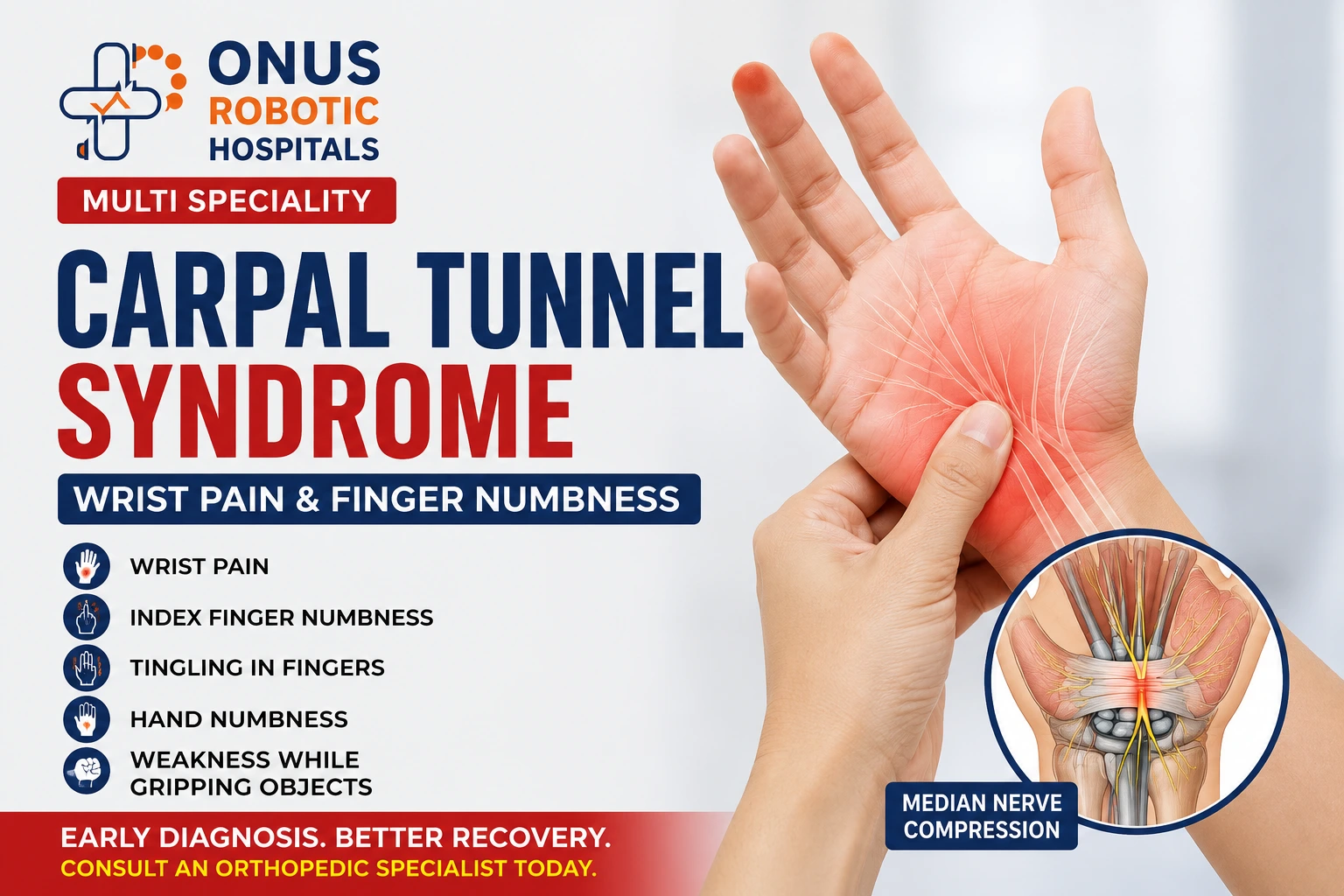
Carpal Tunnel Syndrome develops when the median nerve, which passes through a narrow tunnel in the wrist, becomes compressed. If left untreated, the condition can lead to persistent pain, weakness, and difficulty performing everyday activities.
According to Dr. Balaraju Naidu, Robotic Orthopedic Surgeon at ONUS Robotic Hospitals, early diagnosis and timely treatment can help relieve symptoms and prevent permanent nerve damage.
What is Carpal Tunnel Syndrome?
The carpal tunnel is a narrow passage in the wrist formed by bones and ligaments.
Inside this tunnel pass:
- The Median Nerve
- Flexor tendons that help move the fingers
When swelling or pressure develops within the tunnel, the median nerve becomes compressed, resulting in pain, tingling, numbness, and weakness in the hand.
What Causes Carpal Tunnel Syndrome?
Several medical conditions and wrist problems can increase pressure on the median nerve.
Common causes include:
- Post-pregnancy swelling
- Thyroid disorders (Hypothyroidism)
- Being overweight or obese
- Wrist swelling due to inflammation
- Previous wrist fractures
- Distal radius fracture malunion
- Repetitive hand and wrist movements
- Diabetes
- Rheumatoid arthritis
- Fluid retention
Sometimes, more than one factor may contribute to the condition.
Who is at Higher Risk?
Carpal Tunnel Syndrome is more common in:
- Women
- Pregnant or recently delivered mothers
- People with thyroid disease
- Diabetic patients
- Individuals who perform repetitive wrist movements
- Computer professionals
- Office workers
- Tailors
- Factory workers
- People using vibrating tools
Early evaluation is especially important for individuals with these risk factors.
Symptoms of Carpal Tunnel Syndrome
Symptoms usually develop gradually and may worsen over time.
Common symptoms include:
- Wrist pain
- Tingling sensation in the thumb, index, middle, and part of the ring finger
- Numbness in the hand
- Index finger numbness
- Burning sensation in the fingers
- Weak grip strength
- Difficulty holding objects
- Dropping items frequently
- Night-time hand numbness
- Pain that may extend to the forearm
Ignoring these symptoms may lead to permanent nerve damage.
Why Does It Feel Worse at Night?
Many patients notice increased numbness and tingling during sleep because the wrist often bends while resting, increasing pressure on the median nerve.
Shaking the hand may temporarily relieve the symptoms.
How is Carpal Tunnel Syndrome Diagnosed?
An orthopedic specialist will evaluate your symptoms through:
- Detailed medical history
- Physical examination
- Wrist assessment
- Nerve function tests
- X-rays (if fracture or arthritis is suspected)
- Nerve Conduction Study (NCS)
- Electromyography (EMG) when required
Accurate diagnosis helps determine the severity and appropriate treatment.
Non-Surgical Treatment Options
Many patients improve with conservative treatment if diagnosed early.
Treat the Underlying Cause
Managing conditions such as:
- Thyroid disorders
- Diabetes
- Obesity
- Wrist swelling
can significantly reduce symptoms.
Wrist Splint
A wrist splint helps keep the wrist in a neutral position, especially during sleep, reducing pressure on the median nerve.
Medications
Doctors may prescribe medications to reduce:
- Pain
- Inflammation
- Swelling
These should only be taken under medical supervision.
Physiotherapy
Hand and wrist exercises may help:
- Improve nerve mobility
- Reduce stiffness
- Strengthen hand muscles
- Improve wrist function
Activity Modification
Reducing repetitive wrist movements and taking regular breaks can help prevent worsening of symptoms.
When is Surgery Needed?
If symptoms persist despite conservative treatment or if nerve compression becomes severe, surgery may be recommended.
One commonly performed procedure is Micro Decompression of the Median Nerve.
During this procedure:
- The tight ligament compressing the median nerve is carefully released.
- Pressure on the nerve is relieved.
- Symptoms such as numbness and tingling gradually improve.
- The procedure is minimally invasive and is usually performed as a day-care surgery.
Early surgical treatment can prevent permanent nerve damage in advanced cases.
Tips to Prevent Carpal Tunnel Syndrome
You can reduce your risk by:
- Maintaining a healthy weight
- Managing thyroid disorders and diabetes
- Taking frequent breaks while typing
- Using proper wrist posture
- Performing hand stretching exercises
- Avoiding prolonged repetitive wrist movements
- Using ergonomic keyboards and mouse devices
- Treating wrist injuries promptly
When Should You Consult an Orthopedic Specialist?
Seek medical advice if you experience:
- Persistent wrist pain
- Finger numbness
- Tingling that lasts for several days
- Weakness while gripping objects
- Frequent dropping of items
- Night-time hand numbness
- Symptoms that interfere with work or daily activities
Early diagnosis leads to better treatment outcomes.
Conclusion
Carpal Tunnel Syndrome is a common but treatable condition caused by compression of the median nerve at the wrist. Ignoring symptoms such as wrist pain, finger numbness, and tingling can lead to permanent nerve damage and reduced hand function.
With early diagnosis, treatment of underlying conditions, wrist support, physiotherapy, and, when necessary, micro decompression surgery, most patients can regain normal hand function and return to their daily activities comfortably.
If you are experiencing persistent wrist pain or numbness, consult an orthopedic specialist for a proper evaluation.
Frequently Asked Questions (FAQs)
What is Carpal Tunnel Syndrome?
Carpal Tunnel Syndrome occurs when the median nerve is compressed inside the carpal tunnel at the wrist, causing pain, numbness, and tingling.
Can pregnancy cause Carpal Tunnel Syndrome?
Yes. Fluid retention and swelling during and after pregnancy can temporarily compress the median nerve.
Does thyroid disease increase the risk?
Yes. Hypothyroidism is a well-known risk factor for Carpal Tunnel Syndrome.
Can Carpal Tunnel Syndrome heal without surgery?
Many patients improve with medications, splints, physiotherapy, and treatment of the underlying cause if diagnosed early.
Is surgery always necessary?
No. Surgery is usually recommended only when symptoms persist despite conservative treatment or when nerve compression becomes severe.
For Appointments:
Dr. Balaraju Naidu, Robotic Orthopedic Surgeon
ONUS Robotic Hospitals – Hyderabad
👉 link: contact-us or book-appointment