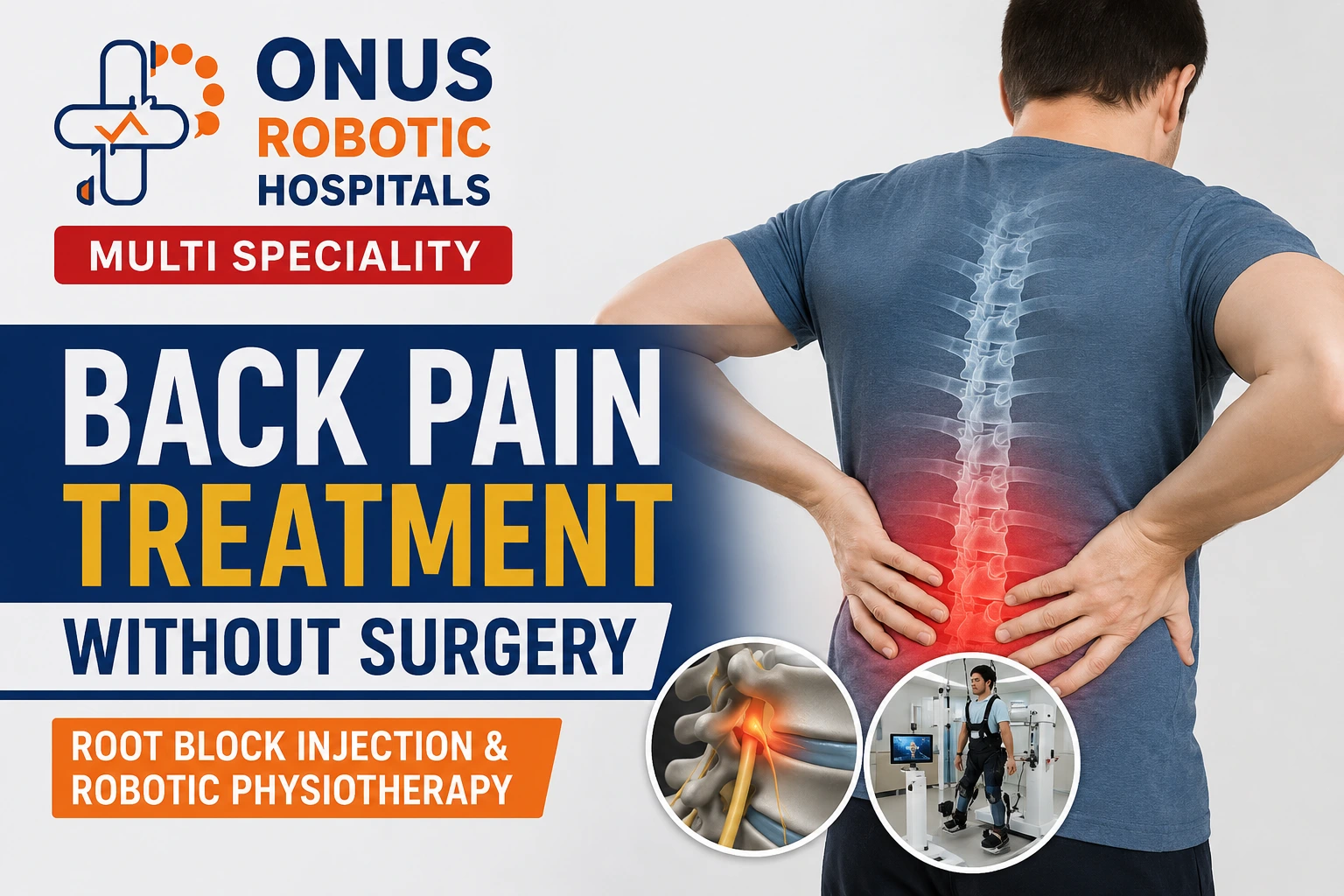
Back pain is one of the most common health problems affecting people of all ages. It can interfere with your daily activities, making it difficult to walk, stand, sit, bend, or even get out of bed. While many people fear that severe back pain always requires surgery, the good news is that many patients can recover effectively without undergoing an operation.
At ONUS Robotic Hospitals, advanced diagnostic techniques and modern non-surgical treatments help patients manage pain, improve mobility, and return to their normal lifestyle safely and effectively.
Common Symptoms of Severe Back Pain
If you experience any of the following symptoms, it may indicate a spinal problem that requires medical evaluation:
- Severe lower back pain
- Pain while walking
- Difficulty turning to the right or left
- Stiffness after getting up from bed or a sofa
- Pain while standing for long periods
- Leg pain associated with back pain
- Tingling or numbness in the legs
- Weakness in one or both legs
Ignoring these symptoms can lead to worsening pain and reduced mobility.
Why Does Back Pain Occur?
Back pain can develop due to several reasons, including:
- Disc Prolapse (Slip Disc)
- Herniated Disc
- Degenerative Disc Disease
- Muscle Strain
- Poor Posture
- Prolonged Sitting
- Heavy Weight Lifting
- Age-related Spine Changes
- Nerve Compression
When a spinal disc slips or bulges, it can compress nearby nerves, causing both back pain and radiating leg pain, commonly known as sciatica.
The Importance of MRI Evaluation
Not every patient requires surgery.
The first step in identifying the exact cause of back pain is a detailed clinical examination followed by an MRI scan when necessary.
MRI helps doctors evaluate:
- Severity of disc prolapse
- Location of nerve compression
- Degree of inflammation
- Spine alignment
- Overall spinal health
Based on the MRI findings and the patient’s symptoms, an appropriate treatment plan is recommended.
Non-Surgical Treatment Options for Back Pain
Many patients recover successfully without surgery through advanced conservative treatments.
1. Robotic Physiotherapy
Robotic physiotherapy uses advanced rehabilitation technology to improve movement, reduce pain, and strengthen muscles around the spine.
Benefits include:
- Reduced pain
- Improved flexibility
- Better posture
- Increased muscle strength
- Faster recovery
- Improved walking ability
Patients often notice gradual improvement in their daily activities after completing their prescribed physiotherapy sessions.
2. Image-Guided Root Block Injection
Some patients continue to experience severe pain because of nerve root inflammation.
For selected patients, doctors may recommend an Image-Guided Root Block Injection.
This minimally invasive procedure involves injecting medication precisely around the affected nerve under imaging guidance.
Benefits include:
- Targeted pain relief
- Reduced nerve inflammation
- Better mobility
- Minimal hospital stay
- Faster recovery
- May help avoid surgery in suitable cases
The procedure is performed with high precision to maximize effectiveness while minimizing discomfort.
Who Can Benefit?
Patients experiencing:
- Severe back pain
- Slip disc
- Disc prolapse
- Sciatica
- Leg pain due to nerve compression
- Pain while walking
- Difficulty bending
- Persistent pain despite medication
may benefit from a specialist evaluation.
Is Surgery Always Necessary?
No.
Many patients improve with:
- Lifestyle modifications
- Medications
- Robotic Physiotherapy
- Root Block Injection
- Exercise rehabilitation
Surgery is generally considered only when conservative treatments fail or when there is significant nerve damage or progressive neurological weakness.
When Should You Consult a Spine Specialist?
Seek medical attention if you experience:
- Back pain lasting more than two weeks
- Pain radiating to the legs
- Numbness or tingling
- Difficulty walking
- Weakness in the legs
- Loss of bladder or bowel control (medical emergency)
- Severe pain affecting daily activities
Early diagnosis and timely treatment can prevent long-term complications.
Expert Care at ONUS Robotic Hospitals
At ONUS Robotic Hospitals, patients receive personalized care using advanced diagnostic techniques and evidence-based treatment options.
Under the guidance of Dr. Balaraju Naidu, Robotic Orthopedic Surgeon, treatment plans are designed according to each patient’s condition, helping many individuals recover through non-surgical methods such as robotic physiotherapy and image-guided root block injections.
If you are struggling with persistent back pain or leg pain, consult a spine specialist for a comprehensive evaluation and the most suitable treatment plan.
Conclusion
Back pain does not always mean surgery. With accurate MRI evaluation, advanced robotic physiotherapy, and image-guided root block injections, many patients can achieve significant pain relief and regain their mobility without undergoing an operation. Early diagnosis and appropriate treatment are key to a faster and healthier recovery.
For Appointments:
Dr. Balaraju Naidu, Robotic Orthopedic Surgeon
ONUS Robotic Hospitals – Hyderabad
👉 link: contact-us or book-appointment