Introduction
Knee pain is one of the most common orthopedic problems affecting people of all ages, especially adults over 40 and senior citizens. While many people assume that knee pain automatically means knee replacement surgery, that is not always the case.
Modern orthopedic medicine offers several effective non-surgical treatment options that can reduce pain, improve mobility, and help patients continue their daily activities without immediate surgery.
According to Dr. Balaraju Naidu, Robotic Orthopedic Surgeon, treatment should always be personalized. Every patient has different symptoms, X-ray findings, activity levels, age, weight, and medical conditions. A detailed clinical evaluation helps determine the most suitable treatment plan.
Why Does Knee Pain Occur?
The knee is one of the body’s largest and most frequently used joints. Daily activities such as walking, climbing stairs, squatting, standing, and exercising place constant stress on the knee.
Common causes of knee pain include:
- Osteoarthritis
- Cartilage wear and tear
- Ligament injuries
- Meniscus injuries
- Sports injuries
- Previous fractures
- Obesity
- Age-related degeneration
- Inflammatory arthritis
Ignoring knee pain may gradually worsen joint damage and reduce mobility.
Does Every Arthritis Patient Need Surgery?
The simple answer is No.
Many patients with early and moderate arthritis can be treated successfully without surgery.
Surgery is usually considered only when:
- Pain becomes severe
- Daily activities become difficult
- Conservative treatments fail
- Advanced arthritis is confirmed on imaging
- Quality of life is significantly affected
For many patients, non-surgical treatments can delay or even avoid knee replacement surgery.
How Doctors Decide the Best Treatment
Every patient is different.
Before recommending treatment, an orthopedic specialist evaluates several factors, including:
- Patient’s age
- Body weight
- Severity of arthritis
- X-ray findings
- MRI findings (if required)
- Activity level
- Lifestyle
- Occupation
- Medical history
- Existing health conditions
A personalized treatment plan provides the best outcomes.
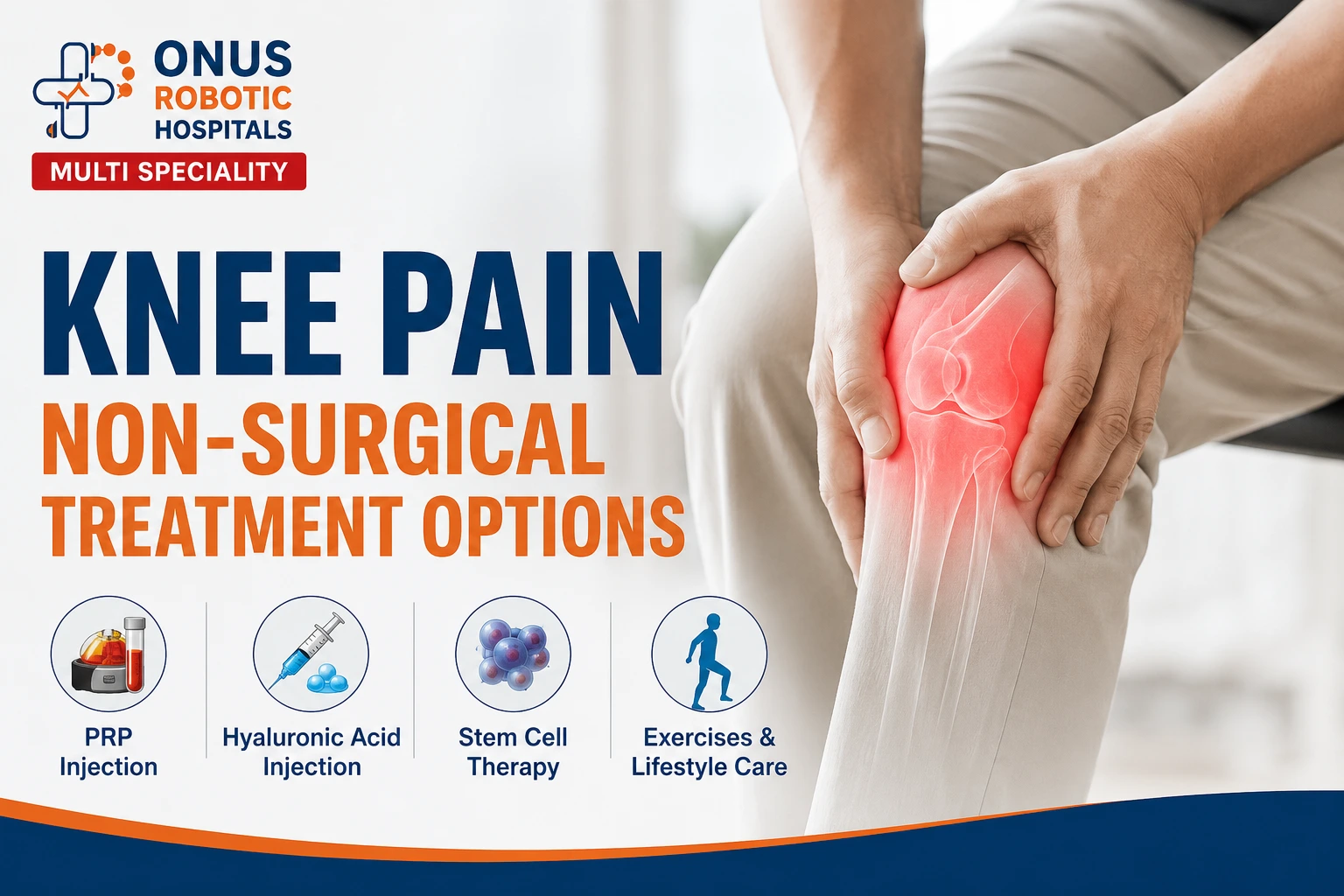
Non-Surgical Treatment Options for Knee Pain
1. PRP (Platelet-Rich Plasma) Injection
PRP therapy uses the patient’s own blood.
After collecting a small blood sample, platelets rich in growth factors are separated and injected into the affected knee.
Benefits of PRP
- Reduces inflammation
- Supports tissue healing
- Improves joint function
- Decreases pain
- May slow arthritis progression in selected patients
PRP is commonly recommended for:
- Early arthritis
- Sports injuries
- Tendon injuries
- Mild cartilage damage
2. Hyaluronic Acid Injection
Hyaluronic acid is a natural lubricant present inside healthy knee joints.
As arthritis develops, this lubrication decreases, leading to pain and stiffness.
Injecting hyaluronic acid helps improve joint lubrication.
Benefits include
- Better joint movement
- Reduced friction
- Pain relief
- Improved flexibility
- Easier walking
It is often useful for patients with mild to moderate osteoarthritis.
3. Stem Cell Therapy
Stem Cell Therapy is an emerging regenerative treatment designed to promote tissue repair.
In carefully selected patients, stem cells may help:
- Reduce inflammation
- Support cartilage repair
- Improve joint function
- Delay surgical intervention
Not every patient is suitable for stem cell therapy, making proper evaluation essential.
Lifestyle Changes That Make a Difference
Medical treatment works best when combined with healthy lifestyle habits.
Doctors often recommend:
- Weight reduction
- Regular walking (as advised)
- Low-impact exercises
- Balanced diet
- Avoiding prolonged squatting
- Avoiding sitting cross-legged for long periods
- Proper footwear
- Adequate Vitamin D and Calcium intake (if advised)
Even a small amount of weight loss can significantly reduce pressure on the knees.
Knee Strengthening Exercises
Strong muscles provide better support to the knee joint.
Recommended exercises may include:
- Straight leg raises
- Quadriceps strengthening
- Hamstring stretches
- Cycling
- Swimming
- Range-of-motion exercises
Exercises should always be performed under medical or physiotherapy guidance.
Pain Management and Mobility Improvement
Along with injections and exercises, doctors may recommend:
- Physiotherapy
- Activity modification
- Knee braces (when appropriate)
- Pain medications (under supervision)
- Ice or heat therapy
These treatments aim to reduce pain while maintaining mobility and independence.
When Should You Consult an Orthopedic Specialist?
Seek medical advice if you experience:
- Persistent knee pain
- Difficulty walking
- Pain while climbing stairs
- Knee stiffness
- Swelling
- Early arthritis symptoms
- Reduced mobility
- Knee instability
- Pain affecting daily activities
Early treatment often leads to better outcomes and may help avoid more extensive procedures.
Can Knee Replacement Be Delayed?
Yes.
Many patients diagnosed with early or moderate arthritis can delay knee replacement surgery through:
- PRP injections
- Hyaluronic acid injections
- Stem Cell Therapy (for suitable candidates)
- Weight management
- Physiotherapy
- Lifestyle modifications
- Regular follow-up with an orthopedic specialist
Timely intervention helps preserve joint function and improve quality of life.
Conclusion
Knee pain should never be ignored, but it also does not always mean surgery is the only solution.
Advances in orthopedic care now offer several effective non-surgical treatment options that help reduce pain, improve movement, and maintain an active lifestyle. The right treatment depends on each patient’s condition and should always be decided after a thorough evaluation by an experienced orthopedic specialist.
If you have persistent knee pain or early arthritis symptoms, consult an orthopedic expert to discuss the most appropriate treatment for your needs.
FAQs
Is PRP treatment painful?
PRP injections cause only mild discomfort and are generally well tolerated.
How long does PRP treatment take?
The procedure usually takes about 30–45 minutes and is performed on an outpatient basis.
Are Hyaluronic Acid injections safe?
Yes. They are commonly used for osteoarthritis and are generally considered safe when administered by qualified orthopedic specialists.
Can Stem Cell Therapy cure arthritis?
Stem Cell Therapy is not a cure for arthritis. It may help reduce symptoms and improve joint function in selected patients.
Can exercise worsen arthritis?
No. Appropriate exercises recommended by a healthcare professional can strengthen muscles and improve joint function without worsening arthritis.
For Appointments:
Dr. Balaraju Naidu, Robotic Orthopedic Surgeon
ONUS Robotic Hospitals – Hyderabad
👉 link: contact-us or book-appointment