5 ENT Symptoms You Should Never Ignore- By Consultant ENT Head & Neck Surgeon, ONUS Robotic Hospitals

5 ENT Symptoms You Should Never Ignore- By Consultant ENT Head & Neck Surgeon, ONUS Robotic Hospitals

Introduction

Many people tend to ignore problems related to the Ear, Nose, and Throat (ENT), assuming they will improve on their own. While minor infections may resolve with proper treatment, some ENT symptoms can be warning signs of serious underlying conditions that require immediate medical attention.

Recognizing these symptoms early and consulting an ENT specialist can help prevent complications and improve treatment outcomes.

According to Dr. Akshita Reddy, Consultant ENT Surgeon at ONUS Robotic Hospitals, early diagnosis plays a vital role in protecting hearing, voice, and overall ENT health.


Why Should You Never Ignore ENT Symptoms?

The ears, nose, and throat are closely connected. Problems affecting one area may also impact others.

Ignoring persistent or sudden ENT symptoms may lead to:

  • Permanent hearing loss
  • Chronic infections
  • Voice disorders
  • Difficulty swallowing
  • Delayed diagnosis of serious diseases
  • Reduced quality of life

Seeking medical care early often leads to faster recovery and better outcomes.


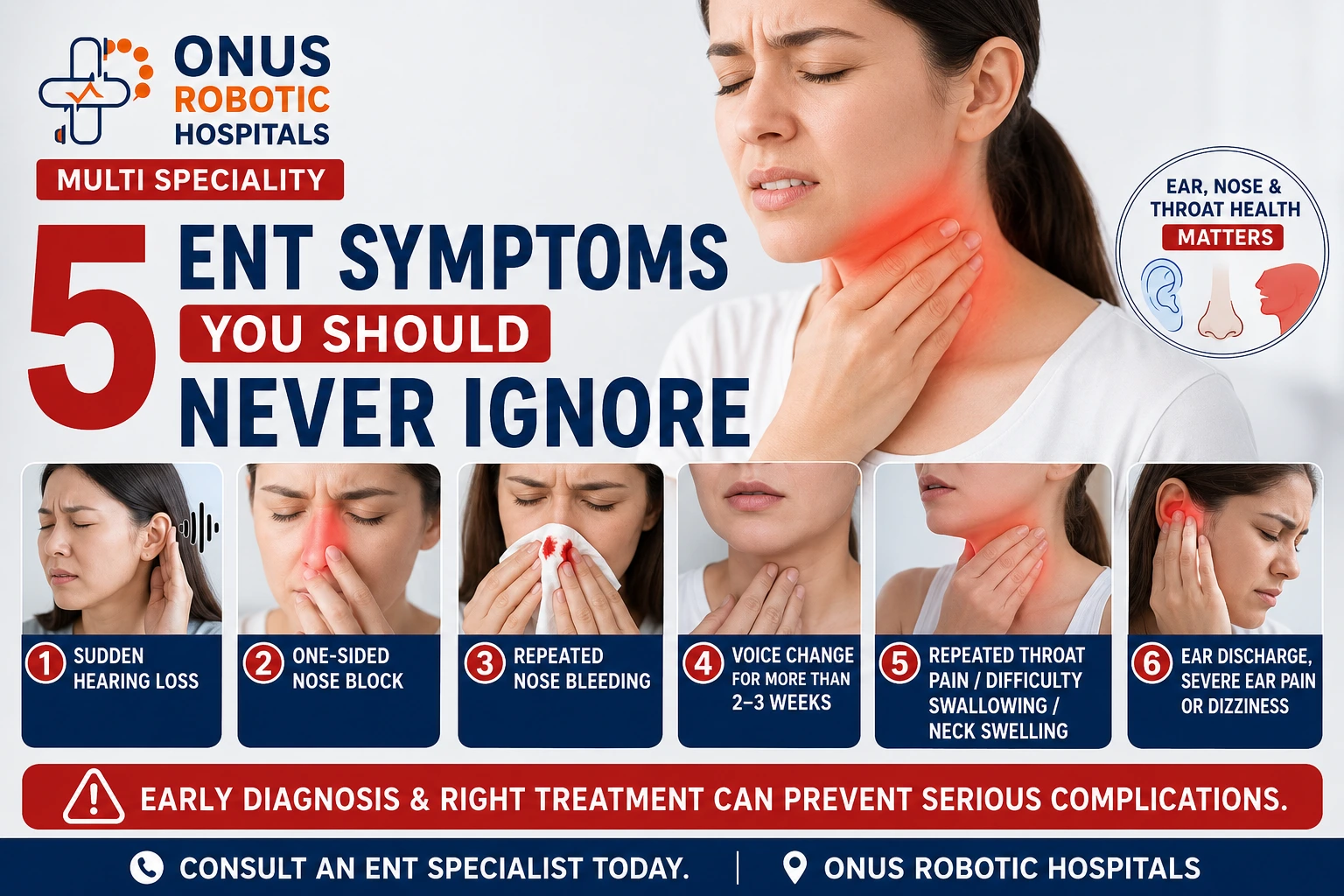
1. Sudden Hearing Loss

Sudden Hearing Loss is considered an ENT emergency.

If hearing suddenly decreases in one or both ears over a few hours or within a day, immediate medical evaluation is essential.

Symptoms

  • Sudden reduction in hearing
  • Ringing in the ears (Tinnitus)
  • Ear fullness
  • Difficulty understanding speech
  • Dizziness in some patients

Why Early Treatment Matters

Prompt treatment within the first few days offers the best chance of hearing recovery. Delaying treatment may result in permanent hearing loss.


2. One-Sided Nose Block or Repeated Nose Bleeding

A blocked nose caused by a common cold usually affects both nostrils and improves within a few days.

However, a persistent blockage on one side of the nose or repeated episodes of nose bleeding should never be ignored.

Possible Causes

  • Nasal polyps
  • Deviated nasal septum
  • Chronic sinus disease
  • Benign nasal growths
  • Tumors (rare but important to rule out)

Consult an ENT Specialist If You Have:

  • Persistent one-sided nasal blockage
  • Recurrent nosebleeds
  • Facial pain
  • Difficulty breathing through one nostril

3. Voice Change Lasting More Than 2–3 Weeks

Hoarseness after a cold or excessive shouting often improves within a few days.

However, if your voice remains hoarse for more than two to three weeks, you should seek medical evaluation.

Possible Causes

  • Vocal cord inflammation
  • Vocal nodules
  • Acid reflux
  • Vocal cord paralysis
  • Smoking-related disorders
  • Laryngeal cancer (in some cases)

People who smoke or frequently use their voice professionally should be especially cautious.


4. Repeated Throat Pain, Difficulty Swallowing, or Neck Swelling

Persistent throat symptoms deserve proper medical evaluation.

Symptoms to Watch For

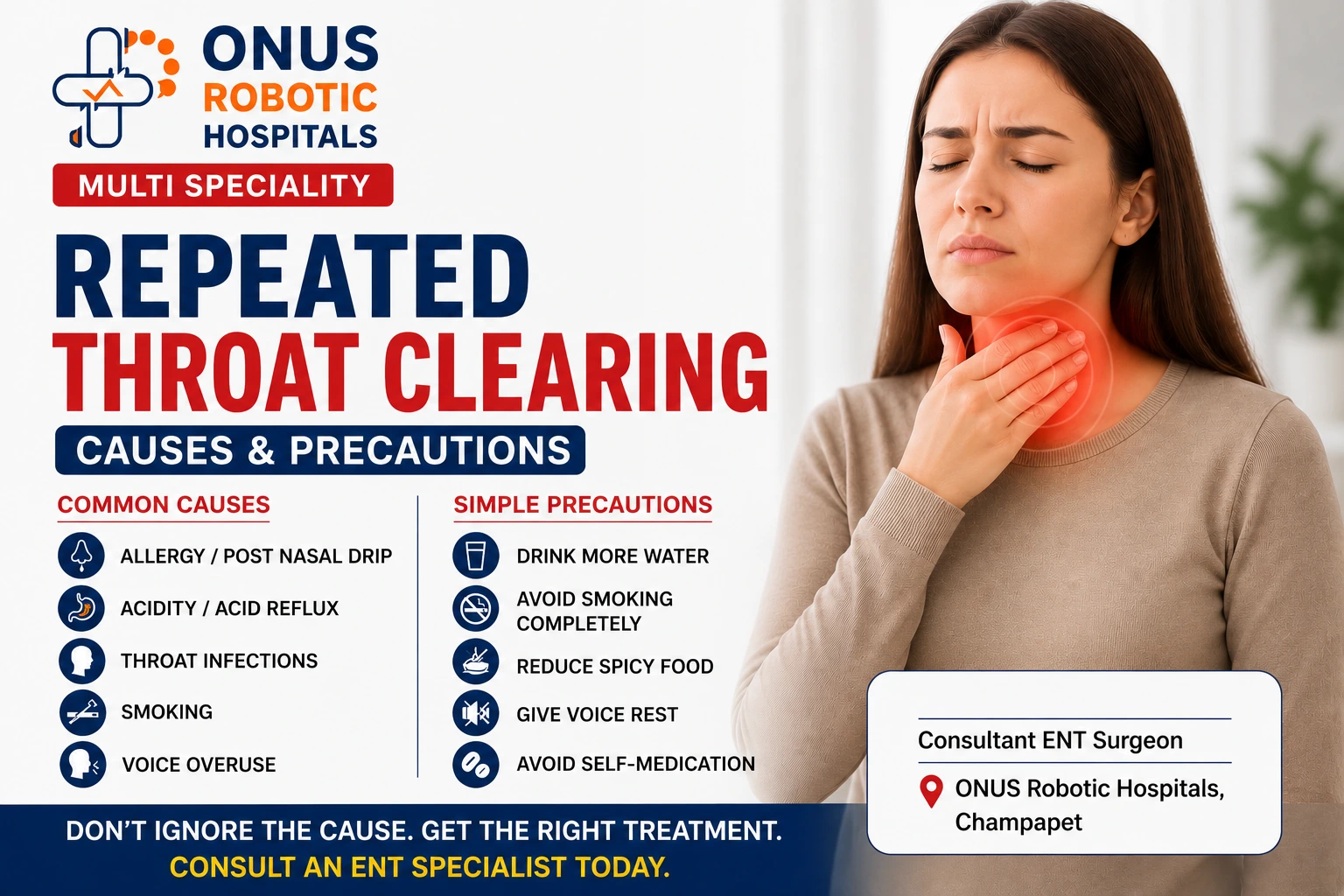
  • Recurrent sore throat
  • Difficulty swallowing
  • Pain while swallowing
  • Lump sensation in the throat
  • Neck swelling
  • Persistent enlarged lymph nodes

These symptoms may be caused by:

  • Chronic infections
  • Tonsil disorders
  • Thyroid problems
  • Salivary gland disease
  • Tumors

Early diagnosis is important for effective treatment.

5. Ear Discharge, Severe Ear Pain, or Dizziness

Ear symptoms should never be ignored, especially if they are severe or persistent.

Ear Discharge

Discharge from the ear may indicate:

  • Ear infection
  • Ruptured eardrum
  • Chronic middle ear disease

Severe Ear Pain

Persistent ear pain may result from:

  • Ear infections
  • Injury
  • Wax impaction
  • Referred pain from the throat or jaw

Dizziness (Vertigo)

Vertigo may be associated with inner ear disorders and can significantly affect balance and daily activities.

Seek medical attention if dizziness is sudden, severe, or associated with hearing loss.


When Should You Consult an ENT Specialist Immediately?

Visit an ENT specialist immediately if you experience:

  • Sudden hearing loss
  • Persistent one-sided nose blockage
  • Repeated nose bleeding
  • Hoarseness lasting longer than 2–3 weeks
  • Difficulty swallowing
  • Persistent throat pain
  • Neck swelling
  • Ear discharge
  • Severe ear pain
  • Dizziness or balance problems

Early diagnosis can prevent long-term complications.


How Are ENT Problems Diagnosed?

Depending on your symptoms, your ENT specialist may recommend:

  • Ear examination
  • Nasal endoscopy
  • Throat examination
  • Flexible laryngoscopy
  • Hearing tests (Audiometry)
  • Tympanometry
  • CT Scan or MRI (if required)
  • Blood investigations
  • Biopsy (when indicated)

A detailed evaluation helps identify the exact cause and guide appropriate treatment.


Treatment Options

Treatment depends on the underlying diagnosis and may include:

  • Medications
  • Antibiotics (when appropriate)
  • Allergy management
  • Ear cleaning
  • Hearing treatment
  • Voice therapy
  • Nasal procedures
  • Endoscopic surgery
  • Lifestyle modifications

Your ENT specialist will recommend the most suitable treatment based on your condition.


Tips to Maintain Good ENT Health

  • Avoid inserting objects into the ears.
  • Protect your ears from loud noise.
  • Stay hydrated.
  • Treat allergies promptly.
  • Avoid smoking and tobacco.
  • Maintain good oral hygiene.
  • Seek medical care for persistent symptoms.
  • Complete prescribed medications as directed.

Conclusion

Your ears, nose, and throat play an essential role in hearing, breathing, speaking, and swallowing. Symptoms such as sudden hearing loss, one-sided nose blockage, repeated nose bleeding, persistent voice changes, throat pain, swallowing difficulty, neck swelling, ear discharge, severe ear pain, or dizziness should never be ignored.

Early diagnosis and timely treatment by an ENT specialist can prevent serious complications and improve your overall quality of life.

If you notice any of these warning signs, schedule an ENT consultation without delay.


Frequently Asked Questions (FAQs)

Is sudden hearing loss an emergency?

Yes. Sudden hearing loss requires immediate ENT evaluation, as early treatment offers the best chance of recovery.

How long is a voice change considered normal?

If hoarseness or voice changes last longer than 2–3 weeks, you should consult an ENT specialist.

Can repeated nose bleeding be serious?

Yes. Persistent or recurrent nosebleeds may indicate an underlying condition that requires evaluation.

When should I worry about ear discharge?

Ear discharge accompanied by pain, hearing loss, or fever should be assessed by an ENT doctor as soon as possible.

Is neck swelling always dangerous?

Not always, but persistent neck swelling should never be ignored, as it may require further investigation.

For Appointments:

Consultant ENT Head & Neck Surgeon

ONUS Robotic Hospitals – Hyderabad

πŸ‘‰ link: contact-us or book-appointment
Β 

Book Doctor Appointment
Book Free Appointment
Please enable JavaScript in your browser to complete this form.
WhatsApp