Lower back pain is one of the most common musculoskeletal problems affecting people of all ages. While some cases improve with rest and medication, others are caused by spinal disc problems that compress nearby nerves, leading to severe pain, numbness, and weakness in the legs. This condition is commonly known as sciatica.
Persistent lower back pain and sciatica can interfere with work, sleep, walking, and daily activities. Fortunately, advancements in spine care now offer non-surgical treatment options such as Robotic Spinal Decompression Therapy, which helps relieve pressure on compressed nerves and reduce pain.
In this article, Dr. Balaraju Naidu, Robotic Orthopedic Surgeon at ONUS Robotic Hospitals, explains the causes of lower back pain, how sciatica develops, and how robotic spinal decompression can help selected patients recover without surgery.
What Is Lower Back Pain?
Lower back pain refers to discomfort in the lumbar region of the spine. It may be mild and temporary or severe and persistent.
Common causes include:
- Disc prolapse (slipped disc)
- Degenerative disc disease
- Muscle strain
- Ligament injury
- Poor posture
- Heavy lifting
- Spinal arthritis
- Nerve compression
When the pain radiates from the lower back into the leg, it is often due to sciatica.
What Is Sciatica?
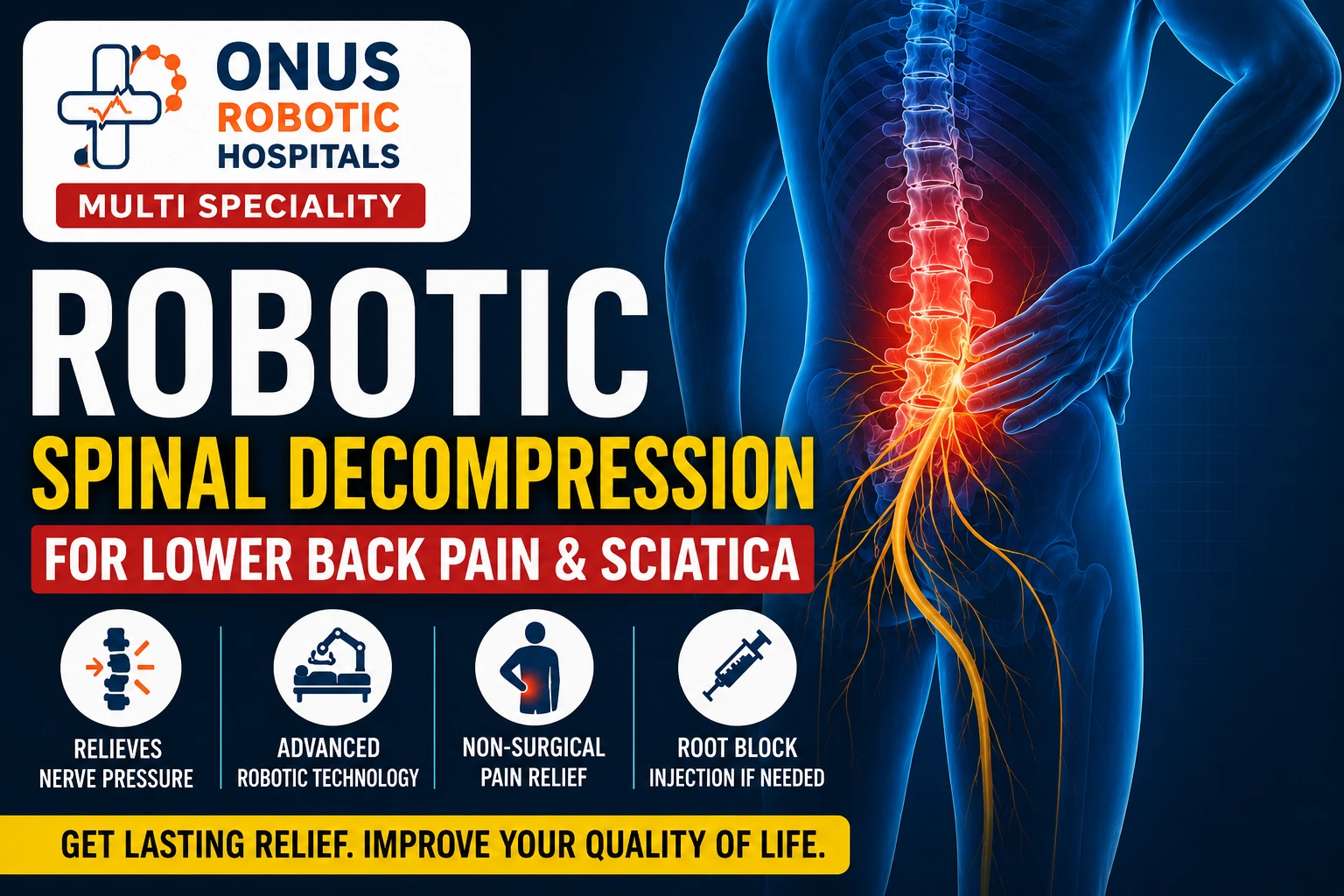
Sciatica is not a disease itself but a symptom caused by irritation or compression of the sciatic nerve, the longest nerve in the human body.
The sciatic nerve originates in the lower spine and travels through the buttocks into each leg. When compressed, it causes pain that travels along the nerve’s pathway.
What Is a Prolapsed Disc?
The spine is made up of bones called vertebrae, separated by soft cushions known as intervertebral discs. These discs act as shock absorbers and allow flexibility.
When a disc bulges, herniates, or prolapses, it can press against nearby nerves, leading to inflammation and pain.
This condition is commonly referred to as:
- Slipped disc
- Herniated disc
- Disc prolapse
- Bulging disc
How Does Nerve Compression Cause Sciatica?
A prolapsed disc can compress the nerve roots exiting the spine.
This compression may lead to:
- Sharp lower back pain
- Pain radiating to the buttock
- Pain extending into the thigh or calf
- Tingling sensation
- Numbness
- Muscle weakness
- Difficulty walking
The severity depends on the extent of nerve compression.
Common Symptoms of Sciatica
Patients with sciatica may experience:
- Lower back pain
- Pain radiating from the back to one leg
- Tingling or “pins and needles” sensation
- Numbness in the leg or foot
- Weakness in the affected leg
- Difficulty sitting for long periods
- Difficulty walking
- Pain while standing
- Sleep disturbance due to pain
If symptoms persist or worsen, medical evaluation is essential.
What Is Robotic Spinal Decompression?
Robotic Spinal Decompression Therapy is an advanced, non-surgical treatment designed to reduce pressure on compressed spinal discs and nerves.
Using computerized technology, the robotic system gently stretches and relaxes the spine in controlled cycles. This creates negative pressure within the affected disc, helping reduce nerve compression and improve nutrient flow to the damaged area.
The treatment is personalized based on the patient’s condition and is performed under professional supervision.
How Does Robotic Spinal Decompression Work?
The therapy works by:
- Gently separating the spinal vertebrae
- Reducing pressure on compressed discs
- Relieving nerve compression
- Improving blood circulation
- Enhancing oxygen and nutrient delivery
- Supporting the natural healing process
- Reducing pain and inflammation
Because the therapy is computer-controlled, the amount of force applied is precise and customized for each patient.
Who Can Benefit from Robotic Spinal Decompression?
This treatment may be recommended for patients with:
- Disc prolapse
- Herniated disc
- Bulging disc
- Sciatica
- Chronic lower back pain
- Degenerative disc disease
- Lumbar nerve compression
However, not every patient is suitable for decompression therapy. A spine specialist will determine whether it is appropriate after a thorough evaluation.
When Is Root Block Injection Recommended?
Some patients continue to experience severe nerve pain despite conservative treatment.
In selected cases, a Root Block Injection may be advised to:
- Reduce inflammation around the affected nerve
- Relieve severe leg pain
- Improve mobility
- Help patients participate comfortably in physiotherapy and rehabilitation
The need for an injection depends on the severity of symptoms and imaging findings.
Benefits of Robotic Spinal Decompression
Potential benefits include:
- Non-surgical treatment
- Reduced nerve pressure
- Relief from lower back pain
- Decreased leg pain
- Improved mobility
- Better posture
- Improved quality of life
- Minimal recovery time
- Personalized treatment protocol
Many patients experience gradual improvement over multiple therapy sessions.
Diagnosis Before Treatment
Before recommending robotic spinal decompression, your doctor may perform:
Clinical Examination
- Pain assessment
- Muscle strength evaluation
- Reflex testing
- Sensory examination
Imaging Studies
- X-rays
- MRI scan
- CT scan (if required)
These tests help identify the exact cause of nerve compression and guide treatment planning.
Lifestyle Tips to Prevent Lower Back Pain
You can reduce the risk of spinal problems by:
- Maintaining proper posture
- Exercising regularly
- Strengthening core muscles
- Avoiding prolonged sitting
- Lifting heavy objects correctly
- Maintaining a healthy weight
- Using ergonomic chairs
- Stretching frequently during work
Healthy lifestyle habits can help protect your spine and reduce recurrent back pain.
When Should You Consult a Spine Specialist?
Seek medical attention if you experience:
- Persistent lower back pain
- Pain radiating into the leg
- Numbness
- Tingling
- Weakness
- Difficulty walking
- Pain lasting more than a few weeks
- Loss of bladder or bowel control (medical emergency)
Early diagnosis allows timely treatment and helps prevent permanent nerve damage.
Expert Spine Care at ONUS Robotic Hospitals
At ONUS Robotic Hospitals, patients receive comprehensive spine care using advanced diagnostic methods and modern non-surgical treatment options.
Dr. Balaraju Naidu, Robotic Orthopedic Surgeon, evaluates every patient individually and recommends the most appropriate treatment plan based on the underlying condition.
Whether your symptoms improve with robotic spinal decompression, medications, physiotherapy, or require further interventions such as root block injections, early consultation is the key to better outcomes.
About the Doctor
Dr. Balaraju Naidu
Robotic Orthopedic Surgeon
ONUS Robotic Hospitals
Dr. Balaraju Naidu specializes in robotic orthopedic procedures, spine disorders, lower back pain, sports injuries, fractures, joint replacement, and advanced musculoskeletal treatments. His approach emphasizes accurate diagnosis, evidence-based treatment, and personalized patient care to restore mobility and improve quality of life.
Frequently Asked Questions (FAQs)
What causes sciatica?
Sciatica is commonly caused by a prolapsed or herniated disc that compresses the sciatic nerve.
Is robotic spinal decompression painful?
No. The therapy is generally gentle, computer-controlled, and designed to improve patient comfort during treatment.
Can lower back pain be treated without surgery?
Yes. Many patients with disc-related lower back pain benefit from medications, physiotherapy, robotic spinal decompression, and other conservative treatments. The appropriate approach depends on the diagnosis.
What is a Root Block Injection?
A Root Block Injection is a targeted injection around an irritated spinal nerve to reduce inflammation and relieve pain in selected patients.
When should I see a doctor for lower back pain?
Consult a spine specialist if you have persistent back pain, pain radiating to the leg, numbness, weakness, or difficulty walking.
For Appointments:
Dr. Balaraju Naidu, Robotic Orthopedic Surgeon
ONUS Robotic Hospitals – Hyderabad
👉 link: contact-us or book-appointment