Nose Bleeding (Epistaxis): First Aid, Causes, Prevention & When to Consult an ENT Specialist- By Consultant ENT Head & Neck Surgeon, ONUS Robotic Hospitals

Nose Bleeding (Epistaxis): First Aid, Causes, Prevention & When to Consult an ENT Specialist- By Consultant ENT Head & Neck Surgeon, ONUS Robotic Hospitals

A nosebleed, medically known as epistaxis, is a common condition that can affect people of all ages. Although seeing blood coming from the nose can be alarming, most nosebleeds are not serious and can be managed safely at home with proper first aid.

However, recurrent or prolonged nosebleeds may indicate an underlying health condition that requires medical attention.

In this article, Consultant ENT Surgeon at ONUS Robotic Hospitals, explains why nosebleeds occur, the correct first aid steps, common mistakes to avoid, and when you should consult an ENT specialist.


What Is a Nosebleed (Epistaxis)?

A nosebleed occurs when the tiny blood vessels inside the nose rupture and start bleeding. The inside of the nose contains a rich network of delicate blood vessels that can easily become damaged due to dryness, irritation, injury, or certain medical conditions.

Most nosebleeds originate from the front part of the nose (anterior nosebleed), which is usually easy to control. Less commonly, bleeding may occur from deeper blood vessels at the back of the nose (posterior nosebleed), which often requires medical treatment.


Common Causes of Nosebleeds

Nosebleeds can happen for several reasons. Some are harmless, while others may require medical evaluation.

1. Dry Air

Dry weather, air conditioning, or excessive indoor heating can dry out the nasal lining, causing cracks and bleeding.


2. Nose Picking

This is one of the most common causes of nosebleeds, especially in children. Repeated irritation can damage delicate blood vessels inside the nose.


3. Allergies and Sinus Infections

Frequent sneezing, nasal irritation, and excessive blowing of the nose can lead to bleeding.


4. Minor Injury

A blow to the nose during sports, falls, or accidents can cause bleeding from damaged blood vessels.


5. High Blood Pressure

In some adults, uncontrolled hypertension may contribute to recurrent nosebleeds, particularly in older individuals.


6. Blood-Thinning Medications

Medicines such as aspirin or anticoagulants can make bleeding last longer.


7. Nasal Polyps or Growths

Occasionally, structural abnormalities or nasal growths may be responsible for repeated bleeding.


Common Causes of Nosebleeds in Children

Children frequently experience nosebleeds because the blood vessels inside their noses are delicate.

Common causes include:

  • Nose picking
  • Dry weather
  • Frequent colds
  • Allergies
  • Minor injuries while playing
  • Foreign objects inserted into the nose

Most childhood nosebleeds are harmless but should be evaluated if they occur frequently.


Common Causes of Nosebleeds in Adults

Adults may experience nosebleeds due to:

  • High blood pressure
  • Sinus infections
  • Nasal allergies
  • Smoking
  • Dry indoor air
  • Blood-thinning medicines
  • Nasal trauma
  • Chronic medical conditions

Persistent or recurrent nosebleeds should not be ignored.


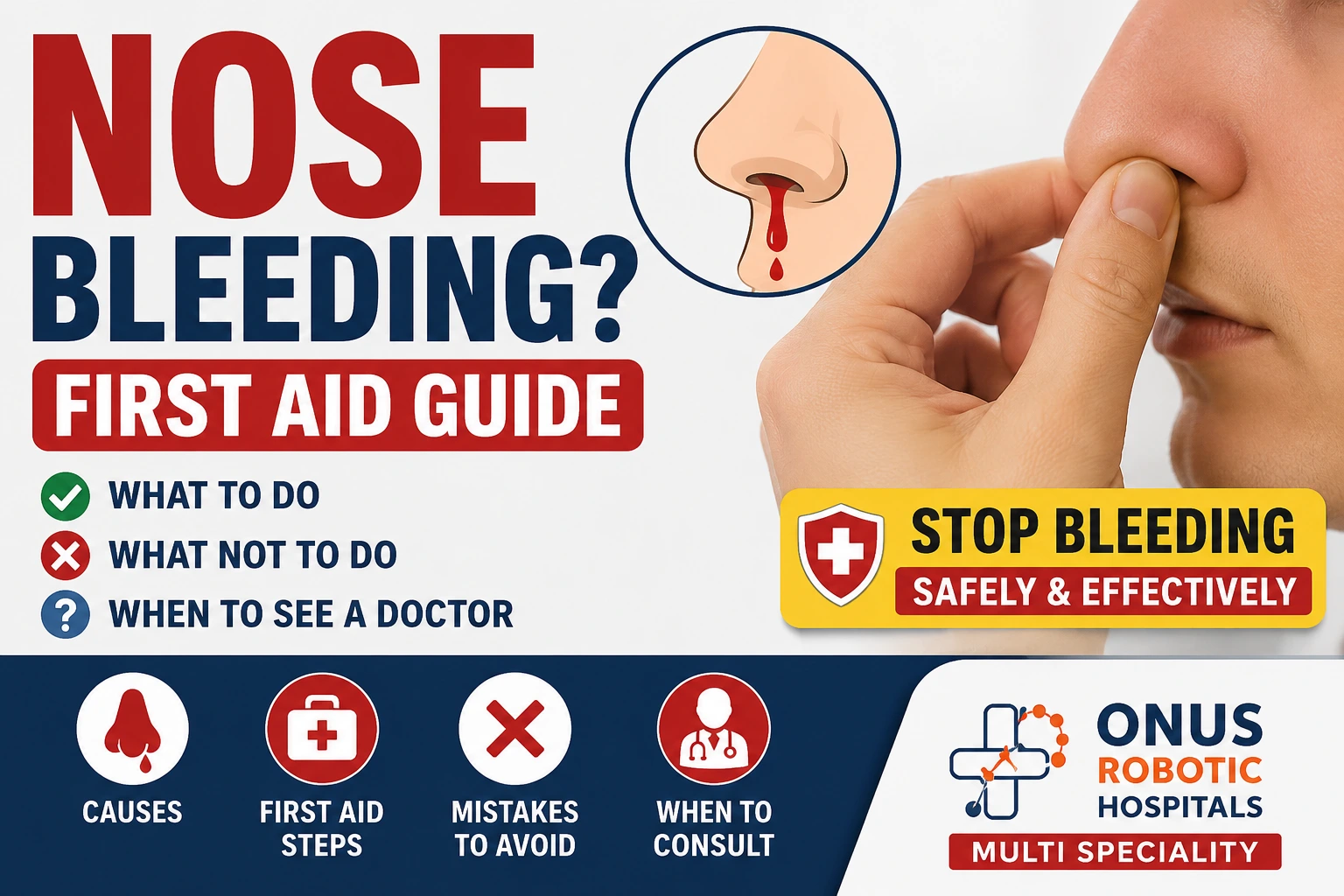
First Aid for a Nosebleed

Knowing the correct first aid can stop most nosebleeds within a few minutes.

Step 1: Stay Calm

Remain calm and reassure the person experiencing the nosebleed.


Step 2: Sit Upright

Sit upright with your head slightly tilted forward.

Do not lie down or tilt your head backward.


Step 3: Pinch the Soft Part of the Nose

Using your thumb and index finger, firmly pinch the soft part of the nose just below the nasal bridge.

Maintain continuous pressure for 10–15 minutes without checking repeatedly.


Step 4: Breathe Through the Mouth

Continue breathing normally through your mouth while keeping pressure on the nose.


Step 5: Apply a Cold Compress

Place an ice pack or cold cloth over the bridge of the nose and cheeks to help reduce bleeding.

What You Should Never Do During a Nosebleed

Many people unknowingly make mistakes that can worsen the bleeding.

Avoid the following:

  • Tilting your head backward
  • Lying flat
  • Blowing your nose immediately after bleeding stops
  • Picking your nose
  • Inserting tissues or cotton deep inside the nose
  • Checking repeatedly before 10–15 minutes have passed

Following the correct first aid steps allows the blood vessel to clot properly.


When Should You Consult an ENT Specialist?

Seek medical attention immediately if:

  • Bleeding continues for more than 15–20 minutes
  • Nosebleeds occur frequently
  • The bleeding follows an accident or facial injury
  • Blood loss is heavy
  • You experience dizziness or fainting
  • Bleeding occurs while taking blood-thinning medications
  • You have difficulty breathing
  • Nosebleeds are associated with a nasal lump or swelling

These situations may require further evaluation by an ENT specialist.


How Do Doctors Diagnose Recurrent Nosebleeds?

Your ENT specialist may perform:

  • Detailed medical history
  • Nasal examination
  • Nasal endoscopy
  • Blood investigations
  • Blood pressure assessment
  • Imaging studies (if necessary)

These tests help identify the underlying cause and guide appropriate treatment.


Treatment Options for Frequent Nosebleeds

Depending on the cause, treatment may include:

  • Nasal moisturizing gels or saline sprays
  • Allergy treatment
  • Blood pressure control
  • Nasal cauterization
  • Removal of nasal polyps or foreign bodies
  • Medication adjustments (under medical supervision)
  • Surgical treatment in rare cases

Most patients improve significantly once the underlying cause is treated.


Tips to Prevent Nosebleeds

Simple preventive measures include:

  • Keep the inside of the nose moist using saline nasal sprays
  • Drink plenty of water
  • Use a humidifier in dry environments
  • Avoid nose picking
  • Trim children’s fingernails
  • Blow your nose gently
  • Wear protective gear during sports
  • Control allergies and sinus infections promptly
  • Keep blood pressure under control

Can Nosebleeds Be Dangerous?

Most nosebleeds are harmless and stop with proper first aid.

However, frequent, heavy, or prolonged bleeding should always be evaluated because it may indicate:

  • High blood pressure
  • Blood clotting disorders
  • Nasal tumors (rare)
  • Chronic sinus disease
  • Blood vessel abnormalities

Early diagnosis ensures timely treatment and prevents complications.


Conclusion

Although nosebleeds are common and often harmless, knowing the correct first aid can make a significant difference. Sitting upright, leaning slightly forward, and applying continuous pressure to the soft part of the nose for 10–15 minutes are the most effective ways to stop most nosebleeds.

If bleeding lasts longer than 15–20 minutes, happens repeatedly, follows an injury, or is associated with dizziness or excessive blood loss, consult an ENT specialist without delay. Early evaluation can identify the underlying cause and help prevent future episodes.


Frequently Asked Questions (FAQs)

What is the most common cause of a nosebleed?

Dry air, nose picking, allergies, and minor trauma are among the most common causes.

Should I tilt my head back during a nosebleed?

No. Tilt your head slightly forward to prevent swallowing blood.

How long should I pinch my nose?

Apply firm pressure to the soft part of the nose for 10–15 minutes without releasing.

When should I worry about a nosebleed?

Seek medical care if it lasts more than 15–20 minutes, is very heavy, occurs frequently, or follows a facial injury.

Can high blood pressure cause nosebleeds?

Yes. Uncontrolled high blood pressure can contribute to recurrent nosebleeds, especially in older adults.

For Appointments:

Consultant ENT Head & Neck Surgeon

ONUS Robotic Hospitals – Hyderabad

πŸ‘‰ link: contact-us or book-appointment

Β 

Book Doctor Appointment
Book Free Appointment
Please enable JavaScript in your browser to complete this form.
WhatsApp